Wednesday, September 14, 2005


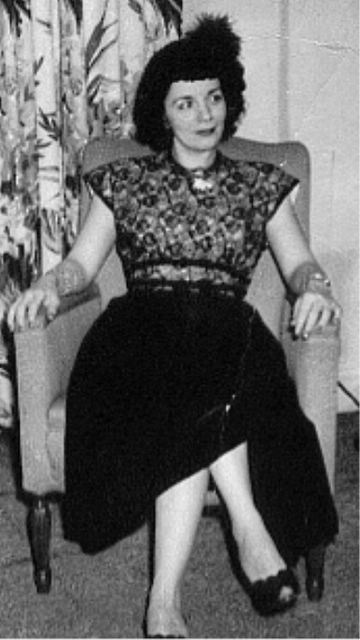
Flora Severini Kowinski, probably in the late 1940s after her marriage, but perhaps earlier. Posted by Picasa

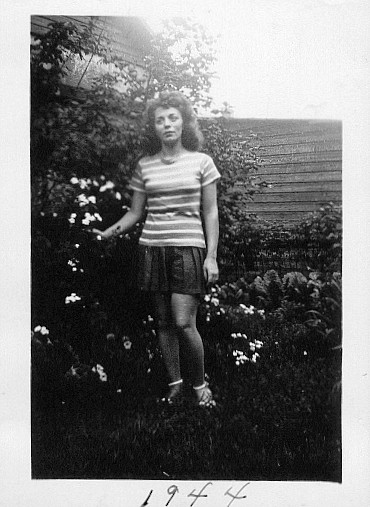
Flora in the back yard of her parent's home in Youngwood, PA in 1944, about a year before she married my father. Posted by Picasa

Billy (me) and Flora (my mother) in 1948.  Posted by Picasa

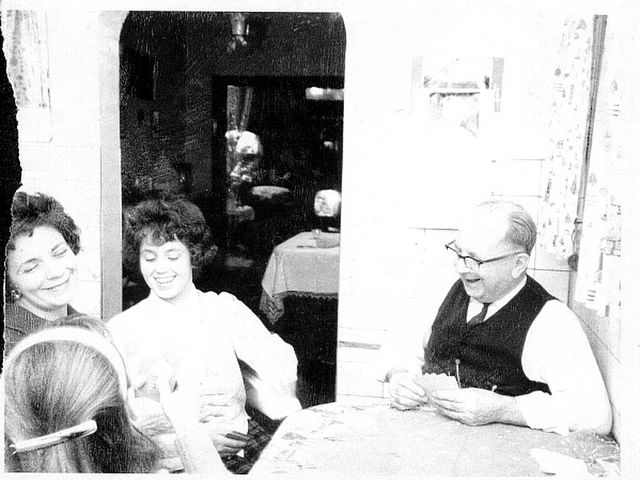
The kitchen of the house in Youngwood where my mother grew up. That's her father, my sister Kathy to his right, and my mother, smiling at my sister Debbie. I'm taking the picture. Posted by Picasa
Flora

She would have been eighty-five yesterday, on September 13. My mother was born in Italy in 1920, named after the character in a novel my grandmother was reading. My grandmother was one of the few women in her village in the Abruzzi mountains who could read---she read letters for people, and wrote their replies. It's how she found out that another woman had her eye on Ignazio Severini, her intended, who was away at war in the north, the Great War. But that's another story.

Flora came to America with her mother when she was four, and met her father, who'd left Manopello to work in Pittsburgh as a tailor when she was an infant. She grew up in Youngwood, PA, a small western PA railroad town about six miles from the bigger town of Greensburg, where she lived most of her life. She married my father in August 1945. I was born at the end of June in 1946.

So I'm less than a year shy of 60 myself, an age my mother didn't reach. (Her mother, however, passed 85; I took her a birthday cake and lit 85 candles on it---it was in the kitchen in the photo above. It makes quite a fire.) Flora died in 1974, after surviving her cancer past the supposed 5 year safety mark.

So you can look at the picture here of the dreamy-eyed young woman in 1944, who doesn't know that at 24 she's got but 30 years left to live. She's lived almost half her life.

After me, two daughters, Kathy in 1950, Debbie in 1954. She knew one granddaughter, Kathy's daughter Christina ; if she'd lived just another decade, she would have known two more: Debbie's daughters, Sarah and Megan.

I can't say when exactly I developed the perspective that would have allowed me to talk with my mother without so much of the freight of parent-child relationship expectations and habits of feeling and thought. But it wasn't fully developed when she was alive. I was smart about some things at 28, and clueless about a lot more. The father-son thing is more complicated, and I may never have gotten out of that dynamic. But I often feel I could have learned a lot and had a better relationship with my mother over these many years.

Not that we had a bad relationship. There just wasn't much perspective in it, at least on my part. So I wonder what it would have been like, to be able to talk to my mother when I was 40 or 50, or now. Apart from what it would bring to the present, there would be a lot of past to talk about, now that I'm more deeply interested in the past, having acquired quite a bit of it.

I would have liked to light 85 candles on her cake. As I say, it makes quite a fire.

Friday, August 05, 2005


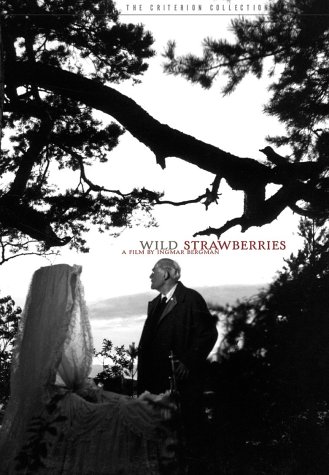
"Wild Strawberries" Posted by Picasa
Wild Strawberries and Bergman at 80

Though he was a young man when he started making films, Ingmar Bergman has always been the trademark filmmaker of mortality. The epic battle on the beach with the devil in "The '>Seventh Seal" is famous enough to be routinely parodied, and the intense beauty of "'>Cries and Whispers" is framed in pain and fatality. Even the child in "'>Through A Glass Darkly" seems to be glimpsing mortal lessons as the adults around him pose and flail on their train trip to the end of the line.

But oddly perhaps, his early film concerning an old man is among his most gentle. The Criterion Collection '>DVD of "Wild Strawberries" happens also to include an extended interview with Bergman when he had just passed the age of that film's protagonist. He was a sharp and physically graceful 80 (and this was in 1998. He's gone back to making films since---his latest release was 2003.) Both the movie and the interview turn out to be rather encouraging.

Ingmar Bergman's films were the closest thing to holy writ I can remember from my college days through the early 70s, when I was editing Janet Maslin's review of "Cries and Whispers" for the Boston Phoenix. Because I hadn't seen a "foreign film" until college, I was learning the cinematic vocabulary and syntax by osmosis mostly, and mostly by watching the French New Wave filmmakers, the Italian giants, and Bergman. Partly because the experience of watching Bergman had been conditioned by his reputation as being deep and depressing, I've seldom gone back to those films. But curiosity for what Bergman can tell me now, inspired me to take a look at this DVD of "Wild Strawberries."

"Wild Strawberries" is the story of an eminent 79 year old doctor, who lives alone with his housekeeper, on the day he is to receive a prestigious honorary degree in another city. It opens with a dream and contains several reveries---the kind of thing that became pretty standard on television dramas like "Thirty-something," but was disconcerting in 1957. Even with all these copycats, these scenes in this movie retain their power: they are economical, with not an extra image or a sound, and elegant.

The doctor wakes up from his unusual dream and suddenly decides instead of taking a plane as was planned, he will drive to the ceremony. Then his daughter-in-law appears; she's been staying with him, and asks to come along, since he'll be driving to the city where she lives. Why is she going back to her husband now? Why has she left?

They pick up three young hitchhikers---including the radiant young Bibi Anderssen, who reminds him of a lost love (who she also plays in his reverie). They get involved in a traffic accident, a bickering couple piles into the car, and suddenly we're in another prototype: the road movie.

The group covers a lot of ground in the past and present, and so does the movie, in a compact ninety minutes. But then, it was his 19th film. And he wasn't half done.) In one of his essays on Bergman, Truffaut comments that Bergman's women are "infinitely subtle," while his men "are mere conventions." This film is a rarity in focusing on a male character, played by Victor Sjostrom, a giant of Swedish theater and film who was all but forgotten by the time this movie was made, and he came out of retirement to act in it. Bergman said he did more than that---he took it over. The character was originally based (at least physically) on his father, but the film ceased being Bergman's, he said, and became Sjostrom's. If he meant through the subtle performance and the life he brought to the character, then it was all to the good.

This is an enjoyable film to watch, and there's extra enjoyment in watching it again with the commentary of film scholar Peter Cowie. His commentary has just the right mixture of preparation and spontaneity (as when he comments on how good a particular scene looks on DVD---the film is in glorious black and white.) When Cowie explains how precious the summers are in Sweden, just a few weeks of warmth and sunshine, it helps you feel the power of the imagery, in the professor's recollections of family summers by the sea.

Bergman directing Liv Ullman in "Saraband" 2003 Posted by Picasa
In a greenish patterned shirt with a black sweater vest, Bergman at 80 sat and talked easily with a friend and fellow filmmaker and writer, Jorn Donner, for a 90 minute interview made for Swedish television, and available here for the first time here on this DVD. He spoke about the relationship of his life to his work, elements of his autobiography (especially his exile from Sweden when he felt he was being persecuted by authorities on tax evasion charges that later proved groundless), and about his work habits, and his beliefs.

Harsh parental discipline and formality felt as coldness dominated Bergman's experience of his childhood, as he portrayed in several films. While his older brother survived it through aggressive assertion, he said, he survived it by adopting a persona pleasing to his parents, and by being a liar. "I lied freely and without restraint."

It's remarkably close to what Truffaut said about his own childhood survival technique. "I see life as very hard; I believe one should have a very simple, very crude and very strong moral system," Truffaut said in an interview. " One should say, 'yes, yes,' and do exactly as one pleases. This is why there can't be any direct violence in my films. Already in The 400 Blows, Antoine is a child who never rebels openly. His moral system is more subtle than that. Like me, Antoine is against violence because it signifies confrontation. Violence is replaced by escape, not escape from what is essential, but escape in order to achieve the essential. "

Bergman affirms his continuing relationship to his childhood, which is central to "Wild Strawberries." "The whole of my creativity is finally childish," he says, at age 80. "I can, in a second, go back to my childhood...Anything I've done that's of value [is] a dialogue with my childhood."

It was his fear of death, strongest in his teen years, that led him to write and film "The Seventh Seal," released just before "Wild Strawberries," and which he says exorcised that particular demon.

Bergman writes by hand, on the same kind of thick square yellow pads that were standard issue for screenwriters in Sweden when he started in 1942, but which in later years he had to have specially made. His only concession to change is that he's switched from a fountain pen to a ball-point.

He always begins with notes in workbooks. He fills many for each project. "Workbooks are fun!" By the time he starts writing the script itself, he knows exactly what he wants to do. "It goes quickly, but it's so boring. It goes quickly because it's so boring...The workbooks are the creative process. Scripts are the process of putting it in order." He adheres to a strict schedule: three hours a day, in 45 minute sessions with 15 minute breaks. This is as much ritual as routine, he agrees.

Bergman's tumultuous private life, which got translated into his domestic relationship films, is well known. But his last long marriage of 24 years ended with his wife's death, and he says he survived only by strictly scheduling his day, and finally by forcing himself to write. He has lived alone since, and though he enjoys talking on the telephone, he is comfortable in solitude.

He says he's not religious but is aware of "the possibilities of bigger patterns...I have a lot of ideas about other realities that surround me. I also have the feeling that we're part of an infinitely large pattern, that we never analyze [or] understand. You can feel that sometimes."

But he is sternly practical about his work, which at the time of his interview was mostly as a theatre director (though he'd had a decade of writing many scripts and stories.) Fame doesn't help the next day's work, he says, when he goes to rehearsals with the same prayer: "Let this day go well. Let it be meaningful and let it be alive."

"Let the work be meaningful for those who do it and then also be alive, so that it will live its own life. That's the only thing I'm afraid of---that suddenly the ability to make something living and moving will be taken away from me. I'll no longer know how to do it."

He has that anxiety every time, "the anxiety that what I do won't live." There are many stone dead days, he says, it's the most terrible thing there is. "This is my recurring nightmare."

"I'm a craftsman, and I make a good product. I make a product to be used. I'll be terribly upset if nobody wants to use my product."

The documentary ends with Bergman walking down the beach of his island of Faro, where he lives and the only place he writes. With his walking stick carried more like a sword, his stride is quick and sure, fluid, elegant and full of authority, like Peter O'Toole playing Lawrence or the King of England.

The television movie he made at age 86 is called "Saraband." Some say it's one of his best.
Friday, July 22, 2005


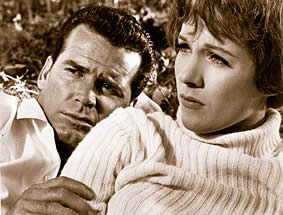
James Garner, Julie Andrews in "The Americanization of Emily"  Posted by Picasa
DVD FRIDAY: The Americanization of Emily

Of all the movies he made, James Garner said this was his favorite. So did Julie Andrews, his co-star. So did James Coburn, who had a more prominent role in many other films than he did in this one.

It was producer Martin Ransohoff's favorite of his movies, and Arthur Hiller's favorite of the many movies he directed. Script writer Paddy Chayevsky, who wrote several classics and an Academy Award winner, said this was one of his two favorite films.

Yet until the newly released DVD, '>The Americanization of Emily had all but disappeared. Perhaps because in many ways it was unclassifiable: a romantic comedy, a war movie, an anti-war movie, or as director Hiller insists, "an anti-the-glorification-of-war movie."

Made in 1964 in black and white, it may have become overshadowed by other more famous films of that era and that style on something like that theme: "Dr. Strangelove," perhaps even "Fail-Safe." Set in World War II, it was more distanced and with a dryer wit than the anti-war war novel of that time, "Catch-22."

But the new DVD reveals its considerable virtues: the eloquent and characteristically Chayevsky script, the fine, committed performances by Garner, Andrews, Coburn and Melvyn Douglas, among others. The rhythms and fluid camera of Arthur Hiller's first major directing job, that managed to make a single movie out of a unique combination of elements.

Hiller's DVD commentary is a great bonus. Producer Ransohoff bought the William Bradford Huie novel of the same title, which was a pretty straightforward romance about an English girl falling in love with an American soldier stationed in England during World War II. At some point he got the idea of asking Chayevsky to write it. Chayevsky flew from New York to Hollywood, and told Ransohoff it really wasn't for him. But on his flight back he thought of a way to do it, and called Ransohoff, explained this very different approach of making the hero a selfish sensualist who despises wartime heroics, but winds up being an accidental hero himself. For some reason, Ransohoff liked it.

Various directors and actors were attached to the project---at one point William Holden was the lead, and James Garner was to play his friend. When Holden dropped out, Garner moved up, and Coburn was added (possibly at the behest of Garner.)
Julie Andrews hadn't done a major movie yet---but she went from this one directly to making "Mary Poppins."

Arthur Hiller was a young and untested director, who got the job when better known directors turned it down. He was pretty nervy for a kid. He insisted on making it in black and white, which the studio opposed, since color films made more money. He set up shots so they were done without cuts, so the studio could slice and dice his film.

Later, Hiller recounts, Ted Turner bought the TV rights and colorized it. Hiller protested loud and long, as did other directors and film buffs. Eventually Turner listened and not only stopped colorizing, he joined Hiller in leading new efforts to preserve America's movie heritage by restoring and preserving endangered films.

This is a quirky, sometimes unsettling but often surprising and always entertaining movie, a real DVD treasure for your weekend viewing.

Friday, July 15, 2005


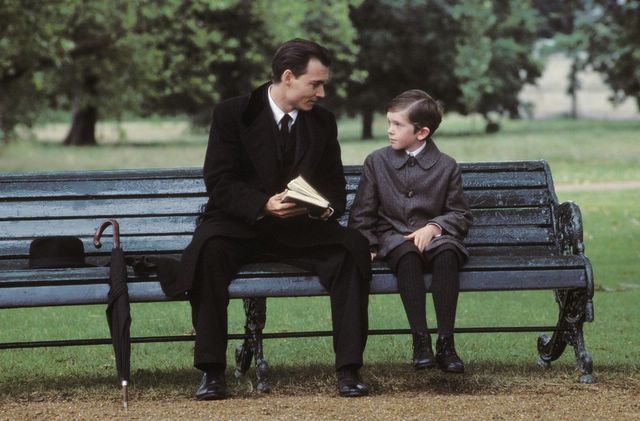
Before Charlie, Finding Neverland Posted by Picasa
Films About Theatre: A DVD Friday Collection

Supplementing what has become a nightly diet of "Six Feet Under" episodes on DVD (an HBO series we've never seen because we didn't have HBO even when we had cable---we're into the second season now), I rented two movies that just got off the "new" list, and by complete accident they both were films about the theatre (the first two in the list below).

Films about theatre happen to form one of my favorite subgenres, and so these two new additions inspire the first of the DVD Friday lists of personal favorites. All are available on DVD unless otherwise noted, though I haven't yet seen them all on DVD.

1. '>BEING JULIA (2004) From a novel by Somerset Magham, scripted by playwright and theatre explainer Ronald Harwood, this story about a famous but aging actress in London of 1938 is smart, stylish, funny and moving. Annette Benning deserved the Oscar she was robbed of, for this film, and the other performances---from Jeremy Irons to the wonderful Juliet Stevenson to relative newcomers, at least to film in America---are uniformly excellent. And in dealing with youthful ambition (somewhat reminiscent of "All About Eve"-see below) the resolution is wonderfully theatrical.

2. '>FINDING NEVERLAND (2004) Johnny Depp plays J.M Barrie in London as the nineteenth century becomes the 20th, when after his latest play fails he meets the woman and her children who will inspire "Peter Pan," which as a play has a double role in the film's climax. Depp and Kate Winslet are outstanding, supported by perfectly pitched performances from Julie Christie and Dustin Hoffman. The whole cast is very good, especially the boys who play the boys (proving that not all the talented English children are in the Harry Potter movies.)

The story is based on real events, though of course reality was much messier. Barrie did in fact write his play for the sons of a woman he met, and did later become guardian to the boys. But the woman's husband was still alive (he's conveniently dead in the movie), and for all the faith in the power of magic Barrie may have instilled in them, the boys came to bad ends: one killed in World War I, one drowned in the embrace of another man, and Peter killed himself, although he was an adult by then, and in publishing, but may have felt himself a prisoner of Barrie's imaginings.

Still, it's a very good movie, if a little saccarine about imagination and unimaginative about faith. But it has lovely touches about theatre, especially the relationships between actors, trying to support each other in the midst of not having a clue why they are dressed up as a pirate and a dog. The DVD extras are great---the deleted scenes are as good as any in the movie, and the outtakes are funny. There's one of Johnny Depp doing a scene in the park with a dog that decides to take a dump, and Depp talks to him in the same Scottish accent he employs for Barrie.

All About Eve Posted by Picasa
3. '>STAGE DOOR (1937). The struggling actor or most often actress who makes good is a staple of dozens of filmed stories: musicals, comedies, dramas and melodramas. This is one of the best, which seems to incorporate all possibilities, veering from screwball comedy to melodrama and ending up a fairly authentic kind of human comedy. It's singular for the appearance of star actresses who seldom worked together, so it's a treat to see Katharine Hepburn trade barbs with Ginger Rogers, while Eve Arden, Lucille Ball and Ann Miller wisecrack around them. It's also one of the better roles for Gail Patrick, who is seldom remembered now but excelled at playing cold manipulative women with just a touch of vulnerability.

Though the film tends to sag where the story does, Gregory La Cava keeps it moving briskly most of the time. (La Cava, a very busy silent movie actor who became a prodigious producer and director, had just directed his best film, the classic comedy '>My Man Godfrey---with Gail Patrick's most memorable performance. "Stage Door" was not only about the theatre, it started out as a play, by the formidable team of Edna Ferber and George S. Kaufman.

4.'>ALL ABOUT EVE (1950) The dark side of "Stage Door" and one of the best written movies of all time (written and directed by Joseph L. Mankiewicz). Famous as a Bette Davis vehicle, it also features outstanding performances by George Sanders, Gary Merill, Celeste Holm and Anne Baxter. Also an early appearance by Marilyn Monroe.

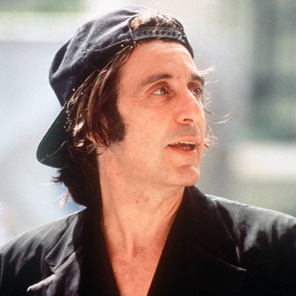
Looking for Richard in Manhattan Posted by Picasa
5. '>SHAKESPEARE IN LOVE (1998). Then there are films about the actual process of creating theatre, the heart of this subgenre. This has to be the ultimate, not just because it's a romantic comedy about the young William Shakespeare writing Romeo and Juliet, with lively and passionate performances by Joseph Fiennes and Gwyneth Paltrow (both their best, in my opinion) and some scenes stolen with relish by Dame Judi Dench.

The script by Marc Norman and Tom Stoppard incorporates so many delicious theatrical in-jokes (for instance, actors always describe the play as being about their character. "What's Romeo and Juliet about?" "Well, it's about this nurse...") as well as delightful bits of throwaway anachronisms. But the real heart of it is the performance of the play that leads to one gorgeous climax after another. Not only is the movie within the play within the movie handled brilliantly, but we get an idea of why Elizabethan theatre was so vital: the audience crowded against the stage, totally involved in every moment. Yes, and it's a mystery.

There isn't anything I don't like about this movie, from the color to the music. I'm looking forward to seeing the Collector's Series DVD with the commentaries, but it looks like I'll have to buy it---the ones for rent here are the extraless version.

6. A MIDWINTER'S TALE (1995) (also known as IN THE BLEAK MIDWINTER). In contrast to "Shakespeare in Love" which won the Best Picture Oscar, this little movie about a ragtag group of actors in England putting on a Christmas production of "Hamlet" is unknown. But it is also funny, with lots of heart and lots of theatre texture. It was written and directed by Kenneth Branagh around the time he directed his huge "Hamlet" for the screen. It's filled with affection, yet Michael Maloney's frenetic performance as the neurotic director and star of the play keeps it moving at a fast pace. And unlike Albert Finney's A MAN OF NO IMPORTANCE (1994), another excellent film about a provincial man who tries to find himself through theatre, this one has a theatrically happy ending.

7. '>LOOKING FOR RICHARD(1996). This is a completely unique film---part documentary in which Al Pacino lead us through his attempts to understand Shakespeare's Richard III and mount a production, culminating in Pacino and his cast performing key scenes of the play. It is entertaining from start to finish, thanks to Pacino's personality, the skillful editing of the cinema verite glimpses of the process (Pacino also directed) and the other oddballs he gathers in, and the power, complexity and ultimately the simplicity of Shakespeare's play. Much of it was shot in Manhattan, so it's Shakespeare with true contemporary grit. It ends up being a great film about the process of actors "finding" the play and performing what they find.

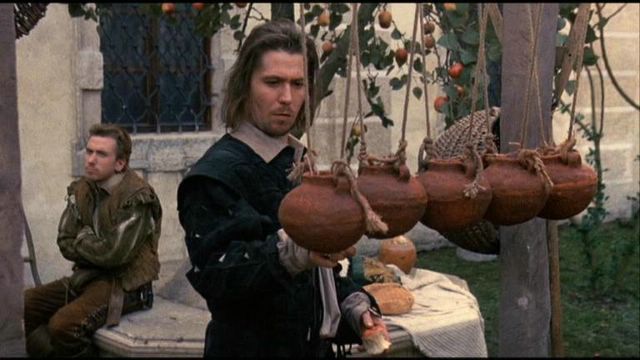
Tim Roth, Gary Oldman, R& G in perpetual immobility Posted by Picasa
8. '>ROSENCRANTZ AND GILDENSTERN ARE DEAD (1990). Then there are films about theatre within theatre. Tom Stoppard directed this film version of his famous play about two minor characters in Hamlet, and what they do when everybody else is watching the Prince of Denmark. The play is a classic, though its echoes of Beckett are now a bit jarring in view of Stoppard's later work. The movie is visually interesting and moves along at a goodly pace, but its chief virtue is the performances of Gary Oldman and Tim Roth, and Richard Dreyfuss as the Player. Oldman and Roth play R & G like a literate Laurel and Hardy, and there are numerous anachronistic sight gags that suggest Stoppard was responsible for that brand of humor in "Shakespeare in Love."

The DVD bonus disk is amazing, featuring an interview with Tom Stoppard of over an hour, and exceptionally revealing (but shorter) interviews with Gary Oldman and Richard Dreyfuss. Trust me, you've never heard actors talk like this in public.

Of course, there are lots of film versions of famous plays, with waves of contemporary Shakespeare still washing over us, but that’s another list. Still it’s worth mentioning here that Gary Oldman said that he and Roth had so much fun being R & G that they rehearsed continually, and in public—they would even do scenes in the pub that they had already shot. Plus, when Mel Gibson did his “Hamlet” they volunteered to play R & G in it, wearing the same costumes as in this movie. Apparently the Gibson folks didn’t get it.

9. '>VANYA ON 42ND STREET (1994). This is another collaboration between Wallace Shawn, Andre Gregory and Louis Malle, the team that created the unique "'>MY DINNER WITH ANDRE" (1981), an apparently spontaneous but in fact scripted conversation that was largely about theatre and its connections to contemporary life.

This time, we watch a group of New York actors gather one morning in an abandoned Ziegfield Follies theatre. They chat, get coffee, and suddenly, seamlessly, their chat becomes Chekov's "Uncle Vanya," and you are utterly hooked. Shawn plays Vanya, and Gregory directs from a script he adapted from David Mamet's very contemporary translation. This group of actors in fact had gathered periodically for years and years to simply work on this play with no thought of performance. Thanks to Malle's intimate camera work, we are privileged witnesses.

And with this, we have come full circle, to a film that is not only about theatre, but is theatre.

Tuesday, July 12, 2005


speed, quickness and lightness Posted by Picasa