TV and I grew up together. This is our story. Eighth in a series.Once he’d made several animated feature films, Walt Disney
wanted to try live action features.
World War II intervened, but at the same time, unexpectedly gave him the
impetus and means to make his first live action films immediately after the
war.
The financial success of Disney animated films depended on
the addition of international audiences, particularly in Europe. Once the war started, his movies couldn’t be
shown in the battlefield that was western Europe, except in England, where they
became a cherished relief from the war. But the British government impounded
the profits until war’s end, and even then, Disney could spend that money only
in the UK.
 |
| Richard Todd, Glynis John in Rob Roy |
So the Disney Studios used those funds to make their first
live action films in England. Just as
his animated features mostly adapted well-known fairy tales and other existing
stories, Disney chose classic British adventures for these movies. His first was a live action version of
Robert Louis Stevenson’s
Treasure Island, released in 1950. It was followed by
The Story of Robin
Hood (1952), and in 1953,
The Sword and the Rose (an Arthurian era
story about knights) and
Rob Roy, the Highland Rogue.
These theatrical films all were presented on Disneyland,
as Disney’s anthology TV show was called in 1954. They were all divided into
two hour-long shows (with Walt Disney providing historical and other
background) on consecutive weeks.
Treasure Island
appeared in two parts in January 1955, during the show’s first season. Robin Hood was shown in the second season, during November 1955. The following January (1956), The Sword
and the Rose appeared under the original title of its source book, “When
Knighthood Was In Flower.” Rob Roy
got the two successive episodes treatment that October, early in the third
season.
I remember
Robin Hood the best. Richard Todd played
Robin as a young energetic upstart (a yeoman rather than a noble.) This Disney movie has the distinction of
being the only version of Robin Hood to have filmed in the actual Sherwood
Forest. I may have seen it before I saw
the Richard Greene TV series.
Knighthood and Rob Roy kind of blended into
Robin Hood, since they also starred Richard Todd. I remember his romantic interest in Knighthood, Glynis
Johns –I’m now surprised to see she wasn’t Maid Marian. She was however, the
female lead in Rob Roy. With her distinctive voice and gaze, she had a
long career in British and Hollywood films.
On the other hand, I didn’t take to
Treasure Island. I found Long John Silver (memorably played
by Robert Newton) uncomfortably scary, especially in his relationship with Jim
Hawkins, a boy more or less my age (Bobby Driscoll again.) (For reference, I was eight when
Disneyland
went on the air in 1954.)
With these modest successes accomplished, Disney began his
first big budget Hollywood live action film, 20,000 Leagues Under the Sea,
based on the novel by Jules Verne. He
assembled a Hollywood cast, though lesser stars who were also good actors:
James Mason, Peter Lorre and the up-and-coming young Kirk Douglas. Except for Douglas, the cast and production
had a European flair, perhaps a transition from the English films.
It turned out to be a highly ambitious film, with Disney
facing technical challenges as he did with his first animated features. This one required underwater photography in
only the second Cinemascope movie ever made.
Even the diving equipment necessitated technical innovations. Disney built a live action studio for this
movie, and with the special effects and location shoots, it quickly became the
most expensive movie in Hollywood history to that time.
Financially stretched, the Disney Studios went all in to
make this film a success with a massive ad campaign. Not by coincidence, scenes
from 20,000 Leagues Under the Sea were the focal point for the seventh
episode of the Disneyland TV show in December 1954, just weeks before
the movie’s release.
The most dramatic scene in the movie was a fight on the deck
of the Nautilus submarine with a mammoth Giant Squid. Fragments of it were featured in the TV hour. I recall Walt Disney explaining on this show
what a giant squid is, especially in contrast to an octopus; how it squirts
ink, and how it may have been the source of perennial tales about sea serpents.
Like most Disneyland episodes, this one was repeated
many times over the years. But it wasn’t until 1976 that the full movie (in
color) was shown on TV, after Disneyland moved to NBC and after a few
name changes to The Wonderful World of Disney.
20,000 Leagues Under the Sea did become a major
international hit. It was innovative
and influential, yet it is curiously forgotten. Part of the reason may be that it was immediately obscured by a
phenomenon unparalleled in television history—and in Hollywood history-- which
began the very next week after this seventh Disneyland episode, when the eighth
was broadcast on December 15, 1954: the first Frontierland show called “Davy Crockett, Indian Fighter.”
Back for a moment to
20,000 Leagues Under the Sea. Creating a working model for that giant squid, with working
tentacles and mouth, was a huge technical challenge. In fact the first version
failed so badly that a new model had to be designed and built, and the
elaborate scene re-shot at huge expense, forcing Disney to go begging to the
banks so he could finish the movie.
So when Walt Disney heard that a new movie was opening that
featured giant ants with articulated limbs and mouth, he went to see it. (He
may also have been taking a look at one of the film’s leads, James Arness—not
yet the star of TV’s Gunsmoke.)
The giant ants in
the sci-fi horror film Them!—one of the first atomic monster
movies—didn’t impress him, and apparently neither did James Arness. But another
actor with one scene did. The studio
was preparing their first live action film specifically for Disneyland,
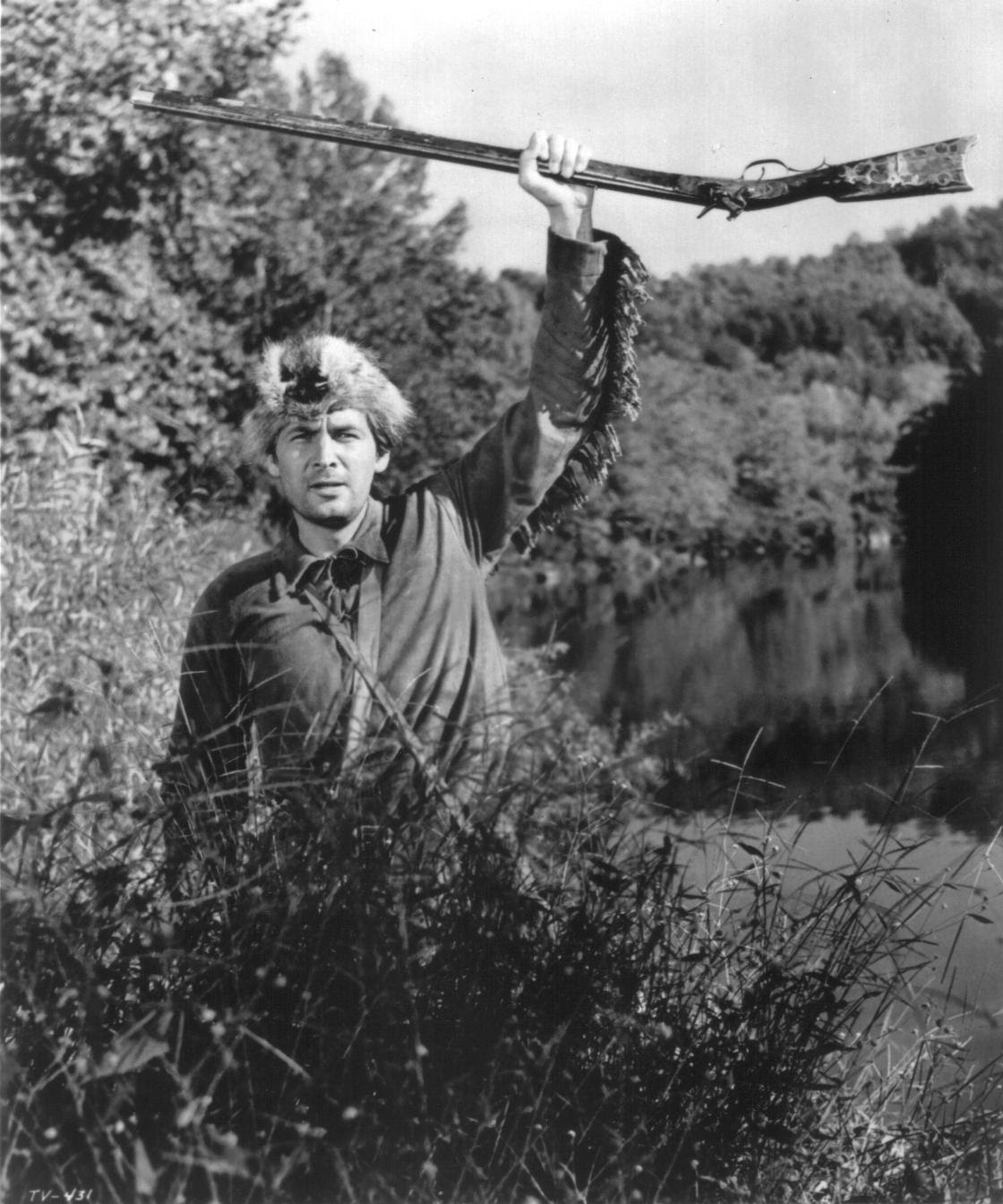
the TV show. It was based on the life
and legends of an early 19th century American folk hero, Davy
Crockett. But so far they didn’t have
anyone to play Crockett.
In
Them! Fess Parker played the pilot of a small
airplane who saw two winged giant queen ants flying along with him, and was
confined by officials, ostensibly as a psycho, but really because scientists
and the military (who at that point knew about the radiation-enlarged ants)
were on the lookout for such reports.
It’s a single scene, but Parker—tall, rangy, folksy and personable--
delivered lines and a performance with conviction and humor. Disney had found his frontier hero.
In his first leading role, Fess Parker was paired with
Hollywood veteran Buddy Ebsen (starting out as a loose-limbed dancer, he was cast
as the Tin Man in
The Wizard of Oz until the makeup made him seriously
ill) as Crockett’s companion, Georgie Russel.
It was a quick, low budget television production, except that Disney
paid extra to film it in Technicolor, as he did most of his shows, looking
forward to color TV. (Which is why Walt almost always appeared in a blue
suit—it filmed best for both black and white and for color.)
The first episode was shot on location in Tennessee, far
from Hollywood and its professional support, so both Parker and Ebsen had to do
most of their own stunts. Each day’s
filming was sent back to Disney Studios, so no one on the production knew how
it looked.
The Davy Crockett saga appeared in three hour-long
Disneyland shows, about a month apart, starting in December 1954. By the time the last episode aired in
February 1955, it was the biggest television phenomenon in history. Initial audience was estimated at 50
million. Disney repeated these episodes
in April and May. Eventually some 90
million viewers had watched it.
The Davy Crockett craze revved up with the show’s signature
song, “The Ballad of Davy Crockett,” one version of which was the number one
record in America for 13 straight weeks.
This Bill Hayes recording ended up as the #6 song of 1955, and two other
versions (by Fess Parker and by Tennessee Ernie Ford) were also in the year’s
top 30, logging in at #22 and #26 respectively.
Just two months after the third episode was first re-run, a
movie edited from the TV episodes opened in theatres—in color (paying off
Disney’s gamble earlier than even he could expect.) It, too, was a hit—perhaps some solace to the perplexed in
Hollywood: TV could subtract from their week-to-week audiences, but in certain
cases it could also multiply.
The Crockett craze is also measured—and remembered-- in
merchandise. Disney, who pioneered the
merchandizing of characters with Mickey Mouse in the 1930s, was up to the
challenge, but since Davy Crockett was an historical character who couldn’t be
trademarked, a lot of others got in on the goldrush. It’s estimated that in just the first six months after the first
episode, $100 million in merchandise was sold (and this was in an era in which
the average annual wage in the US was under $5,000.)
What was this all about?
Clearly, a lot of kids were already watching the
Disneyland TV
show, and their enthusiasm spread. As
part of that initial audience of postwar Baby Boom kids—our numbers swelling
with each passing year until peaking later in the mid-1950s—I’m guessing we
were first attracted to the Crockett charm.
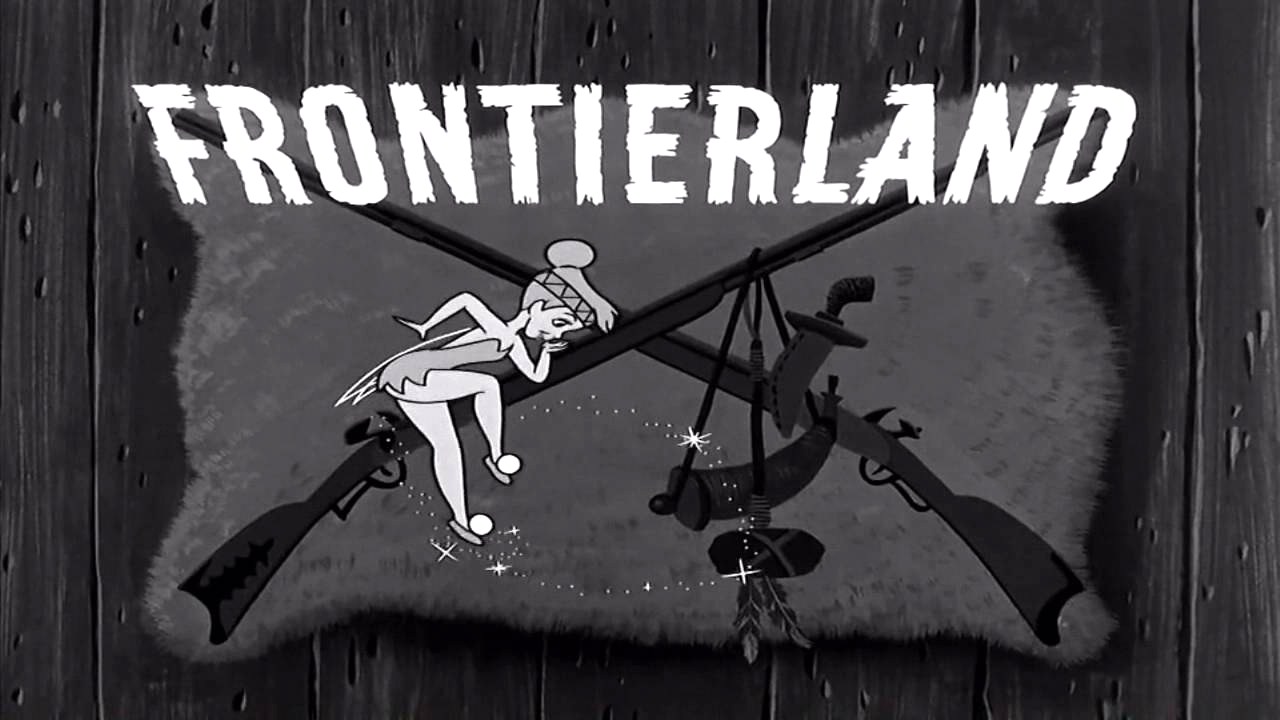
The first Crockett episode was also the first under the Frontierland
banner, which the narrator described as “tall tales and true from the legendary
past.” Crockett was a perfect blend of
“tall tales and true.” In our first
glimpse of him he emerges from some bushes where he had been experimenting on
subduing a bear by grinning at it. You
wouldn’t catch John Wayne trying something like that.
The rollicking theme tune added to that sense of fun. As
Davy, Fess Parker was a soft-spoken showman, who would soon prove to be an
unusual hero: after fighting a band of Creek Indians, he makes peace with them
in agreeing to guarantee they could live on their land. In the second episode he defends other
Indians from European-American predators, and storms out of Congress in protest
against a bill that broke the treaty he helped forge and took away Indian
land.
We’d seen buckskins and fringe jackets in westerns before,
but not coonskin caps, and they became the rage. We all had to have one, and I
recall it was one of my first lessons in socio-economics: I understood that it
was the rich kids who wore the caps completely made of fur. The rest of us got leather-topped (or more likely, leathery plastic) caps with some
fur on the sides, and something like a tail, probably the $1.95 version from a
five-and-ten.
 The only other merchandise I remember having was a set of
socks with Davy Crockett on them. The
best part was that they came in a package with a cardboard backing, upon which
was printed all the lyrics to the Ballad of Davy Crockett—I believe it was
twelve verses. (Eventually I got a record of the song—which I still have.
Not the cap, though.)
The only other merchandise I remember having was a set of
socks with Davy Crockett on them. The
best part was that they came in a package with a cardboard backing, upon which
was printed all the lyrics to the Ballad of Davy Crockett—I believe it was
twelve verses. (Eventually I got a record of the song—which I still have.
Not the cap, though.)
I also was bold enough to stride out of the bright sunshine
into the dim tiny showroom at the nearby Behner’s Garage on the West Newton
Road, and timidly request the photograph I’d read that American Motors
dealers (sponsors of Disneyland) were giving away. Much to my
surprise, they gave me one. It was Fess
Parker in full costume, with printed autograph: “When you’re out to win, try
the Crockett grin…your friend, Davy Crockett/Fess Parker.”
Otherwise, that spring and summer we had the woods across
the road in green Pennsylvania to play Davy Crockett, and we could improvise an
Alamo out of a suitably shaped garage roof down on Maryland Avenue. We wore our
caps and whatever else we had that looked leathery. We cradled our long sticks meant to be rifles across our chests
like Davy did. I did what I felt was a
fair imitation of Fess Parker, starting every thoughtful sentence with, “Wellp…”
It was easy to play Crockett partly because the violence on
the shows looked like play. There was
no blood and no bullet holes or visible knife wounds. The fights were more like the roughhouse and wrestling we did
anyway, and the “bang, you’re dead.” At
the same time, Disney’s stories always included death and its consequences,
however gently.
At some point in our
play we would likely sing the song:
Born on a mountaintop in Tennessee
Greenest state in the land of the free
Raised in the woods so's he knew every tree
Kilt him a b'ar when he was only three-
-Davy Davy Crockett
King of the Wild Frontier
And so we inducted ourselves into a ritual of fantasy,
history and grace. We’d seen Davy at
the helpless cause of the Alamo, in the final act of going down fighting. Then
the next year there were two more episodes, billed as “legends” about Davy
Crockett, and the spectre of idealistic death was overcome by living on in
story, in myth that could encompass our own invented adventures.
Live-action adventures on Disneyland—particularly under the
Frontierland banner that ranged over 18th and 19th
century American history—gradually increased in number until they dominated the
hours in the late 1950s. This nicely
paralleled my growing out of the prime age for animated fantasy and into live
action interests.
I remember three characters in particular. In fifth and sixth grades I developed a keen
interest in the American Revolution and the early formation of the United
States. This may have started in
school—my fifth grade history textbook was titled “Builders of Our Country”—but
it was given impetus, as well as flesh and blood, by Disney’s
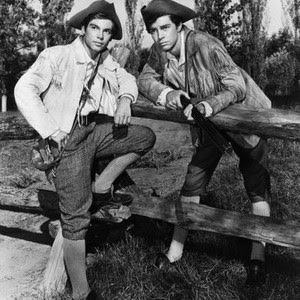
Johnny Tremain.
Disney adapted Esther Forbes’ novel Johnny Tremain,
about a young apprentice silversmith in colonial Boston, beginning just before
protest against Britain’s “taxation without representation” that quickly led to
the Revolutionary War. Tremain
interacted with real historical figures, including Paul Revere, Samuel Adams
and James Otis, and the real events of the Boston Tea Party, and the battles of
Lexington and Concord.
Disney made a movie for theatres from the book, and
previewed it on a Disneyland episode in May 1957 called “The Liberty
Story.” Disney made insightful use of
footage of his film version of Robin Hood, because the King John opposed
by the mythical Robin Hood was the same King John who was forced to sign the
Magna Carta, renowned as the first acknowledgement of rights that led centuries
later to the Bill of Rights in the U.S. Constitution.
But the centerpiece of the episode was Johnny becoming
acquainted with the Sons of Liberty, and participating in the Boston Tea
Party. I couldn’t wait to see the
movie, and I didn’t have to wait long—I saw it in a theatre (in color) that
summer. Then I saw it again in November
1958, when it was presented in two parts on Disneyland.
I was taken with the story of Johnny’s silversmithing
accident that burned his hand, rendering it useless for awhile, but other parts
of the story were less compelling than the talk about the reasons for
independence, and especially the thrilling parts, augmented as usual by catchy
tunes and rousing musical staging:
It’s a tall old tree and a strong old tree—
And we are the sons, yes we are the sons
The Sons of Liberty…
My enthusiasm went as far as acquiring a Johnny Tremain tricorner hat, and paying closer attention to the founding
documents. In sixth grade I was
especially taken with the Declaration of Independence. I saw a facsimile of Thomas Jefferson’s
first draft in a text book, and copied it out in my notebook, trying as best I
could to imitate Jefferson’s handwriting.
Later I acquired (was given or more likely sent away for) fake yellowed
parchment copies of the Declaration, Preamble and Bill of Rights, and for good
measure the Gettysburg Address, and tacked them all on my bedroom wall. By the time I was in high school I knew
these texts pretty well.
The second figure was Elfago Baca, a character at the center
of ten one-hour stories in the 6
th and 7
th seasons, from
October 1958 (when the show’s name had changed to
Walt Disney Presents)
to March 1960, the longest series within the series. There was a real Elfago Baca, a Mexican American lawman and
lawyer in New Mexico and Texas in the late 19
th century, and at
least some of the stories (especially the first few) were based on historical
accounts. The Disney Elfago Baca was more clearly a hero, and a champion of
Mexican Americans and minorities in general.
He was one of the few Latino (or Hispanic or Latinx) TV
heroes, though not the first—not even the first that Disney produced. He was preceded by the Cisco Kid and by
Disney’s Zorro, for example.
Zorro
was the only other television series Walt Disney made, besides this anthology
series and the Mickey Mouse Club. He introduced it on
Disneyland’s
fourth anniversary show, and it ran from October 1957 to the summer of
1959. We watched this series, too. This was so much our Zorro that when its
popularity brought the 1940 Tyrone Power flick,
The Mark of Zorro, back
to one of our Saturday matinees, I’m afraid it was laughed off the screen. For one thing, his “Z” was way too sloppy.
Though Guy Williams (Zorro) and Robert Loggia (Elfago Baca)
both had Italian parents, Loggia (in his first major role) effectively played
Baca as a hero who emerged from the Mexican American community.
Because he survived an onslaught of gunfire while besieged
in a crumbling sod house, Baca got the reputation as indestructible. The inevitable Disney theme song emphasized
the “nine lives” aspect as it played with the Spanish names Elfago El Gato (the
cat.)
I was drawn to Loggia as Elfago Baca partly because although
he was slim he used cat-like quickness to his advantage. I was a skinny kid, and my
self-consciousness increased with age (by this time I was 11 and 12), so Baca
was a kind of model.
But he was a model also in other ways. In the Disney version, as a lawyer he
champions the rule of law over violence, and the principle of equal justice
under the law. This extends not only to
his Mexican American community but to, for example, the Anglo settlers who
arrive to farm in what was until then cattle country.
They are called Mustangers, apparently poor whites from the
Blue Ridge Mountains. They are the
subject of violence by cattle ranchers and prejudice in town, where they are
derided and prevented from buying goods they need. It doesn’t take a lot of imagination to see the mid-1950s
parallels to the Freedom Riders, sit-ins and children attacked for going to
schools because of their race.
Veteran TV writer Maurice Tombragel, who wrote for most of
the westerns I watched in the early to mid 1950s, provided some startling
dialogue towards the end of the story.
Fearing the fate of their lawyer, Elfago Baca, and the sheriff in
confrontation with the ranchers who burned their farms, the Mustangers and
their wagons are occupying the main street of the town, and preventing anyone
from trading at the general store.
The storekeeper (played by DeForrest Kelly) appeals to the
Mustanger elder. “It’s not right to
make innocent people suffer,” he says, meaning his usual customers.
“Those who think themselves better than others are not
innocent,” the elder says.
“But you don’t understand,” the storekeeper pleads. “I was forced to do what I did.”
“Cowards are even less innocent than hypocrites.”
Good thing only children were watching. A political statement like that could get
you blacklisted.
The third figure was another character from the
Revolutionary War, but this time a real person: Francis Marion, known as the
Swamp Fox.
Though no battles in
that war were fought near where I lived (as were several in the preceding,
so-called French and Indian War), that period was important in the history of
my hometown. The city of Greensburg was
named after Revolutionary War General Nathaniel Greene. Though he’d never been there, several
notable town fathers had been officers serving in his command. So this added a certain texture to my
interest.
General Francis Marion was also under Greene’s command later
in the war, but his fame was established in the swamps of South Carolina as
Colonel Marion, leading a band of irregulars on guerilla missions.
Disney dramatized him as the Robin Hood of the American
Revolution, and the catchy theme song emphasizes that, even stealing a line
from the ITV Robin Hood series:
Swamp Fox, Swamp Fox, tail in his hat
Nobody knows where they Swamp Fox at.
Swamp Fox, Swamp Fox, hiding in the glen,
He runs away to fight again.
Leslie Neilson played the Swamp Fox in eight episodes: two
in October 1959, four in January 1960 (taking up the entire month of shows),
and two in January 1961.
By the late 1950s, Disney’s live action TV shows were not
only giving new talent the spotlight, they were employing some of the best
character actors in Hollywood, as well as experienced film directors, writers
and cinematographers. Television
provided these Hollywood veterans with something movies couldn’t anymore: regular
work, and growing audiences.
So long-time Hollywood western director Harry Keller
directed the Swamp Fox shows, which were written by Lewis R. Foster, a veteran
writer who began with Laurel and Hardy silents and later contributed to the
famous Jimmy Stewart feature Mr. Smith Goes To Washington.
There were many movie veterans in the cast, and some
relative newcomers, like star Leslie Neilsen (fresh from playing the intrepid
captain of the first cinema starship in Forbidden Planet), and actors
Patrick Macnee (star of the 1960s British spy spoof series The Avengers)
and Slim Pickens (Doctor Strangelove.)
 |
| Beverly Garland, Brian Keith in Elfago Baca |
Appearing in Elfago Baca were such future movie and TV stars
as James Coburn, Brian Keith and the aforementioned Doctor McCoy. 1950s sci-fi scream queen, Beverly Garland,
got to act a different kind of role. By
then at least some of Hollywood knew it couldn’t beat TV, so it was hurriedly
joining it.
By the time Leslie Neilsen was riding across the screen, I
was in eighth and ninth grades, and too old to be playing Swamp Fox with
neighborhood friends. (We mostly played baseball and football, until we drifted
apart, caught in the pressure-cookers of separate high schools.) It was also
near the end of my regularly watching the Disney show. I don’t recognize many
episodes after 1960, though I recall the teasers for the Fred MacMurray movie
comedy, The Absent-Minded Professor.
Disney used many of the same story techniques in his live
action films as he had in his animations, particularly the use of established
characters, music and catchy songs, and the mood of fantasy. His stories about storybook characters
easily edged into his treatment of actual historical figures. Some if not most historians will suggest
that the real Davy Crockett or Elfago Baca or Francis Marion were not so
unambiguously admirable as the Disney versions, but the emphasis in Disney was
on the story as a model.
But if the live action stories of Frontierland used fact to
augment fantasy, Disney Studios made use of the tools of fantasy to illuminate
fact (or at least educated conjecture) in episodes under the banner of
Adventureland and Tomorrowland. These
will be the subject of my third and final Disney installment.
That installment will also include thoughts on Disney,
television and reading. This might be
especially appropriate as we try to deal with another alleged barrier to the
pace and concentration of reading, represented by social media and the
Internet.






.jpg)


.jpg)