Tuesday, March 07, 2006


Brecht in 1935 Posted by Picasa
Mother Courage and Her Children is a kind of tragedy, but The Caucasian Chalk Circle is classically a comedy, with a happy ending. Of course it still have biting irony concerning class and politics, and some unfortunate events.

The basic story: In the midst of a palace coup, the infant prince is left behind, then rescued---reluctantly at first—by the young peasant woman, Grusha. She is pursued by soldiers, in the dangerous landscape of shifting allegiances. Eventually the old rulers return, the governor’s wife wants the baby back, so Grusha is again pursued, and this time is caught.

Then the matter is put before a court, with the genially corrupt, former revolutionary Azdak presiding as judge. He eventually invokes the “chalk circle” test, in which the two women contending for the baby— the now devoted Grusha and the child’s ‘birth mother,’ the governor’s wife—struggle to pull the child outside the circle on their side. Though Grusha loses the struggle, because she won’t endanger the child, she wins the baby, for precisely that reason. She is finally reunited with her soldier lover, so a Shakespearian marriage is not far off to cap the comedy.

The two pivotal characters are Grusha and Azdak. Brecht’s stay in America is reflected in at least one way. In the notes to this play, Brecht writes, “In the English language there is an American term, ‘sucker,’ and this is exactly what Grusha is being when she takes over the child.” He tries to explain what the word means but there is no German equivalent, which probably suggests the concept was new to him in America.

Eric Bentley takes up this theme in a 1966 essay on this play. “To give way to the promptings of nature, to natural sympathy, to the natural love of the Good, is to be a Sucker. America invented that expressive word, and America’s most articulate comedian, W.C. Fields, called one of his films, Never Give a Sucker An Even Break. In The Caucasian Chalk Circle, a sucker gets an even break."

Azdak is as a character in the “fool” or trickster tradition, especially as preserved in folk tales of clever animals who sometimes triumph, but also sometimes subvert themselves with arrogance, gluttony, greed and too much cleverness. He is a kind of rogue, but he rises to the occasion in Grusha’s case.

Though the play is lighter than “Mother Courage,” it is also suffused with irony and social consciousness, this time more directly concentrated on class. But like Charles Dickens, who also wrote to champion the downtrodden, Brecht spares no class, high or low, in his exposure of hypocrisy, meanness and selfishness. He does so with comedy (as folk stories do) and irony, but never simply as a joke. A peasant in "Mother Courage" is willing to die rather than give information that would allow the sleeping children in town to be slaughtered, when the soldiers threaten her bull and cows, she relents. This is ironic and funny, an apparent comment on character, yet deeply tragic, because it’s tragically true: without livestock, the entire family might starve.

The local "Chalk Circle" production was a project for freshmen and sophomores at North Coast Prep, ranging in age from 13 to l6 (including several foreign exchange students.) More than thirty actors and musicians participated, with music composed and played by students Greg Moore and Izzy Samuels.

Director and teacher Jean Bazemore said her students responded to this play's humor and core message-- --“that there are good people who take risks and make difficult choices in difficult times. They love it. The opportunity to meet characters who make courageous choices is really appealing to them.”

Though the players were young, this was not an ordinary high school production. Theatre is a core subject at North Coast Prep, and everyone involved lives up to their membership in the Young Actors Guild ensemble: they take theatre and learning about it seriously, and work together and support each other every day.

Plus they have Jean Bazemore, a talented and visionary director who directed at HSU and elsewhere for many years. Also the set and lighting design of Gerald Beck, always breathtaking in their simplicity, elegance and appropriateness, providing these young actors with an environment that both expresses and guides them. Neither of them approaches their productions as anything less than a professional effort, and their seriousness is palpable in the discipline of the actors.

But the production still has an educational function, and part of it is to provide for as much participation as possible. Even with so many roles, some are double-cast. The Chalk Circle is quite a challenge, but added to that, it was performed in the large Van Duzer theatre over 4 consecutive nights, with two additional morning performances for other schools. (Residents of a local homeless shelter were also guests at one performance.) Double-casting in the main roles probably helped, and so does youth, but it was still a daunting schedule.

I saw it on opening night, when the cast was still getting their legs under them, though by the second half they were proceeding with more confidence and less self-consciousness. Chisa Hughes as Grusha (she alternated with Fiona Ryder) and Bo Banducci as Azdak (alternating with Isaiah Cooper) did very well in their key roles, and made sure everything they said and did was clear, with defined actions and strong stage voices.

Hughes has an impressive singing voice, though she only got to sing one song the night I saw her perform (many of the play's songs weree spoken.) Banducci has the physical ease and fluidity of a natural performer, plus a vocal quality that is not only clear but inherently interesting, like Peter Coyote’s voice, which invites and commands attention. I look forward to seeing both of them (as well as others in the cast) develop their skills to play nuance and control pace.

While not as powerful or focused as the fall production of Antigone and St. Joan by North Coast Prep’s juniors and seniors, at least when I saw it, this “Chalk Circle” was still a good night of theatre for local audiences, especially as an introduction to Brecht. I wish I could have seen it again later in the run, for I felt that this group would learn a great deal in a few days. What especially interested me was that none of these very young actors had any visible problem playing Brecht. Chisa Hughes was an appropriately sympathetic Grusha, and Bo Banducci was an appropriately ironic Azdak.

For all of Brecht’s influential theories, his plays are filled with drama and emotion, as well as irony and dark laughter (be it gallows humor or black humor, or “Brechtian” humor.) Eric Bentley said that when he taught Brecht, he didn’t start with Brecht’s theories but with his poems. (The North Coast Prep program included a great one.) Perhaps it’s even enough to start with his plays.

“The plays of so socially conscious a playwright as Brecht, who was dedicated to the task of showing his fellow human beings that the world must be changed through social action, also contain powerful poetic metaphors of human emotion,” wrote Martin Esslin, in the final pages of his book, An Anatomy of Drama. “Mother Courage pulling her cart, Gruscha in The Caucasian Chalk Circle crossing the swaying bridge over the ravine to save the child…these are poetic images of human resilence, tenderness and sensuality...”

Thursday, February 09, 2006


Post-Super Bowl celebration downtown Pittsburgh.
Photo:Pittsburgh Post Gazette. All others
on this page from AP Posted by Picasa
Here We Go Steelers

They weren't exactly the Boston Red Sox, but close. The 2005/06 Pittsburgh Steelers did what no NFL team had ever done: just when it looked they weren't even going to make the playoffs, they won eight straight games, including three playoff games and the Super Bowl, to become NFL champions.

So for the first time since the four championships of the 1970s, the Steelers were world famous. At least at the highest level, for there are Steelers fans all over the world. Over a billion people worldwide watched them win on Sunday. Except for the final episode of M*A*S*H (back when there were but 3 networks), more people in the U.S. watched this Super Bowl than any other program in history. Seattle has fans abroad, in Japan and other parts of Asia in particular. But you have to believe that most of the global interest was in the Steelers.

This team was unique: with veteran leadership (Jerome Bettis, beloved by teammates and Pittsburgh fans), uniquely talented young plays (Ben Roethislberger, the youngest quarterback to win a Super Bowl; defensive wizard Troy Palamalu) and players on both sides of the ball in the prime of their careers (like wide receivers Hines Ward and A. Randle-el.)

They didn't play their best game, the stars did not all shine, but they won as a team, because they play for the team: and so many made an outstanding play at just the right time.

The Pittsburgh community loves them for their involvement and general good citizenship, starting at the top (owner Dan Rooney, coach Bill Cowher).

I grew up nearby, I lived in the city, and even though I haven't been back in a few years, I read the Pittsburgh news sites and keep in touch as best I can. The rest is there for all to see.

Here are a few photos from the last incredible week, leading up to, during and after the Super Bowl. There are more photos on my Dreaming Up Daily site, here and here.

And commentaries here and here.

To celebrate this week, here's part of an essay on what the Steelers mean to Pittsburgh that I posted on Daily Kos, is included just below the photo scrapbook. There are other Steelers pieces on this blog, here and here (origin of the Terrible Towel.)

UPDATE: Here's some of the Pittsburgh Post-Gazette account of the celebration downtown:

"You have supported us, win, lose or draw. So I want to say, from the bottom of my heart, thank you for all the memories you've given me, and the way you've taken me in." -- Jerome Bettis

Clinging to lampposts, perched in trees, hanging out of office windows, crowded on parking decks and standing 15-deep in places along the 1.2-mile parade route from Mellon Arena to Gateway Center were people of every size, age and color, a true Steeler Nation that had endured 26 years of dashed dreams and unfulfilled prayers while waiting to celebrate the championship. And celebrate they did.

Grandmothers unashamedly screamed out players' names as the 58-vehicle motorcade took two hours to navigate the route, led by the flag-bearing Pittsburgh Paramedic Honor Guard.
Grown men wearing the jerseys of their favorite players gaped and shouted as individual Steelers slowly moved past in the backs of chauffeured cars and vans.

"This is a rebirth," yelled Elaine Hatton, 59, of Center Township in Beaver County, who said she had attended all four previous Steelers Super Bowl parades. This one was different, though. "We died and were resurrected," she said.

Also in the parade were Gladys and Johnnie Bettis, parents of just-retired Steelers running back Jerome Bettis. "This is just the most incredible moment of my life," Mrs. Bettis said. "We knew winning the Super Bowl was big, but this is even bigger. I had no idea there were this many people in Pittsburgh."

Although many school districts warned that they would not grant excused absences to students attending the parade, thousands of youngsters apparently came down with black-and-gold flu.

Whitehall residents Kevin Walsh, his wife, Nancy, and three school-age children -- Shane, 16, Samantha, 14, and Cassidy, 9 -- waved from a sidewalk. "I got my three kids out of school because I think this is an important family event," he said. "I don't think missing one day of school is going to matter that much when they're going to have memories of this for a lifetime."


fan rally downtown a few days before the Super Bowl Posted by Picasa

Game time, Pittsburgh...(that's father and daughter) Posted by Picasa

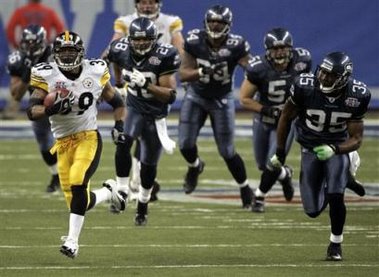
The run that won it-- Posted by Picasa

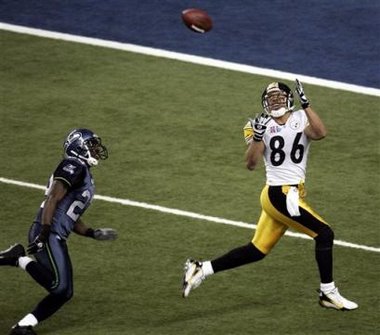
The catch that sealed it Posted by Picasa

Pittsburgh South Side--game over Posted by Picasa

How sweet it is! Posted by Picasa

MVP Hines Ward and the Bus Posted by Picasa

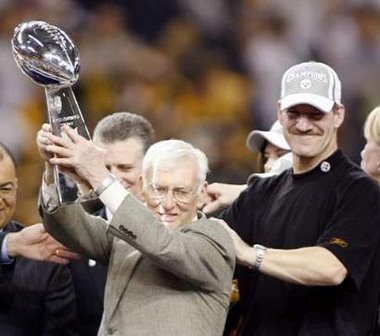
Dan Rooney, Bill Cowher in Detroit Posted by Picasa

Big Ben dawntawn--250,000 fans
greeted the Steelers' ceremonial return Posted by Picasa

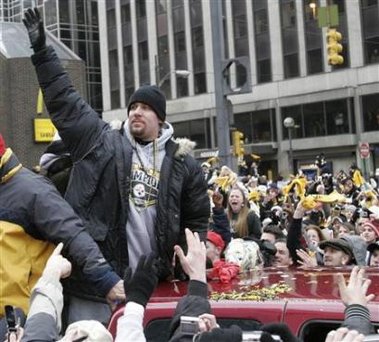
Steelers tackle Max Starks at victory parade downtown Pittsburgh. Posted by Picasa
Pittsburgh on Super Sunday

On a normal Sunday in football season, business in the Pittsburgh area is slow, especially during the game. It's a favorite time for non-fans to go to the mostly empty supermarket, though the game will be blaring from the p.a.

On this Super Bowl Sunday, come six pm eastern time, the city will just stop. The malls will actually close. It's not just that fewer customers are likely. Too many employees want to be watching the game.

The Pittsburgh Public Theatre has cancelled its Sunday night performance of "The Importance of Being Earnest." The Importance of Being Steelers takes precedence. The city's science and art museums, and even the zoo, are running programs and contests related to the Steelers. The game is the cultural event. The Super Bowl is the city's theatre.

By the time the game ends, portions of downtown Pittsburgh will be closed to motorized traffic. A big safe space is being created for the hoped-for celebration. There hasn't been one for a Super Bowl victory since 1980.

City of Champions

The Steelers grabbed the heart of Pittsburgh with its great teams of the 70s, at precisely the same time that the steel mills, the source of the city's identity, were shutting down.

The mills were failing, the Steelers were succeeding, preaching the blue collar ethic. Steel City became Steelers City.

From then until about 1990, the city of Pittsburgh lost half of its population. But people who left in this industrial diaspora retained close connections, if not also to family and the area itself, then certainly to the Steelers. That's why the Steelers can go to any NFL city in North America and play to Steelers fans in the stands.

The Steelers were and are part of everything else that is and was Pittsburgh.

Family: you see it in the photos in the Pittsburgh Post-Gazette online Steelers Nation collection: seven young cousins in Big Ben No. 7 jerseys, a father and his infant daughter in Steelers shirts, etc.

Community: you see it in the joyful faces in other P-G photos of the rally downtown last week. The Steelers organization and individuals within it, including the players, are out in the community and doing for the community.

Tradition: Pittsburgh doesn't much like people who put on airs, but they do appreciate special individuals. Sports heroes and TV news personalities, once Pittsburgh takes them into their hearts, they are royalty forever. Wherever they came from, many of them stay. Pittsburgh respects loyalty and commitment to the city, and they give loyalty back.

Football is itself a tradition there. Western Pennsylvania was once ruled by King Coal, but in recent decades by King Football. Friday nights are high school football, and everyone in town goes to the games. Why not? They've seen Danny Marino, Jim Kelly, Joe Montana, Bill Cowher, and many more later NFL stars. Saturday is college football, Pitt and Penn State and smaller colleges. Since the 70s, Sunday is Steelers time. It doesn't matter what church you go to or don't go to. Sunday at 1, everyone worships at the same shrine.

All of these, and more, come together in the Steelers. They are important to this city and its people as a symbol of winning with their values, but also of persevering in adversity.

The Steelers represent the heart of Pittsburgh, the will to keep on going in tough times, a celebration of its unique character, and the moments of victory that come into almost every life, at least once in awhile. It's very important to know how to celebrate them. This year, Pittsburgh and the Steelers did pretty well on all counts.

Friday, January 20, 2006


The 2005 Darcy and Lizzie.
A Tale of Two Prides

I caught up with the 2005 film version of Jane Austen's Pride and Prejudice at a subrun double feature, presumably before it disappears until DVDed. I loved Austen's novels, which combine great wit and writing, social and character study, with strong stories. Pride and Prejudice has emerged as the story that touches people most deeply and has the most powerful cultural hold of nearly mythic intensity. Inevitably this kind of story is retold with different emphases at different times, by different storytellers.

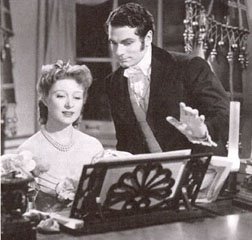
The 1940 version starring Lawrence Olivier and Greer Garson is one of my favorite movies, for a combination of reasons I can't fully describe. I used to watch it every New Year's Eve. But by now it's clear that like many Shakespeare plays, this Austen novel is too large to be contained in a single movie, and the best a movie can do is emphasize aspects of it with a fresh vision. If done with enough heart and skill, Austen is only enhanced.

This version is a very different kind of movie based on the same novel, and it works for me. Moreover, some of the differences are fascinating in themselves. The 1940 version was located in the Hollywood set version of elegant England. There was much talk, as in the novel, of the modesty of the Bennet household, and the financial necessity for the sisters to marry well. While the Bennet family was portrayed as a kind of small town American brood, and Olivier's Darcy and his friends were obviously snobbish, the material difference was hard to see.

Not so in the new version. Here the vast gulf between the country folk and the landed gentry with their estates and houses in London is very obvious. The Bennet household includes pigs and geese and other farm animals, and fields to cultivate and harvest---so there's a sense of how it actually supports itself, missing from the 1940 version. Mr. Bennet (Donald Sutherland) is a working farmer, as well as the father who retreats to his ramshackle study for the shelter of books. We see a direct contrast in the uniformed servant with his precise walk to the exact center of the room to announce visitors to the Darcy crowd, and the shamble by the Bennet's hayseed hired man to announce theirs.

The country folk are mostly unattractive but excited at their noisy, sweaty ball, but they all freeze into a gaping frieze at the appearance of the two gentlemen, Mr. Bingley (Simon Wood) and Mr. Darcy ( Matthew Macfadyen), and the snobbishly cynical Caroline Bingley (Kelly Reilly). In this scene, director Joe Wright also makes Darcy appear about a foot taller than everyone else in the room. After gaping and bowing at them like the freaks they are in this place, the locals then ignore them as they go back to their enthusiastic dancing.

Late in the film, Wright ups the ante even more by presenting Darcy's estate as huge and utterly magnificent. In an almost modern touch, he follows the heroine Elizabeth Bennet's refusal of Darcy's offer of marriage with a scene of her touring the palace that could have been hers, on a kind of great homes tour.

text continues after photo


Greer Garson and Lawrence Olivier in the 1940 version. Posted by Picasa
This visualization of the class differences is the most obvious difference and contribution of this film. This makes the material stakes clearer---the Bennet girls don't need to marry into the gentry (they aren't golddiggers or social climbers), but just to stay at their present level, since their home and lands will go to a male relative according to the law.

But there are also noteworthy and interesting differences in narrative and character shadings. Though keeping some of Austen's references to the ages of the sisters (the oldest in her late 20s), this film portrays them as younger, especially Keira Knightley as the heroine, Lizzie Bennet. She is bright and witty, but no Greer Garson. She seems more like a mischevious 20 at the oldest, trembling with girlish energy. This actually works to make plausible the idea that she's considered the less attractive sister. When she wrinkles up her nose, giggles and ducks her head, having fun with her sisters, it's plausible that her beauty, so evident in repose, would go unnoticed.

Her "more beautiful" older sister, Jane (Rosamund Pike) is evidently beautiful, and is seen much more in repose. What makes this film work immediately is how perfectly matched she is with Simon Wood's Mr. Bingley. Both are shy, modest and sincere, and seem out of place except with each other. They are also both blond. It takes the dark-haired Elizabeth and dark-haired Darcy awhile to discover the secret of their darkness: though both are flawed with pride and prejudice, they share a fierce moral rectitude not at all incompatible with physically passionate natures.

As for this film's take on Darcy, I endorse Stephen Holden's description in his New York Times review (this time in contrast not with Olivier but Colin Firth's portrayal on the 1990s miniseries):Mr. Firth might have been far more dashing, but Mr. Macfadyen's portrayal of the character as a shy, awkward suitor whose seeming arrogance camouflages insecurity and deep sensitivity is more realistic. Isolated by his wealth, ethical high-mindedness and fierce critical intelligence, Mr. Darcy is as stubborn in his idealism as Elizabeth is in hers. The disparity between his diffidence and her forthrightness makes the lovers' failure to connect more than a delaying tactic to keep the story churning forward; it's a touching tale of misread signals.

This is the first major film by director Joe Wright, and it has the studied innocence and ambition of a first movie. Somebody will no doubt study the significance of the many appearances of flame, and how they dissolve into something else. There are plenty of references to other films, especially Olivier's more famous romantic role in Wuthering Heights. But he has so much visual energy (with a score that suggests Philip Glass playing appropriate bits from classical composers, and I say that with admiration) that the symbolism of Lizzie whirling on a swing when she's confused is not at all heavy-handed because it's so deftly done and neat to look at.

He and the screenplay author (Deborah Moggach) also deliver some subtle scenes and dialogue that illuminate minor characters, in place of the delightful movie caricatures,of 1940, particularly Sutherland's Mr. Bennet. Brenda Blethyn's shrill and frenetic Mrs. Bennet also gets some sympathetic moments, when she makes clear what she's up against, that the necessity of five daughters marrying decently if not exceptionally well is no joke, in an age and place that could condemn them to the most degrading circumstances Dickens presented. (This couldn't have been an easy script to write either, as the story seems to defy Hollywood's preferred simple three-act structure.)

In the last part of the movie, realism is perhaps stretched to accomodate the romance, but the film has earned some indulgence. Perhaps someday I'll put together my own double feature of these two Prides and Prejudices. Maybe next New Year's Eve.

Sunday, January 15, 2006

How to Avoid A Heart Attack (and still be a Steelers fan)

You have to be a veteran Steeler---a veteran Steeler fan, that is--to appreciate the emotions of today's game. For three quarters plus, the Pittsburgh Steelers (#6 seed in the playoffs) dominated the Indianapolis Colts (#1 seed), the odds-on favorite to win the Super Bowl. No #6 seed had ever done this.

For veterans, it was like thirty years had melted away, and the Steel Curtain, Terry Bradshaw and Franco Harris were invincible. Those were the days when every schoolkid wore a Steelers jacket, and waitresses would ask you if you wanted your coffee black or gold.

Then after another defensive crush, the Steelers were on the goal line for the touchdown that would put the game away, when their Mr. Automatic, the Bus, did the unthinkable and fumbled the ball. The Colts nearly scored a touchdown after recovering it.

This then was a different echo---the talented teams since the 70s, brilliant one week, and yet in playoff games or even once in the Super Bowl, able to snatch defeat from the jaws of victory in terrible ways, and I'm not talking about towels.Then the Pittsburgh working class self-contempt would kick in, and it would all seem like fate. The little guy never gets a break.

Needless to say, the bonehead plays of the 70s teams were all forgotten, because that now mythic team won so many crucial games, more by the skin of their teeth than most memories would allow.

Anyway, the Steelers survived that scare today when the Colts improbably missed a field goal to tie, and the team that deserved to win did. (In addition to the fumble, the Steelers had a late interception taken away on an inexplicably bad call on replay; they'd lost a couple of other crucial calls as well.) It was the biggest upset of the weekend, although Denver over New England was close.

I taped the game so I could watch it without commercials, and only if it turned out to be worth watching. I didn't even see the score until it was over. I've paid my emotional roller coaster dues. But I'm sure this would have been impossible if I still lived in Pittsburgh (I'm in CA now, where the traditional afternoon games are in the morning, which makes it easier to resist watching them) and my first thought when I read about the fourth quarter, was that I hoped my old friend Clayton didn't have a heart attack.

Tuesday, November 01, 2005


Monday Night Football in Pittsburgh--ceremony of the Terrible Towel Posted by Picasa
The Terrible Towel, an Origin Story

I missed the first half of the Steelers game on Monday Night Football, but even so I doubt I would have seen much of the pre-game ceremonies at Heinz Field honoring the broadcaster Myron Cope on his official retirement.

Although Cope was a local TV and radio broadcaster and civic character, he had an impact on anybody who has seen a Pittsburgh Steelers game in the past thirty years. Because Myron Cope invented The Terrible Towel.

Pittsburgh is a no-nonsense town, where a certain degree of dumb behavior is tolerated but not a lot of non-conformity. That's left up to people like Myron Cope. Pittsburgh projects all its latent rebelliousness on sportscasters and other media figures. Pittsburgh also sticks with what it likes. The news anchors who stay in town for five years usually stay in town for forty years.

Myron Cope is a gravelly voiced character with a strange accent even for Pittsburgh. Pittsburgh has a solid Jewish community that gravitates towards the professions and the arts, and Myron Cope was an anomaly there as well.

Unless you've been in outer space for awhile, you probably know that Pittsburgh loves sports, and above all, the Steelers. The game Monday was on Halloween, but every game is dress-up time in Pittsburgh. There are no rules, except black and gold.

About thirty years ago, on his "Speaking of Sports" segment on TV, Myron Cope waved the first Terrible Towel. Inspired by the babuskas (scarves) that were a staple for working class women in western Pennsylvania, which he said he saw at games (though even then Steelers tickets were pricey and hard to come by, some steelworkers still managed to hang onto their reserved seats, even passing them down through the family), he told his audience, keyed up before a playoff game, that they should bring gold towels to the game and wave them to encourage the Steelers defense and place a hex on the opposing offense.

I saw that broadcast, and I have to tell you I thought he was nuts (not for the first time), and that it was a gimmick that would never work.

Thirty years later the stands are a sea of Terrible Towels, and the Post Gazette is interviewing a guy who is wearing a coat sewn by his grandmother made out of Terrible Towels, which have long since become "official" items that hardcore fans buy, along with their other Steelers gear. That's three generations of Terrible Towel wavers, and counting.

That's tradition. That's show biz. That's Pittsburgh.

Wednesday, September 14, 2005


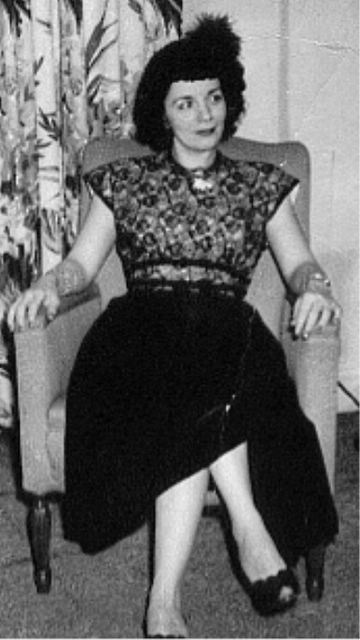
Flora Severini Kowinski, probably in the late 1940s after her marriage, but perhaps earlier. Posted by Picasa

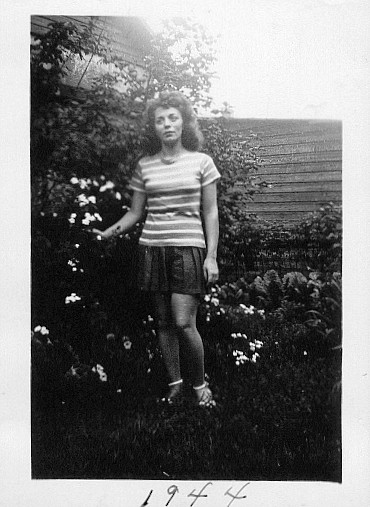
Flora in the back yard of her parent's home in Youngwood, PA in 1944, about a year before she married my father. Posted by Picasa

Billy (me) and Flora (my mother) in 1948.  Posted by Picasa

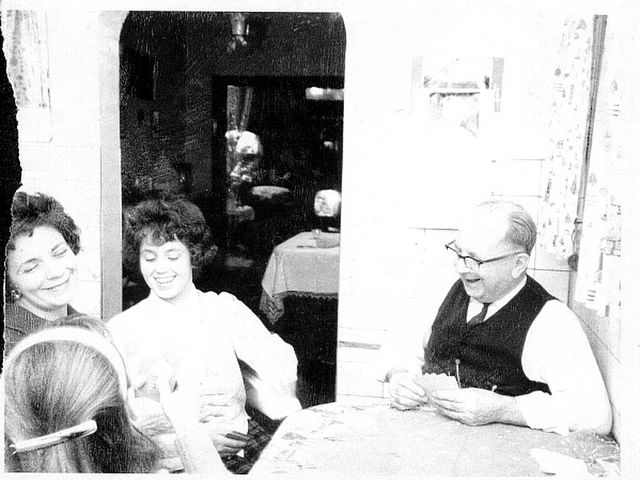
The kitchen of the house in Youngwood where my mother grew up. That's her father, my sister Kathy to his right, and my mother, smiling at my sister Debbie. I'm taking the picture. Posted by Picasa
Flora

She would have been eighty-five yesterday, on September 13. My mother was born in Italy in 1920, named after the character in a novel my grandmother was reading. My grandmother was one of the few women in her village in the Abruzzi mountains who could read---she read letters for people, and wrote their replies. It's how she found out that another woman had her eye on Ignazio Severini, her intended, who was away at war in the north, the Great War. But that's another story.

Flora came to America with her mother when she was four, and met her father, who'd left Manopello to work in Pittsburgh as a tailor when she was an infant. She grew up in Youngwood, PA, a small western PA railroad town about six miles from the bigger town of Greensburg, where she lived most of her life. She married my father in August 1945. I was born at the end of June in 1946.

So I'm less than a year shy of 60 myself, an age my mother didn't reach. (Her mother, however, passed 85; I took her a birthday cake and lit 85 candles on it---it was in the kitchen in the photo above. It makes quite a fire.) Flora died in 1974, after surviving her cancer past the supposed 5 year safety mark.

So you can look at the picture here of the dreamy-eyed young woman in 1944, who doesn't know that at 24 she's got but 30 years left to live. She's lived almost half her life.

After me, two daughters, Kathy in 1950, Debbie in 1954. She knew one granddaughter, Kathy's daughter Christina ; if she'd lived just another decade, she would have known two more: Debbie's daughters, Sarah and Megan.

I can't say when exactly I developed the perspective that would have allowed me to talk with my mother without so much of the freight of parent-child relationship expectations and habits of feeling and thought. But it wasn't fully developed when she was alive. I was smart about some things at 28, and clueless about a lot more. The father-son thing is more complicated, and I may never have gotten out of that dynamic. But I often feel I could have learned a lot and had a better relationship with my mother over these many years.

Not that we had a bad relationship. There just wasn't much perspective in it, at least on my part. So I wonder what it would have been like, to be able to talk to my mother when I was 40 or 50, or now. Apart from what it would bring to the present, there would be a lot of past to talk about, now that I'm more deeply interested in the past, having acquired quite a bit of it.

I would have liked to light 85 candles on her cake. As I say, it makes quite a fire.

Friday, August 05, 2005


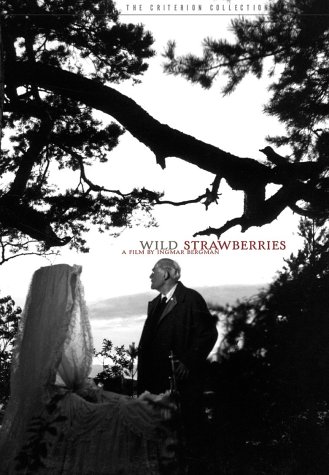
"Wild Strawberries" Posted by Picasa
Wild Strawberries and Bergman at 80

Though he was a young man when he started making films, Ingmar Bergman has always been the trademark filmmaker of mortality. The epic battle on the beach with the devil in "The '>Seventh Seal" is famous enough to be routinely parodied, and the intense beauty of "'>Cries and Whispers" is framed in pain and fatality. Even the child in "'>Through A Glass Darkly" seems to be glimpsing mortal lessons as the adults around him pose and flail on their train trip to the end of the line.

But oddly perhaps, his early film concerning an old man is among his most gentle. The Criterion Collection '>DVD of "Wild Strawberries" happens also to include an extended interview with Bergman when he had just passed the age of that film's protagonist. He was a sharp and physically graceful 80 (and this was in 1998. He's gone back to making films since---his latest release was 2003.) Both the movie and the interview turn out to be rather encouraging.

Ingmar Bergman's films were the closest thing to holy writ I can remember from my college days through the early 70s, when I was editing Janet Maslin's review of "Cries and Whispers" for the Boston Phoenix. Because I hadn't seen a "foreign film" until college, I was learning the cinematic vocabulary and syntax by osmosis mostly, and mostly by watching the French New Wave filmmakers, the Italian giants, and Bergman. Partly because the experience of watching Bergman had been conditioned by his reputation as being deep and depressing, I've seldom gone back to those films. But curiosity for what Bergman can tell me now, inspired me to take a look at this DVD of "Wild Strawberries."

"Wild Strawberries" is the story of an eminent 79 year old doctor, who lives alone with his housekeeper, on the day he is to receive a prestigious honorary degree in another city. It opens with a dream and contains several reveries---the kind of thing that became pretty standard on television dramas like "Thirty-something," but was disconcerting in 1957. Even with all these copycats, these scenes in this movie retain their power: they are economical, with not an extra image or a sound, and elegant.

The doctor wakes up from his unusual dream and suddenly decides instead of taking a plane as was planned, he will drive to the ceremony. Then his daughter-in-law appears; she's been staying with him, and asks to come along, since he'll be driving to the city where she lives. Why is she going back to her husband now? Why has she left?

They pick up three young hitchhikers---including the radiant young Bibi Anderssen, who reminds him of a lost love (who she also plays in his reverie). They get involved in a traffic accident, a bickering couple piles into the car, and suddenly we're in another prototype: the road movie.

The group covers a lot of ground in the past and present, and so does the movie, in a compact ninety minutes. But then, it was his 19th film. And he wasn't half done.) In one of his essays on Bergman, Truffaut comments that Bergman's women are "infinitely subtle," while his men "are mere conventions." This film is a rarity in focusing on a male character, played by Victor Sjostrom, a giant of Swedish theater and film who was all but forgotten by the time this movie was made, and he came out of retirement to act in it. Bergman said he did more than that---he took it over. The character was originally based (at least physically) on his father, but the film ceased being Bergman's, he said, and became Sjostrom's. If he meant through the subtle performance and the life he brought to the character, then it was all to the good.

This is an enjoyable film to watch, and there's extra enjoyment in watching it again with the commentary of film scholar Peter Cowie. His commentary has just the right mixture of preparation and spontaneity (as when he comments on how good a particular scene looks on DVD---the film is in glorious black and white.) When Cowie explains how precious the summers are in Sweden, just a few weeks of warmth and sunshine, it helps you feel the power of the imagery, in the professor's recollections of family summers by the sea.

Bergman directing Liv Ullman in "Saraband" 2003 Posted by Picasa
In a greenish patterned shirt with a black sweater vest, Bergman at 80 sat and talked easily with a friend and fellow filmmaker and writer, Jorn Donner, for a 90 minute interview made for Swedish television, and available here for the first time here on this DVD. He spoke about the relationship of his life to his work, elements of his autobiography (especially his exile from Sweden when he felt he was being persecuted by authorities on tax evasion charges that later proved groundless), and about his work habits, and his beliefs.

Harsh parental discipline and formality felt as coldness dominated Bergman's experience of his childhood, as he portrayed in several films. While his older brother survived it through aggressive assertion, he said, he survived it by adopting a persona pleasing to his parents, and by being a liar. "I lied freely and without restraint."

It's remarkably close to what Truffaut said about his own childhood survival technique. "I see life as very hard; I believe one should have a very simple, very crude and very strong moral system," Truffaut said in an interview. " One should say, 'yes, yes,' and do exactly as one pleases. This is why there can't be any direct violence in my films. Already in The 400 Blows, Antoine is a child who never rebels openly. His moral system is more subtle than that. Like me, Antoine is against violence because it signifies confrontation. Violence is replaced by escape, not escape from what is essential, but escape in order to achieve the essential. "

Bergman affirms his continuing relationship to his childhood, which is central to "Wild Strawberries." "The whole of my creativity is finally childish," he says, at age 80. "I can, in a second, go back to my childhood...Anything I've done that's of value [is] a dialogue with my childhood."

It was his fear of death, strongest in his teen years, that led him to write and film "The Seventh Seal," released just before "Wild Strawberries," and which he says exorcised that particular demon.

Bergman writes by hand, on the same kind of thick square yellow pads that were standard issue for screenwriters in Sweden when he started in 1942, but which in later years he had to have specially made. His only concession to change is that he's switched from a fountain pen to a ball-point.

He always begins with notes in workbooks. He fills many for each project. "Workbooks are fun!" By the time he starts writing the script itself, he knows exactly what he wants to do. "It goes quickly, but it's so boring. It goes quickly because it's so boring...The workbooks are the creative process. Scripts are the process of putting it in order." He adheres to a strict schedule: three hours a day, in 45 minute sessions with 15 minute breaks. This is as much ritual as routine, he agrees.

Bergman's tumultuous private life, which got translated into his domestic relationship films, is well known. But his last long marriage of 24 years ended with his wife's death, and he says he survived only by strictly scheduling his day, and finally by forcing himself to write. He has lived alone since, and though he enjoys talking on the telephone, he is comfortable in solitude.

He says he's not religious but is aware of "the possibilities of bigger patterns...I have a lot of ideas about other realities that surround me. I also have the feeling that we're part of an infinitely large pattern, that we never analyze [or] understand. You can feel that sometimes."

But he is sternly practical about his work, which at the time of his interview was mostly as a theatre director (though he'd had a decade of writing many scripts and stories.) Fame doesn't help the next day's work, he says, when he goes to rehearsals with the same prayer: "Let this day go well. Let it be meaningful and let it be alive."

"Let the work be meaningful for those who do it and then also be alive, so that it will live its own life. That's the only thing I'm afraid of---that suddenly the ability to make something living and moving will be taken away from me. I'll no longer know how to do it."

He has that anxiety every time, "the anxiety that what I do won't live." There are many stone dead days, he says, it's the most terrible thing there is. "This is my recurring nightmare."

"I'm a craftsman, and I make a good product. I make a product to be used. I'll be terribly upset if nobody wants to use my product."

The documentary ends with Bergman walking down the beach of his island of Faro, where he lives and the only place he writes. With his walking stick carried more like a sword, his stride is quick and sure, fluid, elegant and full of authority, like Peter O'Toole playing Lawrence or the King of England.

The television movie he made at age 86 is called "Saraband." Some say it's one of his best.

Friday, July 22, 2005


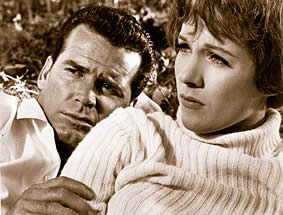
James Garner, Julie Andrews in "The Americanization of Emily"  Posted by Picasa
DVD FRIDAY: The Americanization of Emily

Of all the movies he made, James Garner said this was his favorite. So did Julie Andrews, his co-star. So did James Coburn, who had a more prominent role in many other films than he did in this one.

It was producer Martin Ransohoff's favorite of his movies, and Arthur Hiller's favorite of the many movies he directed. Script writer Paddy Chayevsky, who wrote several classics and an Academy Award winner, said this was one of his two favorite films.

Yet until the newly released DVD, '>The Americanization of Emily had all but disappeared. Perhaps because in many ways it was unclassifiable: a romantic comedy, a war movie, an anti-war movie, or as director Hiller insists, "an anti-the-glorification-of-war movie."

Made in 1964 in black and white, it may have become overshadowed by other more famous films of that era and that style on something like that theme: "Dr. Strangelove," perhaps even "Fail-Safe." Set in World War II, it was more distanced and with a dryer wit than the anti-war war novel of that time, "Catch-22."

But the new DVD reveals its considerable virtues: the eloquent and characteristically Chayevsky script, the fine, committed performances by Garner, Andrews, Coburn and Melvyn Douglas, among others. The rhythms and fluid camera of Arthur Hiller's first major directing job, that managed to make a single movie out of a unique combination of elements.

Hiller's DVD commentary is a great bonus. Producer Ransohoff bought the William Bradford Huie novel of the same title, which was a pretty straightforward romance about an English girl falling in love with an American soldier stationed in England during World War II. At some point he got the idea of asking Chayevsky to write it. Chayevsky flew from New York to Hollywood, and told Ransohoff it really wasn't for him. But on his flight back he thought of a way to do it, and called Ransohoff, explained this very different approach of making the hero a selfish sensualist who despises wartime heroics, but winds up being an accidental hero himself. For some reason, Ransohoff liked it.

Various directors and actors were attached to the project---at one point William Holden was the lead, and James Garner was to play his friend. When Holden dropped out, Garner moved up, and Coburn was added (possibly at the behest of Garner.)
Julie Andrews hadn't done a major movie yet---but she went from this one directly to making "Mary Poppins."

Arthur Hiller was a young and untested director, who got the job when better known directors turned it down. He was pretty nervy for a kid. He insisted on making it in black and white, which the studio opposed, since color films made more money. He set up shots so they were done without cuts, so the studio could slice and dice his film.

Later, Hiller recounts, Ted Turner bought the TV rights and colorized it. Hiller protested loud and long, as did other directors and film buffs. Eventually Turner listened and not only stopped colorizing, he joined Hiller in leading new efforts to preserve America's movie heritage by restoring and preserving endangered films.

This is a quirky, sometimes unsettling but often surprising and always entertaining movie, a real DVD treasure for your weekend viewing.

Friday, July 15, 2005


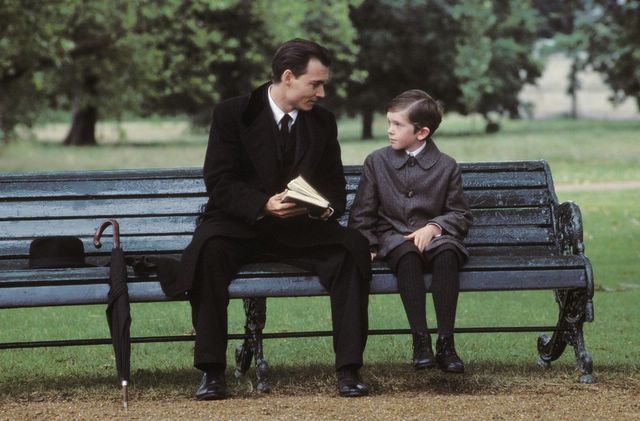
Before Charlie, Finding Neverland Posted by Picasa
Films About Theatre: A DVD Friday Collection

Supplementing what has become a nightly diet of "Six Feet Under" episodes on DVD (an HBO series we've never seen because we didn't have HBO even when we had cable---we're into the second season now), I rented two movies that just got off the "new" list, and by complete accident they both were films about the theatre (the first two in the list below).

Films about theatre happen to form one of my favorite subgenres, and so these two new additions inspire the first of the DVD Friday lists of personal favorites. All are available on DVD unless otherwise noted, though I haven't yet seen them all on DVD.

1. '>BEING JULIA (2004) From a novel by Somerset Magham, scripted by playwright and theatre explainer Ronald Harwood, this story about a famous but aging actress in London of 1938 is smart, stylish, funny and moving. Annette Benning deserved the Oscar she was robbed of, for this film, and the other performances---from Jeremy Irons to the wonderful Juliet Stevenson to relative newcomers, at least to film in America---are uniformly excellent. And in dealing with youthful ambition (somewhat reminiscent of "All About Eve"-see below) the resolution is wonderfully theatrical.

2. '>FINDING NEVERLAND (2004) Johnny Depp plays J.M Barrie in London as the nineteenth century becomes the 20th, when after his latest play fails he meets the woman and her children who will inspire "Peter Pan," which as a play has a double role in the film's climax. Depp and Kate Winslet are outstanding, supported by perfectly pitched performances from Julie Christie and Dustin Hoffman. The whole cast is very good, especially the boys who play the boys (proving that not all the talented English children are in the Harry Potter movies.)

The story is based on real events, though of course reality was much messier. Barrie did in fact write his play for the sons of a woman he met, and did later become guardian to the boys. But the woman's husband was still alive (he's conveniently dead in the movie), and for all the faith in the power of magic Barrie may have instilled in them, the boys came to bad ends: one killed in World War I, one drowned in the embrace of another man, and Peter killed himself, although he was an adult by then, and in publishing, but may have felt himself a prisoner of Barrie's imaginings.

Still, it's a very good movie, if a little saccarine about imagination and unimaginative about faith. But it has lovely touches about theatre, especially the relationships between actors, trying to support each other in the midst of not having a clue why they are dressed up as a pirate and a dog. The DVD extras are great---the deleted scenes are as good as any in the movie, and the outtakes are funny. There's one of Johnny Depp doing a scene in the park with a dog that decides to take a dump, and Depp talks to him in the same Scottish accent he employs for Barrie.

All About Eve Posted by Picasa
3. '>STAGE DOOR (1937). The struggling actor or most often actress who makes good is a staple of dozens of filmed stories: musicals, comedies, dramas and melodramas. This is one of the best, which seems to incorporate all possibilities, veering from screwball comedy to melodrama and ending up a fairly authentic kind of human comedy. It's singular for the appearance of star actresses who seldom worked together, so it's a treat to see Katharine Hepburn trade barbs with Ginger Rogers, while Eve Arden, Lucille Ball and Ann Miller wisecrack around them. It's also one of the better roles for Gail Patrick, who is seldom remembered now but excelled at playing cold manipulative women with just a touch of vulnerability.

Though the film tends to sag where the story does, Gregory La Cava keeps it moving briskly most of the time. (La Cava, a very busy silent movie actor who became a prodigious producer and director, had just directed his best film, the classic comedy '>My Man Godfrey---with Gail Patrick's most memorable performance. "Stage Door" was not only about the theatre, it started out as a play, by the formidable team of Edna Ferber and George S. Kaufman.

4.'>ALL ABOUT EVE (1950) The dark side of "Stage Door" and one of the best written movies of all time (written and directed by Joseph L. Mankiewicz). Famous as a Bette Davis vehicle, it also features outstanding performances by George Sanders, Gary Merill, Celeste Holm and Anne Baxter. Also an early appearance by Marilyn Monroe.

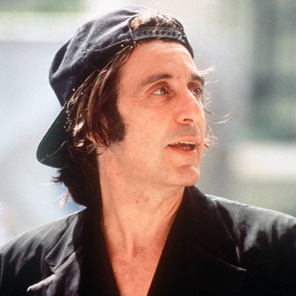
Looking for Richard in Manhattan Posted by Picasa
5. '>SHAKESPEARE IN LOVE (1998). Then there are films about the actual process of creating theatre, the heart of this subgenre. This has to be the ultimate, not just because it's a romantic comedy about the young William Shakespeare writing Romeo and Juliet, with lively and passionate performances by Joseph Fiennes and Gwyneth Paltrow (both their best, in my opinion) and some scenes stolen with relish by Dame Judi Dench.

The script by Marc Norman and Tom Stoppard incorporates so many delicious theatrical in-jokes (for instance, actors always describe the play as being about their character. "What's Romeo and Juliet about?" "Well, it's about this nurse...") as well as delightful bits of throwaway anachronisms. But the real heart of it is the performance of the play that leads to one gorgeous climax after another. Not only is the movie within the play within the movie handled brilliantly, but we get an idea of why Elizabethan theatre was so vital: the audience crowded against the stage, totally involved in every moment. Yes, and it's a mystery.

There isn't anything I don't like about this movie, from the color to the music. I'm looking forward to seeing the Collector's Series DVD with the commentaries, but it looks like I'll have to buy it---the ones for rent here are the extraless version.

6. A MIDWINTER'S TALE (1995) (also known as IN THE BLEAK MIDWINTER). In contrast to "Shakespeare in Love" which won the Best Picture Oscar, this little movie about a ragtag group of actors in England putting on a Christmas production of "Hamlet" is unknown. But it is also funny, with lots of heart and lots of theatre texture. It was written and directed by Kenneth Branagh around the time he directed his huge "Hamlet" for the screen. It's filled with affection, yet Michael Maloney's frenetic performance as the neurotic director and star of the play keeps it moving at a fast pace. And unlike Albert Finney's A MAN OF NO IMPORTANCE (1994), another excellent film about a provincial man who tries to find himself through theatre, this one has a theatrically happy ending.

7. '>LOOKING FOR RICHARD(1996). This is a completely unique film---part documentary in which Al Pacino lead us through his attempts to understand Shakespeare's Richard III and mount a production, culminating in Pacino and his cast performing key scenes of the play. It is entertaining from start to finish, thanks to Pacino's personality, the skillful editing of the cinema verite glimpses of the process (Pacino also directed) and the other oddballs he gathers in, and the power, complexity and ultimately the simplicity of Shakespeare's play. Much of it was shot in Manhattan, so it's Shakespeare with true contemporary grit. It ends up being a great film about the process of actors "finding" the play and performing what they find.

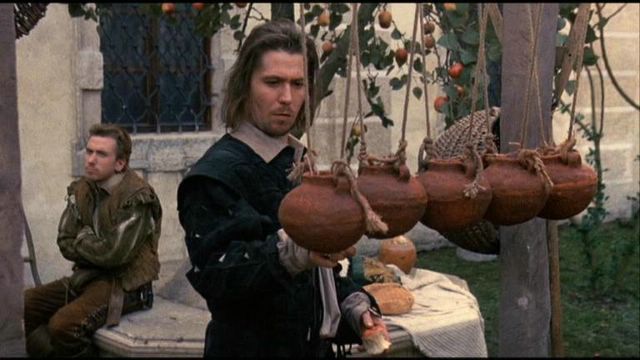
Tim Roth, Gary Oldman, R& G in perpetual immobility Posted by Picasa