Tuesday, May 24, 2022

TV and Me: Disney (Part 3) Tomorrowland and Other Adventures

     
TV and I grew up together.  This is our story.  Ninth in a series.


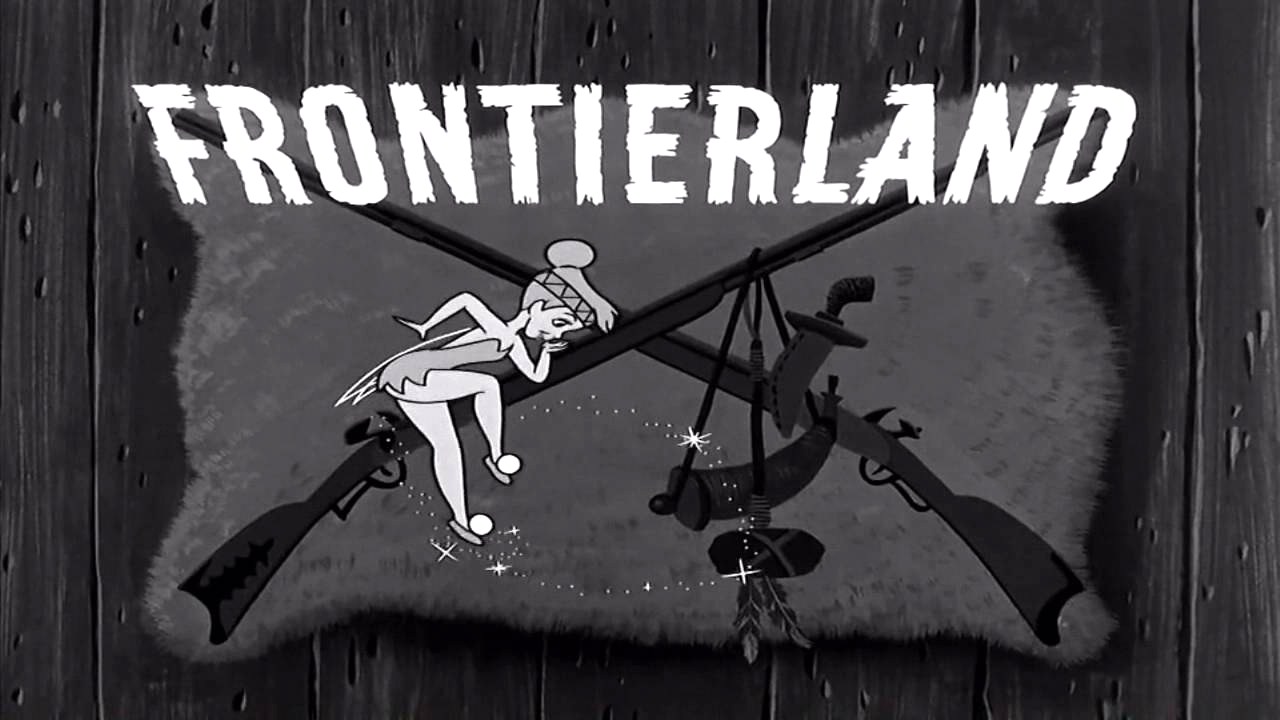
From its first episode in the fall of 1954, the Disneyland TV hour began with a review of the four "lands" before a story from one of them would then begin.  First that season there was Fantasyland, then Adventureland. They alternated for awhile. By December and the eighth episode, there was Frontierland, and so Davy Crockett was in that mix.  But for weeks and months and-- it seemed like-- years, I waited and waited for the one I most wanted: Tomorrowland.

The waiting was so excruciating for my eight year old self, that even now I am surprised to see that the first Tomorrowland episode wasn't years later, but towards the end of that first season: Episode 20, on March 9, 1955.  But it was worth the wait.  It was called "Man in Space."

Consider that date: early 1955.  The first rocket mission to space, the launch of the Soviet satellite Sputnik that shocked America, didn't happen until the fall of 1957, nearly three years later.  The U.S., which had planned to launch a satellite during the International Geophysical Year of 1957, didn't accomplish this feat until 1958.  The Soviet Union launched the first human into Earth orbit in 1961; later that year, the U.S. sent its first man into space in a sub-orbital flight.  The first American to attain orbit around the Earth was in 1962. The first American mission that landed the first humans on the moon was in 1969.

Well into the 1950s, including that year of 1955, Americans generally just did not take space flight seriously. Though there were development programs ongoing, the predominant American attitude was that space travel was a nutty idea, a juvenile fantasy of no practical value, even if possible. That was also the belief of many in government, and many if not most scientists.  Space travel was science fiction.

But what is accomplished must first be imagined, as William Blake suggested. According to a 2014 book called Marketing the Moon: The Selling of the Apollo Lunar Program by David Meerman Scott and Richard Jerek, science fiction was in fact the origin of what became reality. 
  
This book quotes astronomical artist Ron Miller: "Astronautics is unique among all the sciences because it owes its origins to an art form.  Long before engineers and scientists took the possibility of spaceflight seriously, virtually all of its aspects were explored first in art and literature..." 

"No one had considered the actual technological problems of space flight until Jules Verne," Miller asserted.  Thanks mostly to weapons of war in the 20th century, scientists and engineers became deeply interested in such technological problems.  But the goal of manned space flight for the purpose of exploration was still for dreamers.

This book singles out some of the ways that the public was prepared for space even before the reality began in 1957 with the launch of Sputnik I.  Science fiction, including the movies like Forbidden Planet, and those Saturday morning TV shows in the early 1950s that as a space-happy kid I remember vividly-- Space Patrol,Tom Corbett, Space Cadet; Rocky Jones, Space Ranger--and even earlier, Captain Video.
But the authors emphasize the speculations and artistic rendering in the popular press in the 1950s (notably Collier's Magazine) and particularly the three programs produced by Walt Disney for the Disneyland anthology, beginning with "Man in Space."  They made humans in space dramatic and real.

Walt Disney took space travel seriously, and he was personally involved in the research for these television programs.  The company had a bit of experience in this kind of program, having produced "Victory Through Air Power," a 1942 film based on a book advocating a large role for air power in the Second World War, said to have influenced Winston Churchill, and through him, FDR.  But these first Tomorrowland programs were ahead of their time.  They discussed details of rocketry, space and space travel that most Americans didn't know, let alone children in the audience.

"Man in Space" was first of the series.  The second, "Man on the Moon" was also broadcast before even a human-made satellite reached space. (And even though "man" was used in its general sense as "human," it pretty much was just men in space.  Though the Russians sent the first woman into orbit in 1963, none of the US programs before the shuttle had women astronauts.) Only the third program in the series, "Mars and Beyond," was broadcast after Sputnik, by about two months. 

These were first seen in black and white, but shot in color.  Color illustrations were lifted for books and magazine articles derived from the show.

"Man in Space" is introduced by Walt Disney, who refers to space as "the new frontier" (JFK's campaign slogan in 1960 became The New Frontier.)  The bulk of the program is a history of rocketry and animated illustrations of possible perils of humans in space, introducing the concept of weightlessness.  Rocketry pioneer Willy Ley is among those who explain various concepts.

Some of the rocketry history sacrifices accuracy for the sake of humor, but explanations of how rockets work and what might happen in space were new to most of the audience (and helped govern depictions of space trips in subsequent fiction films.)  I remember in particular that this is where I learned Newton's third law of motion, which as this film put it means "for every action there is an equal and opposite reaction."  It's still just about all the physics I know.

The history of rocketry leads up to the V-2, the last German rocket built in World War II.  Several blast-offs of this handsome rocket are shown, probably launches of some of the 75 V-2s the US captured and brought back after the war to essentially create the US rocket program.  Many launches of a dazzling array of differently designed rockets follow.

Not once however is it mentioned that the V-2 was used to rain terror and destruction down on England.  V-2 meant "Vengeance Weapon 2" in retaliation for the Allied bombing of Berlin and other population centers.  Over 3,000 were launched against Allied targets, mostly London, killing some 9,000 people.  Some 12,000 people died in forced labor camps making these rockets.

The London Blitz at first consisted of attack by German bombers, and then the V-1 rockets.  Londoners learned to listen for the V-1 and for the silence after the motors cut out--if it sounded close, then the bomb was apt to fall nearby.  The V-2 however was supersonic--the bomb arrived before the sound was heard, making it even more of a terror weapon.  In Thomas Pynchon's famous novel Gravity's Rainbow set in London during the V-2 bombing, one of the characters seems to have precognition of where the bombs will land.

The reason for the Disney film's silence on the uses of the V-2 was simple: Wernher von Braun was one of the chief German scientists who designed the V-2 but by 1955 he was working for the US government on its military rocket programs.  And about a half hour into the 49 minutes of this show, he appeared on camera to explain his design for the rocket that would take Americans into space.

Then comes the animated first launch of man into space.  The style is hyper-realistic, with a dramatic music score.  It's only about ten minutes but for me it was unforgettable. (The illustration at the top is from this segment.)

 In broad outlines, it does predict what the launches were like that I later watched avidly on TV, from the first Explorer satellite launch through Mercury and Apollo manned launches.  But a lot of very big details were off.  Von Braun was way too ambitious--he has a four stage rocket topped by a winged aircraft to return the 6-man crew to this "isolated atoll in the Pacific."  The first Russian and US spaceflights were three stages and had crews of one.  US Gemini had two, and Apollo three. The Disney animation also made it a night launch, which was more dramatic, but there wasn't a US night launch until deep into the Apollo program.

Probably the funniest detail for those who watched the real launches is that the crew on the Disney program wasn't taken to the rocket until 20 minutes before launch.  Watching the real launches I recall those poor astronauts sitting strapped-in for hour after hour, through the long countdowns, through launch holds and scrubbed missions.

"Man in Space" was directed by Disney animator Ward Kimball, who also appeared as a kind of host (as he would at times in the following two programs.)  The voice-over narrator is Dick Tufeld, familiar from lots of Disney productions but also as the voice of the robot in Lost in Space (Danger Will Robinson!) on TV in the 60s (and later reprised on The Simpsons.)

"Man in the Moon" was first broadcast midway through the second season on December 28, 1955.  It starts with animation illustrating the human conception of the moon throughout history, narrated (as is the rest of the film) by Hans Conreid, a famous face as well as voice of the 50s and 60s, frequently in Disney productions.

From a fanciful history of stories the program moves onto the science.  It's unfortunately noticeable now how casually Walt Disney himself mentions that the universe is at least 4 billion years old.  A mention like that (though with a larger number) in the 2014 version of the Cosmos series was loudly attacked by fundamentalists, but in 1955 this caused no controversy.  In a program built on science, it was perfectly natural.

The basic astral mechanics and the then-current knowledge about the solar system is well told with animation of various kinds, though details like the number of moons of the outer planets are now far out of date.

Then von Braun appears again to talk about the process of a human voyage to the moon.  Again he's thinking very big, ultimately about a craft that carries ten.  But a major part of this process is the construction of a space station, as an embarkation point for the huge moon-bound craft.  The space station itself is immense--much larger than today's International Space Station.  And it is in the now classic shape of the wheel.

The circular space station with a hub in the center and spokes to the sides was already becoming a space travel icon, in science fiction novels like Arthur C. Clarke's Islands in the Sky, published in 1952 as part of the Winston series of juvenile s/f novels, or in films and TV shows like Rocky Jones, Space Ranger (1954), culminating in Kubrick's 2001: A Space Odyssey (1968.)

It's not surprising that von Braun would gravitate towards the space wheel, for according to Sam Moskowitz's s/f history Explorers of the Infinite, its first appearance was in a novel by German writer Kurd Lasswitz in 1897, which was republished many times well into the 1940s at least.  Several aspects of von Braun's design are descendants of concepts published by German scientist Hermann Oberth in 1923. An Austrian writer named Noordung and two German scientists named von Pirquet and Gail pioneered other ideas adapted into this design, including how the crew would live on the space station, all decades earlier. It's likely von Braun would have been aware of all of these as he worked on the German rocket program. To these concepts Von Braun added an atomic power plant.

The dramatization of the actual voyage from the station to the moon is the most elaborate of the series.  It involves animation but also models, and live actors and sets.  The models and sets are particularly interesting--the spacecraft are all white, while the interiors favor primary colors.  It's all surprisingly 1960s Trek-like.

The technology however is dated to the point of nostalgia.  The on-board computer for instance gives a new meaning to "dial-up."  There's a little drama aboard when a micro-meteor hits a fuel line and a space walk is necessary.  The craft doesn't attempt to land (as the first Apollo didn't) but does a single orbit.  There's a little s/f involved when it crosses the dark side of the moon and launches flares to reveal unusual surface features at right angles, perhaps suggesting built structures, but nothing is said about it and the moment passes.

Mars and Beyond was first broadcast on December 4, 1957.  It's narrated by Paul Frees, an actor who did a lot of voice-over work for many decades (he was everybody from the unseen millionaire on The Millionaire to Boris Badenov on Rocky and Bullwinkle.)  His most prominent s/f appearance was in the 1953 George Pal version of  The War of the Worlds: he was the first of the narrators, and played a role as a radio announcer.  As this program begins he seems to be trying to sound like Orson Welles, but by the end he's using the portentous voice he employed when talking about Mars in The War of the Worlds.

This show begins with animation about human conceptions of the nature of the stars and the cosmos and life on other planets.  The concepts are often so weird that the animation gets wildly creative.  At times it seems very Cubist, as if Picasso is the strangest thing the animators could think of.  There are also suggestions of such later animations as Yellow Submarine.

To suggest the variety of possibilities for life on other planets, the show tells the story of Earth's own history, from carbon atoms to proteins to organic compounds in the primordial sea.  "Now with time as the main ingredient the evolution of life is inevitable."  Visually arresting enough for children, the script is surprisingly sophisticated and eloquent.  While the accompanying images sometimes go off on playful tangents, the narration is carefully scientific.  Again, it's sad to compare what was uncontroversial for a family audience in 1957 compared to the regressiveness of today.

The program's attention finally turns to Mars, and the question of whether humans could exist there--a question, the narration states, that arises because of human overpopulation and depletion of resources on Earth.  This is 1957!  (Which is getting close to the time that the correlation between fossil fuel burning, higher CO2 in the atmosphere and the warming of the global temperature is being determined.)

There's also the question of what kind of life could exist on Mars.  Some of the forms discussed are silicon based lifeforms, and creatures that eat through rock.   Years later, similar creatures would appear in one of Star Trek's best known stories.

There's talk of fuels and drives for the Mars spaceship. Someone with a firmer grasp of propulsion will have to check me but I think one they describe is the equivalent of the ion drive that also appears in science fiction.  In any case, the von Braun design is atomic-powered.  It has a big circular dish at the top and a kind of airplane-looking landing craft underneath.  

This is a much briefer depiction of a trip of a six ship convoy, beginning at the space station (which we've seen in animation being built) and ending with speculation as to what the craft will find on the surface (though a planet totally devoid of life isn't among the speculated possibilities).

  The "beyond" part is briefer still, as a flying saucer--apparently of advanced electro-magnetic drive to neutralize gravity--zips off towards the infinite, looking like the opening of Forbidden Planet (or perhaps the end of The Day the Earth Stood Still) with small saucers disappearing into the belly of a much larger mothership (This Island Earth to Close Encounters of the Third Kind.)

This is the spaciest of the series, with imagery that suggests some of the wilder parts of 2001 a decade later (which maybe why they didn't surprise me?)  It also has the most eloquent script.  Its description of the possible lifeforms on Mars is the most imaginative I've ever seen illustrated.  Think of what they could have done with the tools of today.

The function of this series at the time was to excite the imagination while showing through scientific explanation that these age-old dreams of exploring outer space, the moon and Mars were within the realm of possibility in the near future.  And as it turned out, with some modifications, some of them were.

Yet something about these programs apparently transcended their time, for they continued to play fairly often on the Disney Channel into the 21st century, long after most of their speculations became obsolete.  I was certainly thrilled by them when they first appeared.  Then I got to see the real thing--the first years of the U.S. space program, broadcast live on the commercial networks.

Adventureland

 Many of the early episodes of the Disneyland series were under the heading of Adventureland: “Nature’s own realm.”  Once again, Disney made liberal use of prior motion picture footage.  Along with his first forays into scripted live action in his company’s lean years after World War II, Disney experimented with a series of seven half-hour “True-Life Adventures” nature films, beginning in 1948.  He later ran these on Disneyland, accompanied by newer (and not always related) material.

 The first of these (“Seal Island”) comprised half of the third episode of Disneyland in 1954.  The 1950 “Beaver Valley” was half of episode 10, and 1951’s “Nature’s Half Acre” was half of episode 16 in February 1955.  The last short feature in 1953, on the Everglades, was seen in the second episode of the second season.

 After that, between 1953 and 1960, Disney made seven full-length nature films, and pieces of them appeared in the TV anthology—in later years, before they were released to theatres.

 On the plus side, Disney pioneered the use of time-lapse photography, which could show the entire lifecycle of plants or insects, and slow motion photography, which isolated delicate moments in the flight of bees and hummingbirds, for instance.

 But the Disney business was narrative, and the emphasis was often on conflict. Predators and prey, or male animals clashing in the mating season, had the action to keep viewers watching.  While it’s true that a lot of activity in the wild is along the theme of eating and being eaten, emphasis on predator/prey scenes also unfortunately supported the standard metaphor of nature as constant warfare, “survival of the fittest” in the grossest sense.  The more subtle elements of survival, such as cooperation, learning, sharing and negotiation, aren't fast enough to be considered watchable, although these films sometimes did patch together narratives out of less violent behaviors. Also unfortunately, like other nature films of the time, events were sometimes staged, using trained animals in artificial circumstances. 

I grew up climbing trees.  We weren't out in the country, but there was plenty of life around us--especially small creatures, from rabbits and squirrels on down. So even though these were far from my favorite episodes, I was sometimes fascinated, for the camera captured a lot of what I could not otherwise witness.  I don't recall specifics, but these probably contributed to my later interest in ecology.  For me, futuristic technology and space travel, and the importance of environment and the agency of all life on earth, were not contradictory interests or concerns. Tomorrowland and Adventureland coexisted, along with history (Frontierland) and Fantasyland. In these early days for me, they were all part of the world, as they remain. Perhaps in at least a partial way I have the Disneyland anthology to thank for that point of view.

  Disney, TV and Reading

 The rise of television in the lives of my Baby Boomer generation was accompanied by outcries from parental and religious groups, and decried by educators.  Congressional hearings were held on violence in programs with young audiences, and supposed vision experts were seriously concerned about the fate of our eyes.  Educators worried about addictive and mindless content seducing us from our homework, and were afraid the constant parade of imagery was ruining our capacity to read.

 They weren’t entirely wrong about some of that, especially about reading.  It would be another decade before Marshall McLuhan became famous for detailing how different television is from print. 

 Did TV images themselves discourage reading?  Probably to some extent. It was easier to be stimulated--to get revved up--by TV, regardless of content.  We read the moving images of TV at a faster rhythm that made slowing down to read words more difficult.  The time spent watching TV that previous generations may have spent reading was probably also a potent factor, as well as TV’s seductiveness.

 The Internet is known for slicing and dicing the contemporary attention span, but long before the first emoji there was television, charged with decimating our concentration.  I’ve always maintained that attention spans were shortened then, not so much by anything inherent in television, but by the bright distractions of television commercials.   Even in the 1950s, when there were fewer commercials and less of a TV hour devoted to them, and they were not so abruptly thrown in, they still distracted and disrupted attention to the narrative, with cumulative effects.

 Attention spans in childhood are already limited, however.  Perhaps I was slow on the uptake, but even though I was reading books from the library by the time I was 10, I was still having trouble stretching my attention through a long novel in high school.  There were of course books I couldn’t stop reading.  But some books stimulated me so much I couldn’t keep reading them, while others made me sleepy, or I just got lost, even if I was interested.

 Television was not alone in making books sometimes seem like a foreign country: exotic and beckoning perhaps, but confusing, hard to understand, and intimidating. So sometimes an entry point, or perhaps a bridge, was needed to get into the book and its reality. 

 Written stories, oral tales, are themselves bridges to many of Disney’s best-known animations.  But sometimes the Disney version encourages going back across that bridge to the source. 

For example, I knew the basic story of Alice in Wonderland before seeing the Disney version, though I was too young to read the Lewis Carroll book at that time.  Having some confidence from knowing the Disney version, I must have read it a few years later —all I can remember is coming to the end of it and the thrill of seeing that there was yet another Alice story to read, Through the Looking Glass.

 As I mentioned in the post previous to this one in this series, I probably had an interest in the American Revolution from reading about it, before I saw Disney’s Johnny Tremain.  But that story inspired further reading, probably including a stab at the source novel, Johnny Tremain by Esther Forbes, from the public library.  I don’t specifically recall reading it, though, and a more recent reading suggests why: the novel involves a much more complicated story, that goes on past the events in the movie.  I may not have had the attention span for all of it yet. 

Sometimes it took awhile before I was ready to walk over the bridge.  From Disney’s 20,000 Leagues Under the Sea, I knew the name of Jules Verne, and the success of that movie led to others made from Verne stories that I saw at Saturday matinees.  Actually reading Verne required yet another bridge: the Classics Illustrated comic books.  The first one I read was I believe the first one ever, the cover of which I remember vividly: it was From the Earth to the Moon. (It looks like a 1950s rocketship but it's actually more of a bullet.)

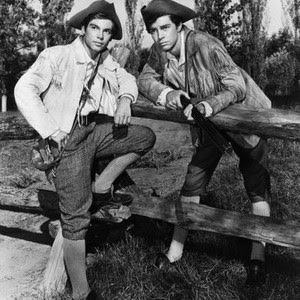
 The only Disney product I definitely remember leading directly to reading was not from the Disneyland anthology but another series.  I was a bit too old for the Mickey Mouse Club, but my younger sister Kathy watched it every afternoon, so I might see some of it in passing on the living room TV, still the only one in the house.  One day I noticed a filmed story beginning within the Mickey Mouse Club show, about two boy detectives, Frank and Joe Hardy.   

The story, called “The Mystery of the Applegate Treasure,” was based on the first novel in the Hardy Boys series, The Tower Treasure (though it also borrowed elements from #36: The Secret of Pirate Hill.)  The serial, starring Tim Considine and Tommy Kirk (both appeared in many other Disney stories) was broadcast in October 1956, every day for 19 episodes of fifteen minutes each. I was completely smitten.

 I asked my sister to alert me if there was another Hardy Boys story (there was and she did: “The Mystery of Ghost Farm” was broadcast in 12 segments the following year. It begins with the beginning of #2 of the novels, The House on the Cliffs, but quickly diverges.)

 Meanwhile, I discovered the Hardy Boys series of books, and hit the public library for whatever was available at the moment, for they had other readers.  These were the originals, the series that ran from 1927 into the 1950s, before the first 38 were revised (and many ruined) in 1959.  As library books they were without the dust jackets but with the brown letters on light brown covers.  I wrote about them in detail in my “History of My Reading” series.

  This bridge relationship of TV shows to books continued for the rest of my life so far.  Just a few years ago, when I undertook to read Charles Dickens Bleak House—all 875 paperback pages—I did so after having seen the 2005 BBC miniseries, and I borrowed the DVDs from the university library to watch after I’d read the appropriate chapters, to make sure I had the characters and action straight in my mind. 

 The theme of such bridges will recur in this series, which now moves on beyond shows for children to other 1950s TV forms, beginning with the variety show.

Thursday, May 12, 2022

TV and Me: Disney (Part 2) The Crockett Grin


 TV and I grew up together.  This is our story.  Eighth in a series.

Once he’d made several animated feature films, Walt Disney wanted to try live action features.  World War II intervened, but at the same time, unexpectedly gave him the impetus and means to make his first live action films immediately after the war.

 The financial success of Disney animated films depended on the addition of international audiences, particularly in Europe.  Once the war started, his movies couldn’t be shown in the battlefield that was western Europe, except in England, where they became a cherished relief from the war. But the British government impounded the profits until war’s end, and even then, Disney could spend that money only in the UK. 

Richard Todd, Glynis John in Rob Roy
So the Disney Studios used those funds to make their first live action films in England.  Just as his animated features mostly adapted well-known fairy tales and other existing stories, Disney chose classic British adventures for these movies.  His first was a live action version of Robert Louis Stevenson’s Treasure Island, released in 1950.  It was followed by The Story of Robin Hood (1952), and in 1953, The Sword and the Rose (an Arthurian era story about knights) and Rob Roy, the Highland Rogue.

 These theatrical films all were presented on Disneyland, as Disney’s anthology TV show was called in 1954. They were all divided into two hour-long shows (with Walt Disney providing historical and other background) on consecutive weeks.

  Treasure Island appeared in two parts in January 1955, during the show’s first season.  Robin Hood was  shown in the second season, during November 1955.  The following January (1956), The Sword and the Rose appeared under the original title of its source book, “When Knighthood Was In Flower.”  Rob Roy got the two successive episodes treatment that October, early in the third season.

 I remember Robin Hood the best. Richard Todd played Robin as a young energetic upstart (a yeoman rather than a noble.) This Disney movie has the distinction of being the only version of Robin Hood to have filmed in the actual Sherwood Forest.  I may have seen it before I saw the Richard Greene TV series.

 Knighthood and Rob Roy kind of blended into Robin Hood, since they also starred Richard Todd.  I remember his romantic interest in Knighthood, Glynis Johns –I’m now surprised to see she wasn’t Maid Marian. She was however, the female lead in Rob Roy. With her distinctive voice and gaze, she had a long career in British and Hollywood films. 

On the other hand, I didn’t take to Treasure Island.  I found Long John Silver (memorably played by Robert Newton) uncomfortably scary, especially in his relationship with Jim Hawkins, a boy more or less my age (Bobby Driscoll again.)  (For reference, I was eight when Disneyland went on the air in 1954.)

 With these modest successes accomplished, Disney began his first big budget Hollywood live action film, 20,000 Leagues Under the Sea, based on the novel by Jules Verne.  He assembled a Hollywood cast, though lesser stars who were also good actors: James Mason, Peter Lorre and the up-and-coming young Kirk Douglas.  Except for Douglas, the cast and production had a European flair, perhaps a transition from the English films.

It turned out to be a highly ambitious film, with Disney facing technical challenges as he did with his first animated features.  This one required underwater photography in only the second Cinemascope movie ever made.  Even the diving equipment necessitated technical innovations.  Disney built a live action studio for this movie, and with the special effects and location shoots, it quickly became the most expensive movie in Hollywood history to that time. 

 Financially stretched, the Disney Studios went all in to make this film a success with a massive ad campaign. Not by coincidence, scenes from 20,000 Leagues Under the Sea were the focal point for the seventh episode of the Disneyland TV show in December 1954, just weeks before the movie’s release.

 The most dramatic scene in the movie was a fight on the deck of the Nautilus submarine with a mammoth Giant Squid.  Fragments of it were featured in the TV hour.  I recall Walt Disney explaining on this show what a giant squid is, especially in contrast to an octopus; how it squirts ink, and how it may have been the source of perennial tales about sea serpents.

 Like most Disneyland episodes, this one was repeated many times over the years. But it wasn’t until 1976 that the full movie (in color) was shown on TV, after Disneyland moved to NBC and after a few name changes to The Wonderful World of Disney.

 20,000 Leagues Under the Sea did become a major international hit.  It was innovative and influential, yet it is curiously forgotten.  Part of the reason may be that it was immediately obscured by a phenomenon unparalleled in television history—and in Hollywood history-- which began the very next week after this seventh Disneyland episode, when the eighth was broadcast on December 15, 1954: the first Frontierland show called “Davy Crockett, Indian Fighter.”

 Back for a moment to 20,000 Leagues Under the Sea.  Creating a working model for that giant squid, with working tentacles and mouth, was a huge technical challenge. In fact the first version failed so badly that a new model had to be designed and built, and the elaborate scene re-shot at huge expense, forcing Disney to go begging to the banks so he could finish the movie.

 So when Walt Disney heard that a new movie was opening that featured giant ants with articulated limbs and mouth, he went to see it. (He may also have been taking a look at one of the film’s leads, James Arness—not yet the star of TV’s Gunsmoke.)

   The giant ants in the sci-fi horror film Them!—one of the first atomic monster movies—didn’t impress him, and apparently neither did James Arness. But another actor with one scene did.  The studio was preparing their first live action film specifically for Disneyland, the TV show.  It was based on the life and legends of an early 19th century American folk hero, Davy Crockett.  But so far they didn’t have anyone to play Crockett.  

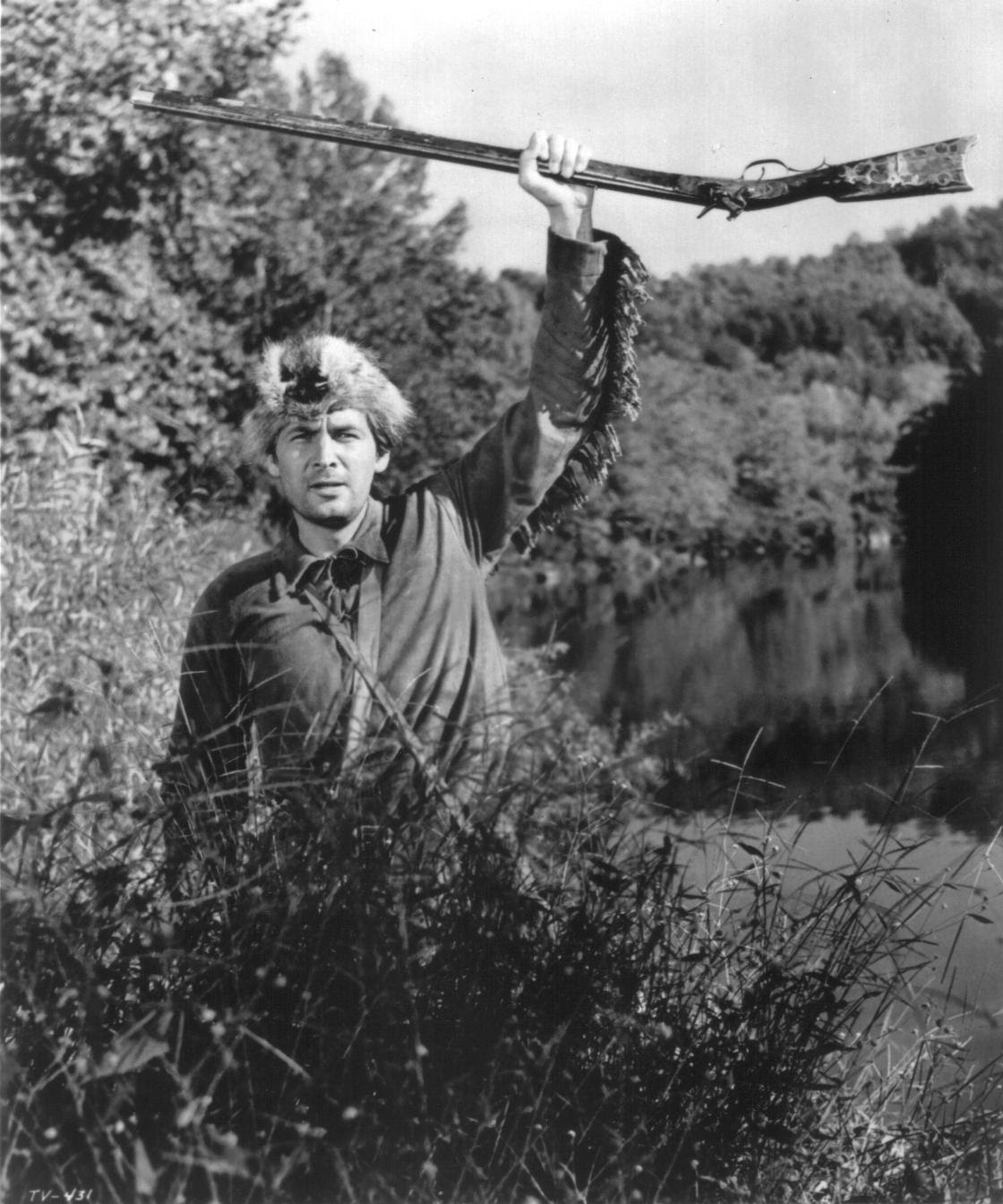
In Them! Fess Parker played the pilot of a small airplane who saw two winged giant queen ants flying along with him, and was confined by officials, ostensibly as a psycho, but really because scientists and the military (who at that point knew about the radiation-enlarged ants) were on the lookout for such reports.  It’s a single scene, but Parker—tall, rangy, folksy and personable-- delivered lines and a performance with conviction and humor.  Disney had found his frontier hero.


In his first leading role, Fess Parker was paired with Hollywood veteran Buddy Ebsen (starting out as a loose-limbed dancer, he was cast as the Tin Man in The Wizard of Oz until the makeup made him seriously ill) as Crockett’s companion, Georgie Russel.  It was a quick, low budget television production, except that Disney paid extra to film it in Technicolor, as he did most of his shows, looking forward to color TV. (Which is why Walt almost always appeared in a blue suit—it filmed best for both black and white and for color.) 

The first episode was shot on location in Tennessee, far from Hollywood and its professional support, so both Parker and Ebsen had to do most of their own stunts.  Each day’s filming was sent back to Disney Studios, so no one on the production knew how it looked.

 The Davy Crockett saga appeared in three hour-long Disneyland shows, about a month apart, starting in December 1954.  By the time the last episode aired in February 1955, it was the biggest television phenomenon in history.  Initial audience was estimated at 50 million.  Disney repeated these episodes in April and May.  Eventually some 90 million viewers had watched it.  

The Davy Crockett craze revved up with the show’s signature song, “The Ballad of Davy Crockett,” one version of which was the number one record in America for 13 straight weeks.  This Bill Hayes recording ended up as the #6 song of 1955, and two other versions (by Fess Parker and by Tennessee Ernie Ford) were also in the year’s top 30, logging in at #22 and #26 respectively.

 Just two months after the third episode was first re-run, a movie edited from the TV episodes opened in theatres—in color (paying off Disney’s gamble earlier than even he could expect.)  It, too, was a hit—perhaps some solace to the perplexed in Hollywood: TV could subtract from their week-to-week audiences, but in certain cases it could also multiply. 

 The Crockett craze is also measured—and remembered-- in merchandise.  Disney, who pioneered the merchandizing of characters with Mickey Mouse in the 1930s, was up to the challenge, but since Davy Crockett was an historical character who couldn’t be trademarked, a lot of others got in on the goldrush.  It’s estimated that in just the first six months after the first episode, $100 million in merchandise was sold (and this was in an era in which the average annual wage in the US was under $5,000.) 

What was this all about?  Clearly, a lot of kids were already watching the Disneyland TV show, and their enthusiasm spread.  As part of that initial audience of postwar Baby Boom kids—our numbers swelling with each passing year until peaking later in the mid-1950s—I’m guessing we were first attracted to the Crockett charm.  The first Crockett episode was also the first under the Frontierland banner, which the narrator described as “tall tales and true from the legendary past.”  Crockett was a perfect blend of “tall tales and true.”  In our first glimpse of him he emerges from some bushes where he had been experimenting on subduing a bear by grinning at it.  You wouldn’t catch John Wayne trying something like that.

 The rollicking theme tune added to that sense of fun. As Davy, Fess Parker was a soft-spoken showman, who would soon prove to be an unusual hero: after fighting a band of Creek Indians, he makes peace with them in agreeing to guarantee they could live on their land.  In the second episode he defends other Indians from European-American predators, and storms out of Congress in protest against a bill that broke the treaty he helped forge and took away Indian land.  

 We’d seen buckskins and fringe jackets in westerns before, but not coonskin caps, and they became the rage. We all had to have one, and I recall it was one of my first lessons in socio-economics: I understood that it was the rich kids who wore the caps completely made of fur.  The rest of us got leather-topped (or more likely, leathery plastic) caps with some fur on the sides, and something like a tail, probably the $1.95 version from a five-and-ten. 

 The only other merchandise I remember having was a set of socks with Davy Crockett on them.  The best part was that they came in a package with a cardboard backing, upon which was printed all the lyrics to the Ballad of Davy Crockett—I believe it was twelve verses.  (Eventually I got a record of the song—which I still have. Not the cap, though.)

 I also was bold enough to stride out of the bright sunshine into the dim tiny showroom at the nearby Behner’s Garage on the West Newton Road, and timidly request the photograph I’d read that American Motors dealers  (sponsors of Disneyland) were giving away.  Much to my surprise, they gave me one.  It was Fess Parker in full costume, with printed autograph: “When you’re out to win, try the Crockett grin…your friend, Davy Crockett/Fess Parker.”

 Otherwise, that spring and summer we had the woods across the road in green Pennsylvania to play Davy Crockett, and we could improvise an Alamo out of a suitably shaped garage roof down on Maryland Avenue. We wore our caps and whatever else we had that looked leathery.  We cradled our long sticks meant to be rifles across our chests like Davy did.  I did what I felt was a fair imitation of Fess Parker, starting every thoughtful sentence with, “Wellp…”

 It was easy to play Crockett partly because the violence on the shows looked like play.  There was no blood and no bullet holes or visible knife wounds.  The fights were more like the roughhouse and wrestling we did anyway, and the “bang, you’re dead.”  At the same time, Disney’s stories always included death and its consequences, however gently.

  At some point in our play we would likely sing the song:

 Born on a mountaintop in Tennessee

 Greenest state in the land of the free

Raised in the woods so's he knew every tree

 Kilt him a b'ar when he was only three-

-Davy Davy Crockett

 King of the Wild Frontier

 And so we inducted ourselves into a ritual of fantasy, history and grace.  We’d seen Davy at the helpless cause of the Alamo, in the final act of going down fighting. Then the next year there were two more episodes, billed as “legends” about Davy Crockett, and the spectre of idealistic death was overcome by living on in story, in myth that could encompass our own invented adventures. 

 Live-action adventures on Disneyland—particularly under the Frontierland banner that ranged over 18th and 19th century American history—gradually increased in number until they dominated the hours in the late 1950s.  This nicely paralleled my growing out of the prime age for animated fantasy and into live action interests.   

I remember three characters in particular.  In fifth and sixth grades I developed a keen interest in the American Revolution and the early formation of the United States.  This may have started in school—my fifth grade history textbook was titled “Builders of Our Country”—but it was given impetus, as well as flesh and blood, by Disney’s Johnny Tremain.  

 Disney adapted Esther Forbes’ novel Johnny Tremain, about a young apprentice silversmith in colonial Boston, beginning just before protest against Britain’s “taxation without representation” that quickly led to the Revolutionary War.  Tremain interacted with real historical figures, including Paul Revere, Samuel Adams and James Otis, and the real events of the Boston Tea Party, and the battles of Lexington and Concord.   

 Disney made a movie for theatres from the book, and previewed it on a Disneyland episode in May 1957 called “The Liberty Story.”  Disney made insightful use of footage of his film version of Robin Hood, because the King John opposed by the mythical Robin Hood was the same King John who was forced to sign the Magna Carta, renowned as the first acknowledgement of rights that led centuries later to the Bill of Rights in the U.S. Constitution.   

But the centerpiece of the episode was Johnny becoming acquainted with the Sons of Liberty, and participating in the Boston Tea Party.  I couldn’t wait to see the movie, and I didn’t have to wait long—I saw it in a theatre (in color) that summer.  Then I saw it again in November 1958, when it was presented in two parts on Disneyland

I was taken with the story of Johnny’s silversmithing accident that burned his hand, rendering it useless for awhile, but other parts of the story were less compelling than the talk about the reasons for independence, and especially the thrilling parts, augmented as usual by catchy tunes and rousing musical staging: 

It’s a tall old tree and a strong old tree—

And we are the sons, yes we are the sons

The Sons of Liberty… 


 My enthusiasm went as far as acquiring a Johnny Tremain tricorner hat, and paying closer attention to the founding documents.  In sixth grade I was especially taken with the Declaration of Independence.  I saw a facsimile of Thomas Jefferson’s first draft in a text book, and copied it out in my notebook, trying as best I could to imitate Jefferson’s handwriting.  Later I acquired (was given or more likely sent away for) fake yellowed parchment copies of the Declaration, Preamble and Bill of Rights, and for good measure the Gettysburg Address, and tacked them all on my bedroom wall.  By the time I was in high school I knew these texts pretty well.


The second figure was Elfago Baca, a character at the center of ten one-hour stories in the 6th and 7th seasons, from October 1958 (when the show’s name had changed to Walt Disney Presents) to March 1960, the longest series within the series.  There was a real Elfago Baca, a Mexican American lawman and lawyer in New Mexico and Texas in the late 19th century, and at least some of the stories (especially the first few) were based on historical accounts. The Disney Elfago Baca was more clearly a hero, and a champion of Mexican Americans and minorities in general.


 He was one of the few Latino (or Hispanic or Latinx) TV heroes, though not the first—not even the first that Disney produced.  He was preceded by the Cisco Kid and by Disney’s Zorro, for example.  Zorro was the only other television series Walt Disney made, besides this anthology series and the Mickey Mouse Club. He introduced it on Disneyland’s fourth anniversary show, and it ran from October 1957 to the summer of 1959.  We watched this series, too.  This was so much our Zorro that when its popularity brought the 1940 Tyrone Power flick, The Mark of Zorro, back to one of our Saturday matinees, I’m afraid it was laughed off the screen.  For one thing, his “Z” was way too sloppy.

 Though Guy Williams (Zorro) and Robert Loggia (Elfago Baca) both had Italian parents, Loggia (in his first major role) effectively played Baca as a hero who emerged from the Mexican American community.  

Because he survived an onslaught of gunfire while besieged in a crumbling sod house, Baca got the reputation as indestructible.  The inevitable Disney theme song emphasized the “nine lives” aspect as it played with the Spanish names Elfago El Gato (the cat.) 

I was drawn to Loggia as Elfago Baca partly because although he was slim he used cat-like quickness to his advantage.  I was a skinny kid, and my self-consciousness increased with age (by this time I was 11 and 12), so Baca was a kind of model.   

 But he was a model also in other ways.  In the Disney version, as a lawyer he champions the rule of law over violence, and the principle of equal justice under the law.  This extends not only to his Mexican American community but to, for example, the Anglo settlers who arrive to farm in what was until then cattle country.

 They are called Mustangers, apparently poor whites from the Blue Ridge Mountains.  They are the subject of violence by cattle ranchers and prejudice in town, where they are derided and prevented from buying goods they need.  It doesn’t take a lot of imagination to see the mid-1950s parallels to the Freedom Riders, sit-ins and children attacked for going to schools because of their race.

 Veteran TV writer Maurice Tombragel, who wrote for most of the westerns I watched in the early to mid 1950s, provided some startling dialogue towards the end of the story.  Fearing the fate of their lawyer, Elfago Baca, and the sheriff in confrontation with the ranchers who burned their farms, the Mustangers and their wagons are occupying the main street of the town, and preventing anyone from trading at the general store. 

 The storekeeper (played by DeForrest Kelly) appeals to the Mustanger elder.  “It’s not right to make innocent people suffer,” he says, meaning his usual customers.

 “Those who think themselves better than others are not innocent,” the elder says.

 “But you don’t understand,” the storekeeper pleads.  “I was forced to do what I did.”

 “Cowards are even less innocent than hypocrites.”

 Good thing only children were watching.  A political statement like that could get you blacklisted.


 The third figure was another character from the Revolutionary War, but this time a real person: Francis Marion, known as the Swamp Fox.

  Though no battles in that war were fought near where I lived (as were several in the preceding, so-called French and Indian War), that period was important in the history of my hometown.  The city of Greensburg was named after Revolutionary War General Nathaniel Greene.  Though he’d never been there, several notable town fathers had been officers serving in his command.  So this added a certain texture to my interest.

 General Francis Marion was also under Greene’s command later in the war, but his fame was established in the swamps of South Carolina as Colonel Marion, leading a band of irregulars on guerilla missions. 

 Disney dramatized him as the Robin Hood of the American Revolution, and the catchy theme song emphasizes that, even stealing a line from the ITV Robin Hood series:

 Swamp Fox, Swamp Fox, tail in his hat

Nobody knows where they Swamp Fox at.

Swamp Fox, Swamp Fox, hiding in the glen,

He runs away to fight again.

 Leslie Neilson played the Swamp Fox in eight episodes: two in October 1959, four in January 1960 (taking up the entire month of shows), and two in January 1961.

 By the late 1950s, Disney’s live action TV shows were not only giving new talent the spotlight, they were employing some of the best character actors in Hollywood, as well as experienced film directors, writers and cinematographers.  Television provided these Hollywood veterans with something movies couldn’t anymore: regular work, and growing audiences. 

 So long-time Hollywood western director Harry Keller directed the Swamp Fox shows, which were written by Lewis R. Foster, a veteran writer who began with Laurel and Hardy silents and later contributed to the famous Jimmy Stewart feature Mr. Smith Goes To Washington.

 There were many movie veterans in the cast, and some relative newcomers, like star Leslie Neilsen (fresh from playing the intrepid captain of the first cinema starship in Forbidden Planet), and actors Patrick Macnee (star of the 1960s British spy spoof series The Avengers) and Slim Pickens (Doctor Strangelove.) 

Beverly Garland, Brian Keith in Elfago Baca
Appearing in Elfago Baca were such future movie and TV stars as James Coburn, Brian Keith and the aforementioned Doctor McCoy.  1950s sci-fi scream queen, Beverly Garland, got to act a different kind of role.  By then at least some of Hollywood knew it couldn’t beat TV, so it was hurriedly joining it.

 By the time Leslie Neilsen was riding across the screen, I was in eighth and ninth grades, and too old to be playing Swamp Fox with neighborhood friends. (We mostly played baseball and football, until we drifted apart, caught in the pressure-cookers of separate high schools.) It was also near the end of my regularly watching the Disney show. I don’t recognize many episodes after 1960, though I recall the teasers for the Fred MacMurray movie comedy, The Absent-Minded Professor

 Disney used many of the same story techniques in his live action films as he had in his animations, particularly the use of established characters, music and catchy songs, and the mood of fantasy.  His stories about storybook characters easily edged into his treatment of actual historical figures.  Some if not most historians will suggest that the real Davy Crockett or Elfago Baca or Francis Marion were not so unambiguously admirable as the Disney versions, but the emphasis in Disney was on the story as a model. 

But if the live action stories of Frontierland used fact to augment fantasy, Disney Studios made use of the tools of fantasy to illuminate fact (or at least educated conjecture) in episodes under the banner of Adventureland and Tomorrowland.  These will be the subject of my third and final Disney installment.

 That installment will also include thoughts on Disney, television and reading.  This might be especially appropriate as we try to deal with another alleged barrier to the pace and concentration of reading, represented by social media and the Internet.