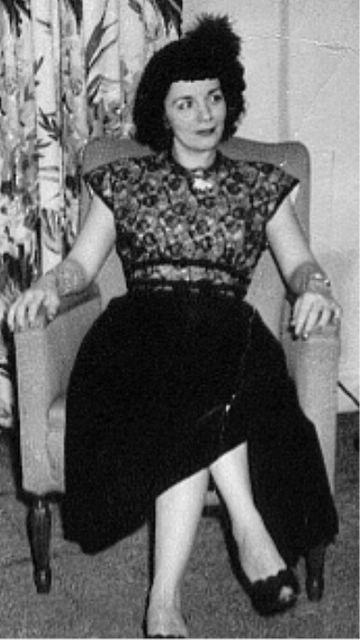
My parents were married in August 1945. Among their wedding presents was a set of Fiestaware: cups and saucers, plates of various sizes, salt and pepper shakers, a gravy boat, a pitcher, bowls, sugar bowl and creamer, a lazy susan and possibly other items. They were the mix of colors typical of what's officially called just Fiesta, made by a West Virginia outfit and originally introduced at a pottery fair in Pittsburgh in 1936. I believe they were a gift from my mother's younger sister.
Many of these pieces were ubiquitous in my childhood and beyond. The dishes were perhaps the "good dishes" for awhile, but some pieces in enough use that some bit the dust (the bowls, the cups and saucers.) Some pieces (the salt and pepper shakers) were in common use forty years later. The sugar bowl just quietly disappeared. But at a certain point in the 60s or 70s, they were replaced by a new, more formal looking set, and the remaining Fiestaware consigned to the back of a kitchen cabinet.
So imagine my shock when I was walking through a huge exhibit called The Machine Age in the Carnegie Museum of Art in 1985 or so, when I came upon a collection of Fiestaware that might have been taken from that cabinet, but it was in a glass case and labeled.
When my childhood home was sold, I got most of the surviving Fiestaware, and perhaps all of it. I brought it with me out here to California. There wasn't really much of it left, and though one of the rarer pieces is in excellent condition, some of the plates are chipped. But one piece survived with only minor abrasions, all the more surprising because it was one of the most used pieces.
That, it will come as no surprise by now, was the yellow pitcher. As a representative piece it is quite striking for the Art Deco design is most evident of all the pieces. But it also carries the memories of a lot of Kool-Aid and ice cubes on hot summer days through the 1950s and beyond.
This past October of 2015, my niece Sarah got married. Her wedding was almost exactly 70 years after my parents wedding. So it seemed especially fitting that this Fiestaware pitcher be passed down to her on this occasion. And that's what I did.
Though it has value on the collectors market, she is honoring its family history by using it.
Showing posts with label family. Show all posts
Sunday, February 14, 2016
Wednesday, March 03, 2010
My mother was born in Italy, and her family and the community of their friends who came over together were all a major part of my young life. Plus, when I was growing up in the 50s, there were prominent Italians in Hollywood, in music and sports: the era of Sinatra and DiMaggio. There were even songs on the hit parade in the Italian language.
But it's been downhill since then. For years now, Italian Americans have been defined by the pop culture version of the Mafia. A collection of Italian language songs was advertised on TV as "Mob Hits." I found it all so insulting and demeaning that I don't care how "well done" the Sopranos was, I was never going to watch it. And I'm sure not going to watch "Jersey Shore," yet another stereotype that has nothing to do with my experience.
What I did watch however was a wonderful film story, made in Italy, about a group of characters who were adolescents or young adults in the 60s, and following them into the 21st century. The English title is The Best of Youth. It was made for television, but was also released in theatres, usually shown in two parts, each 3 hours long. (Available from netflix, etc.) But it is worth the time. It's one of the best written, best acted, most beautifully photographed stories I've ever seen. It was very special to me because I understood the common expressions in Italian--I think the dialect was close to the one I heard mostly as a child, but for much of my life. Even the body language was familiar--I've never felt so attuned to the people in a film before, not even an American film. Everyone should see this, but especially Italian Americans who feel like they have to be fugitives from the prevailing insulting stereotypes.
Sunday, September 20, 2009
Talking Great Depression Blues
I posted this on my Stage Matters blog, in connection with a Dell'Arte School original production here on the North Coast about the Great Depression. But since it's about family and history, and what I learned on my summer vacation, it seems to me it also belongs here...
I saw the Dell'Arte original show about the Great Depression, called The Body Remembers, shortly after returning from a visit back home to western Pennsylvania. While I was there, my sisters and I sorted through several boxes of photos and documents, some unopened since each of my parents died (my mother in 1974, my father in 1990.) There were some photos from the 1940s and 30s, and also three letters my father received at his CCC Camp in 1940--one from a hometown buddy who was in another CCC camp, and two from his mother--my paternal grandmother, who died several years before I was born.
My father rarely talked about his past, but whenever there was an economic recession or other economic problem in the news, I could pretty much count on him saying that what they ought to do is revive the CCCs. I've since read about the CCC and other New Deal programs, but those letters provided something more specific: the role they played in my father's life, part of which led to me.
The Civil Conservation Corps was a program that employed young men (starting at 17 or 18) in conservation projects all over America. The projects were developed by the Interior Department, but the Corps was run by the Army. Young men lived in Army-style camps, were provided with food, clothing and shelter, and paid a small wage, most of which was automatically sent back to their families. Between 1934 and 1943, some 3 million men cumulatively worked in more than 4,000 camps.
From the letters we learned that my father was in a camp in Blain, Pennsylvania, a few hundred miles from his home in United, PA. Some guys got sent thousands of miles away, often to the West, but that may have mostly been earlier in the program. His friend was in a camp even closer to home, in the Laurel Highlands, not far from where one of my sisters now lives. There were apparently about 150 guys at my father's camp (though 300 was the norm), and they were building Big Spring state park. The camp was very isolated, probably as far into the woods as he'd ever been (or ever would be again). But besides a military schedule and discipline, they had activities--sports teams that competed with other camps, for example. His friend was closer to a town (Somerset) and so seemed to have a lively social life. (Here's another good source on the CCCs in this region.)
My father's hometown was built by the United Coal and Coke Company, and his father and grandfathers were (or had been) coal miners. Mines were closing in the 30s, and there were big and violent strikes in the 20s and 30s, that got the miners essentially nothing. There were few jobs, no money and no future there.
The plight of the miners in the area was so severe that the FDR administration built one of a few experimental communities there. They built new houses (with a novelty in the area: indoor plumping) and started cooperative farms and eventually a small garment factory. It came to be called "Norvelt," the last syllables of Eleanor Roosevelt's name, after she came to visit it. Locals apparently just called it the homestead.
The homestead is mentioned in my grandmother's letters, though they didn't get to live there. They were still in United. By 1940 Norvelt was changing, and people who lived there were being asked to buy their houses rather than rent them. But I also learned about Norvelt on this trip because there was an article in the local newspaper while I was there: this summer was Norvelt's 75th anniversary. And as it happens, one of my sisters now works for a small business that's housed in the very building that used to be the Norvelt coop garment factory.
At issue in the letters in 1940 was what my father was going to do next. Apparently his hitch was up, and there was anxiety about losing the money he was bringing in. The family was saving to buy their house. The letters left the matter unresolved, but they fit with something else I saw many years before. It was a mimeographed, stapled newspaper, and inside it was my father's name, as editor-in-chief. Probably my mother dug it out and gave it to me, when I started my string of editors jobs in junior high. My father never mentioned it. I've examined it since, though at the moment I've lost track of it again.
It was the publication of the "self-governing community" called Armor City, a National Youth Administration work experience project in South Charleston, West Virginia. It was another federal project under the umbrella of the Works Project Administration. It seemed to be very much like the CCCs, except this was for slightly older young men, and it's purpose was to train them for jobs in industry, not the woods. Eventually it was training them for jobs in national defense, and judging from other information about South Charleston at the time, that's what my father was probably doing. There was a big naval munitions plant in South Charleston, which FDR visited.
My father was at Armor City in 1941 and apparently still there in 1943, when he was called home for his mother's last illness. (He was found physically unfit for the draft. As children we were told it was because of color-blindness, but it may actually have been because of a deformation in his back, perhaps the result of a fall in infancy.) Soon after, he got a good paying job in industry, in a plant in Youngwood, PA that made military instruments. That's also where he met the young woman who would become his wife and my mother.
I grew up with some tales from the Depression, on both sides of the family, as well as from the lives of parents and grandparents of school friends, and total strangers. I got more interested in it all in the 60s, thanks in part to Bob Dylan being so interested in Woody Guthrie. And of course, Arlo. I've heard stories since--Steve Allen told me a few--and read many more. It's important in terms of what individuals and families went through, though I would stop short of calling those who lived through it and are still alive "Depression survivors," as some of the Dell'Arte publicity did. It sounds too much like "Holocaust survivors," which is a different order of experience.
It also tends to distance us from it. Books like the Stud Terkel volume that inspired this production are one way to get close to it, or even recollections in memoirs--I was especially interested in Malcolm Cowley's, with his Pittsburgh connections. But of course the best of all is family memories, and letters like these.
I posted this on my Stage Matters blog, in connection with a Dell'Arte School original production here on the North Coast about the Great Depression. But since it's about family and history, and what I learned on my summer vacation, it seems to me it also belongs here...
I saw the Dell'Arte original show about the Great Depression, called The Body Remembers, shortly after returning from a visit back home to western Pennsylvania. While I was there, my sisters and I sorted through several boxes of photos and documents, some unopened since each of my parents died (my mother in 1974, my father in 1990.) There were some photos from the 1940s and 30s, and also three letters my father received at his CCC Camp in 1940--one from a hometown buddy who was in another CCC camp, and two from his mother--my paternal grandmother, who died several years before I was born.
My father rarely talked about his past, but whenever there was an economic recession or other economic problem in the news, I could pretty much count on him saying that what they ought to do is revive the CCCs. I've since read about the CCC and other New Deal programs, but those letters provided something more specific: the role they played in my father's life, part of which led to me.
The Civil Conservation Corps was a program that employed young men (starting at 17 or 18) in conservation projects all over America. The projects were developed by the Interior Department, but the Corps was run by the Army. Young men lived in Army-style camps, were provided with food, clothing and shelter, and paid a small wage, most of which was automatically sent back to their families. Between 1934 and 1943, some 3 million men cumulatively worked in more than 4,000 camps.
From the letters we learned that my father was in a camp in Blain, Pennsylvania, a few hundred miles from his home in United, PA. Some guys got sent thousands of miles away, often to the West, but that may have mostly been earlier in the program. His friend was in a camp even closer to home, in the Laurel Highlands, not far from where one of my sisters now lives. There were apparently about 150 guys at my father's camp (though 300 was the norm), and they were building Big Spring state park. The camp was very isolated, probably as far into the woods as he'd ever been (or ever would be again). But besides a military schedule and discipline, they had activities--sports teams that competed with other camps, for example. His friend was closer to a town (Somerset) and so seemed to have a lively social life. (Here's another good source on the CCCs in this region.)
My father's hometown was built by the United Coal and Coke Company, and his father and grandfathers were (or had been) coal miners. Mines were closing in the 30s, and there were big and violent strikes in the 20s and 30s, that got the miners essentially nothing. There were few jobs, no money and no future there.
The plight of the miners in the area was so severe that the FDR administration built one of a few experimental communities there. They built new houses (with a novelty in the area: indoor plumping) and started cooperative farms and eventually a small garment factory. It came to be called "Norvelt," the last syllables of Eleanor Roosevelt's name, after she came to visit it. Locals apparently just called it the homestead.
The homestead is mentioned in my grandmother's letters, though they didn't get to live there. They were still in United. By 1940 Norvelt was changing, and people who lived there were being asked to buy their houses rather than rent them. But I also learned about Norvelt on this trip because there was an article in the local newspaper while I was there: this summer was Norvelt's 75th anniversary. And as it happens, one of my sisters now works for a small business that's housed in the very building that used to be the Norvelt coop garment factory.
At issue in the letters in 1940 was what my father was going to do next. Apparently his hitch was up, and there was anxiety about losing the money he was bringing in. The family was saving to buy their house. The letters left the matter unresolved, but they fit with something else I saw many years before. It was a mimeographed, stapled newspaper, and inside it was my father's name, as editor-in-chief. Probably my mother dug it out and gave it to me, when I started my string of editors jobs in junior high. My father never mentioned it. I've examined it since, though at the moment I've lost track of it again.
It was the publication of the "self-governing community" called Armor City, a National Youth Administration work experience project in South Charleston, West Virginia. It was another federal project under the umbrella of the Works Project Administration. It seemed to be very much like the CCCs, except this was for slightly older young men, and it's purpose was to train them for jobs in industry, not the woods. Eventually it was training them for jobs in national defense, and judging from other information about South Charleston at the time, that's what my father was probably doing. There was a big naval munitions plant in South Charleston, which FDR visited.
My father was at Armor City in 1941 and apparently still there in 1943, when he was called home for his mother's last illness. (He was found physically unfit for the draft. As children we were told it was because of color-blindness, but it may actually have been because of a deformation in his back, perhaps the result of a fall in infancy.) Soon after, he got a good paying job in industry, in a plant in Youngwood, PA that made military instruments. That's also where he met the young woman who would become his wife and my mother.
I grew up with some tales from the Depression, on both sides of the family, as well as from the lives of parents and grandparents of school friends, and total strangers. I got more interested in it all in the 60s, thanks in part to Bob Dylan being so interested in Woody Guthrie. And of course, Arlo. I've heard stories since--Steve Allen told me a few--and read many more. It's important in terms of what individuals and families went through, though I would stop short of calling those who lived through it and are still alive "Depression survivors," as some of the Dell'Arte publicity did. It sounds too much like "Holocaust survivors," which is a different order of experience.
It also tends to distance us from it. Books like the Stud Terkel volume that inspired this production are one way to get close to it, or even recollections in memoirs--I was especially interested in Malcolm Cowley's, with his Pittsburgh connections. But of course the best of all is family memories, and letters like these.
Monday, December 08, 2008
Pema's Progress
My last Pema update was nearly two years ago, and I said that our previously semi-feral cat was near to discovering laps-- optimistically, as it turned out. Because she only became clear on the concept within the last couple of months. And of course, she now owns it.
I think it may have happened because we got rid of our old couch before we got a new one, and substituted two chairs for the ritual evening DVD/recorded TV show hour. Suddenly she had nowhere to sit. She was comfortable sitting behind Margaret on her chair at the kitchen table, but that didn't work in the living room. So that's probably what led to Pema's discovery of the lap.
First Margaret's, then mine. She favors mine at the moment, probably because it's easier for her to jump up to and jump down from my chair, and because Margaret is often knitting, while my hands are free to be dedicated solely to Pema. Though it took her three years to discover laps, I now barely am seated before she jumps up on mine.
Pema goes outside and has learned her circumscribed permissible area--mostly where she's visible from the back door. She's a bit more curious about other people when they're in the house, though she tends to reconnoiter quickly before retreating to her safety zone. Otherwise, she's retained some curious ways. She still won't drink water, except as part of a soupy mixture with soft catfood. And when her soup dish is picked up for filling, she still goes out of the kitchen and sits under the dining room table (she is never fed anywhere near there) for reasons still mysterious to my poor human intelligence.
The next step is for Pema to get comfortable being picked up. She's a little more relaxed about it now, but she still won't allow herself to be held. Tess didn't like it much either, except by me: she liked to rub her head on my beard. I don't know about Pema. Maybe by next Christmas.
My last Pema update was nearly two years ago, and I said that our previously semi-feral cat was near to discovering laps-- optimistically, as it turned out. Because she only became clear on the concept within the last couple of months. And of course, she now owns it.
I think it may have happened because we got rid of our old couch before we got a new one, and substituted two chairs for the ritual evening DVD/recorded TV show hour. Suddenly she had nowhere to sit. She was comfortable sitting behind Margaret on her chair at the kitchen table, but that didn't work in the living room. So that's probably what led to Pema's discovery of the lap.
First Margaret's, then mine. She favors mine at the moment, probably because it's easier for her to jump up to and jump down from my chair, and because Margaret is often knitting, while my hands are free to be dedicated solely to Pema. Though it took her three years to discover laps, I now barely am seated before she jumps up on mine.
Pema goes outside and has learned her circumscribed permissible area--mostly where she's visible from the back door. She's a bit more curious about other people when they're in the house, though she tends to reconnoiter quickly before retreating to her safety zone. Otherwise, she's retained some curious ways. She still won't drink water, except as part of a soupy mixture with soft catfood. And when her soup dish is picked up for filling, she still goes out of the kitchen and sits under the dining room table (she is never fed anywhere near there) for reasons still mysterious to my poor human intelligence.
The next step is for Pema to get comfortable being picked up. She's a little more relaxed about it now, but she still won't allow herself to be held. Tess didn't like it much either, except by me: she liked to rub her head on my beard. I don't know about Pema. Maybe by next Christmas.
Monday, June 30, 2008
Birth Day
I was born into a much different America on this date in 1946. There were half as many people in it, and these days it seems they were also about half the size of people today. Since I was the first born of my generation on both sides of the family, there were a lot of relatives who came to see me. My grandfather Severini was just 53, and he had survived poison gas in World War I in Italy. If there was anyone who was 85 year old among my visitors, that person would have been an toddler when Abraham Lincoln signed the Emancipation Proclamation.
1946 was a miserable year in Europe, but a good one and a hopeful one in the United States. I was born less than a year after Hiroshima, and there was still an international consensus--including the U.S. government and U.S. military--that atomic weapons would have to be banned. A couple of weeks before I was born, the United Nations Commission on Atomic Energy met for the first time, and discussed proposals for international control of atomic energy put forward by the U.S. and by the Soviet Union. Even two years later, U.S. General Omar Bradley would observe, "The world has achieved brilliance without wisdom, power without conscience. Ours is a world of nuclear giants and ethical infants."
That hope probably died the day I was born--with the first big postwar atomic bomb tests in the Pacific, called Crossroads. And indeed it was the crossroads. America and the Soviet Union would pursue nuclear supremacy, and soon Omar Bradley would be lobbying for the U.S. to develop the hydrogen bomb. The world has been living on borrowed time ever since, though that was much more a part of conscious life, and the national unconscious erupting into sudden panics and bug-eyed monster movies, when I was a child, adolescent, student.
As for my personal history, it seems I almost did not live beyond my first week after my birth on that Sunday afternoon. Some ten or so years ago, when I first researched what might have been wrong based on the few clues I'd had over the years, there wasn't a whole lot readily available. Now there's so much more on the Internet. And I found a book in the university library entirely devoted to the research on what came to be known by various names, most simply as Rh Disease.
This disease generally occurs when the mother has Rh negative blood, and the father Rh positive. (The - and + after the ABO blood types indicate this separate Rh Factor.) The cause is somewhat complicated. If the mother has been exposed to Rh positive blood, through a transfusion or a prior childbirth, her blood may develop antibodies to fight off Rh. If a subsequent child is Rh positive, these antibodies may then attack his or her blood.
The result is often catastrophic. Some die in the womb or are stillborn. This may have been a major cause of stillbirths for centuries--Hippocrates mentions something like this disease. But it can attack after birth as well, usually within hours. I knew that babies die of this--some say up to 90%. What I didn't know was the effects some children who live may carry with them, which includes severe organ damage and severe brain damage.
I am missing quite a bit of specific information about my "case," including the mystery of why I was part of a very small minority of first-borns to have this affliction. But the family legend is very clear on one point: everyone was exclaiming on my appearance. My skin was golden. Only my grandmother understood that this meant something was wrong. The golden color is often the first sign of Rh Disease: it indicates jaundice. And things get worse from there.
I know that I received a blood transfusion. I know that the appropriate blood wasn't on hand, and my mother kept a list of names--I think there were six--of possible donors, including the one who donated the blood that was soon placed in my veins.
What I don't know is what kind of transfusion this was. Various kinds were tried for this disease over at least a decade, with limited success, but the most effective ones weren't developed until 1944 and 1945, even 1946. They were various methods of "exchange transfusions," in which nearly all the baby's blood is removed while new blood is dripped in. Standard transfusions had limited success; exchange transfusions were much more effective, and saved hundreds of thousands of lives before a preventive vaccine was developed in the mid 1960s.
Few people now even know of the existence of this disease. But it was once a very, very serious matter. It led to suggestions that Rh incompatible couples should not be permitted to have children. Various states introduced legislation that came close to this eugenics approach.
The research to find a vaccine led to many other innovations. Before this, there was no fetal medicine or fetal research. It was considered too invasive. The amniocentesis that's become standard for pregnant women today was developed as a direct result of Rh Disease research.
But it's especially striking to me that so much happened regarding this condition around the year of my birth. The Rh Factor itself had been discovered only in 1940. Blood Banks in general wouldn't be routinely testing for it until 1950. It is just barely possible that some form of exchange transfusion was being done by the end of June 1946 at the western Pennsylvania hospital where I was born. I hope to find out whether that's what I received. It could be that my case was mild enough to respond to a standard transfusion.
It's very rare for a first-born to have this, unless the mother had a transfusion with Rh positive blood earlier in her life. But it wasn't unknown, and the theory was that an even more rare trait of the father's blood was responsible, but these cases usually were comparatively mild. So I might not have been in such mortal danger.
I've pieced together enough to be pretty sure that I was transfused with Rh negative blood. It was probably done over three days. The only effect of the disease that's shown up so far is probably my one deaf ear. I don't know if this exactly qualifies as borrowed time. But it does seem that from the beginning my life was very much embedded in its time and place.
I was born into a much different America on this date in 1946. There were half as many people in it, and these days it seems they were also about half the size of people today. Since I was the first born of my generation on both sides of the family, there were a lot of relatives who came to see me. My grandfather Severini was just 53, and he had survived poison gas in World War I in Italy. If there was anyone who was 85 year old among my visitors, that person would have been an toddler when Abraham Lincoln signed the Emancipation Proclamation.
1946 was a miserable year in Europe, but a good one and a hopeful one in the United States. I was born less than a year after Hiroshima, and there was still an international consensus--including the U.S. government and U.S. military--that atomic weapons would have to be banned. A couple of weeks before I was born, the United Nations Commission on Atomic Energy met for the first time, and discussed proposals for international control of atomic energy put forward by the U.S. and by the Soviet Union. Even two years later, U.S. General Omar Bradley would observe, "The world has achieved brilliance without wisdom, power without conscience. Ours is a world of nuclear giants and ethical infants."
That hope probably died the day I was born--with the first big postwar atomic bomb tests in the Pacific, called Crossroads. And indeed it was the crossroads. America and the Soviet Union would pursue nuclear supremacy, and soon Omar Bradley would be lobbying for the U.S. to develop the hydrogen bomb. The world has been living on borrowed time ever since, though that was much more a part of conscious life, and the national unconscious erupting into sudden panics and bug-eyed monster movies, when I was a child, adolescent, student.
As for my personal history, it seems I almost did not live beyond my first week after my birth on that Sunday afternoon. Some ten or so years ago, when I first researched what might have been wrong based on the few clues I'd had over the years, there wasn't a whole lot readily available. Now there's so much more on the Internet. And I found a book in the university library entirely devoted to the research on what came to be known by various names, most simply as Rh Disease.
This disease generally occurs when the mother has Rh negative blood, and the father Rh positive. (The - and + after the ABO blood types indicate this separate Rh Factor.) The cause is somewhat complicated. If the mother has been exposed to Rh positive blood, through a transfusion or a prior childbirth, her blood may develop antibodies to fight off Rh. If a subsequent child is Rh positive, these antibodies may then attack his or her blood.
The result is often catastrophic. Some die in the womb or are stillborn. This may have been a major cause of stillbirths for centuries--Hippocrates mentions something like this disease. But it can attack after birth as well, usually within hours. I knew that babies die of this--some say up to 90%. What I didn't know was the effects some children who live may carry with them, which includes severe organ damage and severe brain damage.
I am missing quite a bit of specific information about my "case," including the mystery of why I was part of a very small minority of first-borns to have this affliction. But the family legend is very clear on one point: everyone was exclaiming on my appearance. My skin was golden. Only my grandmother understood that this meant something was wrong. The golden color is often the first sign of Rh Disease: it indicates jaundice. And things get worse from there.
I know that I received a blood transfusion. I know that the appropriate blood wasn't on hand, and my mother kept a list of names--I think there were six--of possible donors, including the one who donated the blood that was soon placed in my veins.
What I don't know is what kind of transfusion this was. Various kinds were tried for this disease over at least a decade, with limited success, but the most effective ones weren't developed until 1944 and 1945, even 1946. They were various methods of "exchange transfusions," in which nearly all the baby's blood is removed while new blood is dripped in. Standard transfusions had limited success; exchange transfusions were much more effective, and saved hundreds of thousands of lives before a preventive vaccine was developed in the mid 1960s.
Few people now even know of the existence of this disease. But it was once a very, very serious matter. It led to suggestions that Rh incompatible couples should not be permitted to have children. Various states introduced legislation that came close to this eugenics approach.
The research to find a vaccine led to many other innovations. Before this, there was no fetal medicine or fetal research. It was considered too invasive. The amniocentesis that's become standard for pregnant women today was developed as a direct result of Rh Disease research.
But it's especially striking to me that so much happened regarding this condition around the year of my birth. The Rh Factor itself had been discovered only in 1940. Blood Banks in general wouldn't be routinely testing for it until 1950. It is just barely possible that some form of exchange transfusion was being done by the end of June 1946 at the western Pennsylvania hospital where I was born. I hope to find out whether that's what I received. It could be that my case was mild enough to respond to a standard transfusion.
It's very rare for a first-born to have this, unless the mother had a transfusion with Rh positive blood earlier in her life. But it wasn't unknown, and the theory was that an even more rare trait of the father's blood was responsible, but these cases usually were comparatively mild. So I might not have been in such mortal danger.
I've pieced together enough to be pretty sure that I was transfused with Rh negative blood. It was probably done over three days. The only effect of the disease that's shown up so far is probably my one deaf ear. I don't know if this exactly qualifies as borrowed time. But it does seem that from the beginning my life was very much embedded in its time and place.
Sunday, June 15, 2008
Father
My father and I had a difficult and incomplete relationship. Now I'm in the decade of my life that was the last of his.
There are times that I am astonished by his life. He came from a coal patch, growing up in a company owned house. By then the coal was about played out there. He was young in the depths of the Depression, when people in such places were starving. The only story I know about him as a young man--which I heard as a child, told by his brothers around a card table with their wives, as well as my father and mother--had him driving somewhere, perhaps West Virginia, looking for work, sleeping in his car, washing his socks in a stream or maybe a gas station rest room, and hanging them on the car windows at night. The socks hanging from the car windows--that's the image that remains.
But he did join the Civil Conservation Corps, and several times during his life I remember him extolling the virtues of the CCC. He was also editor of a camp newspaper, something I don't remember him talking about--but I still have the mimeoed copy of one of these stapled-together, magazine- like periodicals.
He worked all his life, although from a few years after my youngest sister was born, my mother had to work as well, to support the family and our home. He lived long enough to have several grandchildren, although his relationship with them was as distant as it was with his children. Still--supporting a family, buying and maintaining a home, going to a job every day, children and grandchildren--I have done and had none of these. However grudging his support was at times, I always had a roof.
His final illness was ugly and humiliating. At the end he was in the condition of a crippled infant. Although ALS is not supposed to affect the mind, I think it diminished his substantially.
Not long after he died I saw him in a dream. His eyes were very blue. He was smiling; he glowed. He looked at me as if to say, this is the real me.
I remember times in life when his eyes looked almost as blue as that. Is the potential the real? Perhaps after death it is, or in dreams.
After his death, the corneas of his eyes were taken to be used by someone else. Now perhaps someone else in the world is looking out from my father's eyes.
My father and I had a difficult and incomplete relationship. Now I'm in the decade of my life that was the last of his.
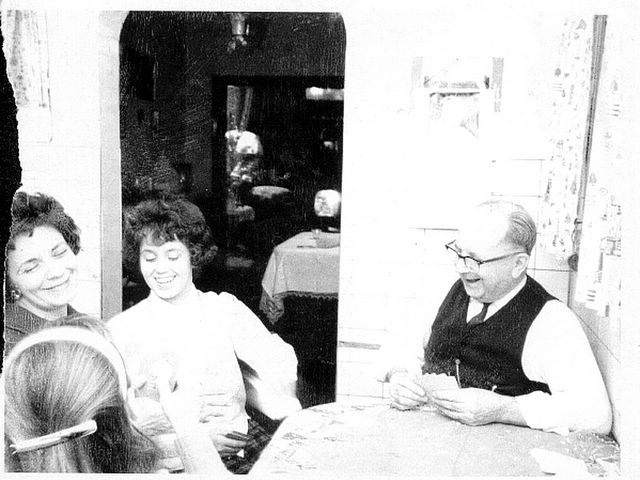
There are times that I am astonished by his life. He came from a coal patch, growing up in a company owned house. By then the coal was about played out there. He was young in the depths of the Depression, when people in such places were starving. The only story I know about him as a young man--which I heard as a child, told by his brothers around a card table with their wives, as well as my father and mother--had him driving somewhere, perhaps West Virginia, looking for work, sleeping in his car, washing his socks in a stream or maybe a gas station rest room, and hanging them on the car windows at night. The socks hanging from the car windows--that's the image that remains.
But he did join the Civil Conservation Corps, and several times during his life I remember him extolling the virtues of the CCC. He was also editor of a camp newspaper, something I don't remember him talking about--but I still have the mimeoed copy of one of these stapled-together, magazine- like periodicals.
He worked all his life, although from a few years after my youngest sister was born, my mother had to work as well, to support the family and our home. He lived long enough to have several grandchildren, although his relationship with them was as distant as it was with his children. Still--supporting a family, buying and maintaining a home, going to a job every day, children and grandchildren--I have done and had none of these. However grudging his support was at times, I always had a roof.
His final illness was ugly and humiliating. At the end he was in the condition of a crippled infant. Although ALS is not supposed to affect the mind, I think it diminished his substantially.
Not long after he died I saw him in a dream. His eyes were very blue. He was smiling; he glowed. He looked at me as if to say, this is the real me.
I remember times in life when his eyes looked almost as blue as that. Is the potential the real? Perhaps after death it is, or in dreams.
After his death, the corneas of his eyes were taken to be used by someone else. Now perhaps someone else in the world is looking out from my father's eyes.
Saturday, December 23, 2006
Pema
After we lost our cat Tess, we didn't have a third member of the household for about a year. Then friends who live in a rural area up the mountain from Arcata rescued a young cat. They found her in their barn, starving and dehydrated. They got her healthy again and began looking for a permanent home for her. We visited to see this still scrawny cat, dark gold with golden eyes. She hid from us but when I extracated her from under a bed, she responded to being petted, almost desperately.
She'd been checked by a vet, who said she'd been spayed. Later the theory was that she was one of a group of cats kept outdoors at a nearby farm, some of whom had escaped. They were originally part of a "catch, spay and release" program for cats on their own. We still don't know how she came to be in that barn, or why she was so close to starvation.
We brought her home, and I had my first experience with a feral cat, which is a cat that hasn't been brought up around humans. We named her Pema, after Pema Chodron, the Buddhist nun whose tapes we were listening to at the time. Pema was probably semi-feral, but I learned a lot about what to expect from a book I coincidentally happened on at a used store, which described the experiences at a shelter that had feral and non-feral cats. Feral cats are often very fearful of humans, keep their distance, don't allow themselves to be touched, though they may have close relationships with other cats. Sometimes this behavior changes and they warm up to humans, but sometimes not.
Margaret spent a lot of time with Pema and Pema bonded with her. Margaret became her mother. This time we (Margaret especially) took extra care with her food--it's free of chemicals, etc. and otherwise the best. But for months, Pema kept her distance from me. She wouldn't allow me to touch her, and she generally sped away when I was around, gradually getting a bit more comfortable as long as I kept a distance. This was of course difficult for me, given my relationship with Tess. But I was in charge of Pema's evening meal, and she got used to that.
Eventually she allowed herself to be petted a little. I made sure to rub the area of her neck which would give me her scent, which she would then recognized. Pretty soon she began to seek me out and now she likes to be petted, and rubs herself against my shoes. Unlike Tess, she likes her belly rubbed. But also unlike Tess, she won't allow herself to be picked up by either of us, and she hasn't yet figured out the concept of the lap. But she's getting closer.
She's a smart cat, and she likes to play. She has several "mice" that she alternately bats around, like mice, or licks, like kittens. The other unusual thing about her is that she won't drink from a water dish. We add a lot of water to her canned food which she laps up, as long as the proportion is right. And of course it has to be slightly heated, but not too much. She's gone from a starving cat to a finicky one. But she's comfortable running the household, and she's become a companion to both of us.
I have learned a few things from what Pema learned as a feral cat. She's very hesitant to enter a room without a clear sightline--and beeline--to an exit, and if there are two doors, she prefers that they're both open before she relaxes. Seems like a good idea.
After we lost our cat Tess, we didn't have a third member of the household for about a year. Then friends who live in a rural area up the mountain from Arcata rescued a young cat. They found her in their barn, starving and dehydrated. They got her healthy again and began looking for a permanent home for her. We visited to see this still scrawny cat, dark gold with golden eyes. She hid from us but when I extracated her from under a bed, she responded to being petted, almost desperately.
She'd been checked by a vet, who said she'd been spayed. Later the theory was that she was one of a group of cats kept outdoors at a nearby farm, some of whom had escaped. They were originally part of a "catch, spay and release" program for cats on their own. We still don't know how she came to be in that barn, or why she was so close to starvation.
We brought her home, and I had my first experience with a feral cat, which is a cat that hasn't been brought up around humans. We named her Pema, after Pema Chodron, the Buddhist nun whose tapes we were listening to at the time. Pema was probably semi-feral, but I learned a lot about what to expect from a book I coincidentally happened on at a used store, which described the experiences at a shelter that had feral and non-feral cats. Feral cats are often very fearful of humans, keep their distance, don't allow themselves to be touched, though they may have close relationships with other cats. Sometimes this behavior changes and they warm up to humans, but sometimes not.
Margaret spent a lot of time with Pema and Pema bonded with her. Margaret became her mother. This time we (Margaret especially) took extra care with her food--it's free of chemicals, etc. and otherwise the best. But for months, Pema kept her distance from me. She wouldn't allow me to touch her, and she generally sped away when I was around, gradually getting a bit more comfortable as long as I kept a distance. This was of course difficult for me, given my relationship with Tess. But I was in charge of Pema's evening meal, and she got used to that.
Eventually she allowed herself to be petted a little. I made sure to rub the area of her neck which would give me her scent, which she would then recognized. Pretty soon she began to seek me out and now she likes to be petted, and rubs herself against my shoes. Unlike Tess, she likes her belly rubbed. But also unlike Tess, she won't allow herself to be picked up by either of us, and she hasn't yet figured out the concept of the lap. But she's getting closer.
She's a smart cat, and she likes to play. She has several "mice" that she alternately bats around, like mice, or licks, like kittens. The other unusual thing about her is that she won't drink from a water dish. We add a lot of water to her canned food which she laps up, as long as the proportion is right. And of course it has to be slightly heated, but not too much. She's gone from a starving cat to a finicky one. But she's comfortable running the household, and she's become a companion to both of us.
I have learned a few things from what Pema learned as a feral cat. She's very hesitant to enter a room without a clear sightline--and beeline--to an exit, and if there are two doors, she prefers that they're both open before she relaxes. Seems like a good idea.
Wednesday, September 14, 2005
Flora
She would have been eighty-five yesterday, on September 13. My mother was born in Italy in 1920, named after the character in a novel my grandmother was reading. My grandmother was one of the few women in her village in the Abruzzi mountains who could read---she read letters for people, and wrote their replies. It's how she found out that another woman had her eye on Ignazio Severini, her intended, who was away at war in the north, the Great War. But that's another story.
Flora came to America with her mother when she was four, and met her father, who'd left Manopello to work in Pittsburgh as a tailor when she was an infant. She grew up in Youngwood, PA, a small western PA railroad town about six miles from the bigger town of Greensburg, where she lived most of her life. She married my father in August 1945. I was born at the end of June in 1946.
So I'm less than a year shy of 60 myself, an age my mother didn't reach. (Her mother, however, passed 85; I took her a birthday cake and lit 85 candles on it---it was in the kitchen in the photo above. It makes quite a fire.) Flora died in 1974, after surviving her cancer past the supposed 5 year safety mark.
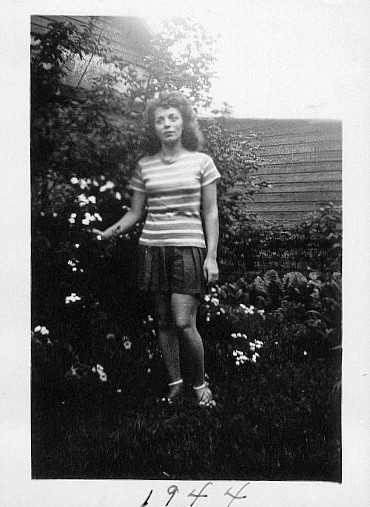
So you can look at the picture here of the dreamy-eyed young woman in 1944, who doesn't know that at 24 she's got but 30 years left to live. She's lived almost half her life.
After me, two daughters, Kathy in 1950, Debbie in 1954. She knew one granddaughter, Kathy's daughter Christina ; if she'd lived just another decade, she would have known two more: Debbie's daughters, Sarah and Megan.
I can't say when exactly I developed the perspective that would have allowed me to talk with my mother without so much of the freight of parent-child relationship expectations and habits of feeling and thought. But it wasn't fully developed when she was alive. I was smart about some things at 28, and clueless about a lot more. The father-son thing is more complicated, and I may never have gotten out of that dynamic. But I often feel I could have learned a lot and had a better relationship with my mother over these many years.
Not that we had a bad relationship. There just wasn't much perspective in it, at least on my part. So I wonder what it would have been like, to be able to talk to my mother when I was 40 or 50, or now. Apart from what it would bring to the present, there would be a lot of past to talk about, now that I'm more deeply interested in the past, having acquired quite a bit of it.
I would have liked to light 85 candles on her cake. As I say, it makes quite a fire.
She would have been eighty-five yesterday, on September 13. My mother was born in Italy in 1920, named after the character in a novel my grandmother was reading. My grandmother was one of the few women in her village in the Abruzzi mountains who could read---she read letters for people, and wrote their replies. It's how she found out that another woman had her eye on Ignazio Severini, her intended, who was away at war in the north, the Great War. But that's another story.
Flora came to America with her mother when she was four, and met her father, who'd left Manopello to work in Pittsburgh as a tailor when she was an infant. She grew up in Youngwood, PA, a small western PA railroad town about six miles from the bigger town of Greensburg, where she lived most of her life. She married my father in August 1945. I was born at the end of June in 1946.
So I'm less than a year shy of 60 myself, an age my mother didn't reach. (Her mother, however, passed 85; I took her a birthday cake and lit 85 candles on it---it was in the kitchen in the photo above. It makes quite a fire.) Flora died in 1974, after surviving her cancer past the supposed 5 year safety mark.
So you can look at the picture here of the dreamy-eyed young woman in 1944, who doesn't know that at 24 she's got but 30 years left to live. She's lived almost half her life.
After me, two daughters, Kathy in 1950, Debbie in 1954. She knew one granddaughter, Kathy's daughter Christina ; if she'd lived just another decade, she would have known two more: Debbie's daughters, Sarah and Megan.
I can't say when exactly I developed the perspective that would have allowed me to talk with my mother without so much of the freight of parent-child relationship expectations and habits of feeling and thought. But it wasn't fully developed when she was alive. I was smart about some things at 28, and clueless about a lot more. The father-son thing is more complicated, and I may never have gotten out of that dynamic. But I often feel I could have learned a lot and had a better relationship with my mother over these many years.
Not that we had a bad relationship. There just wasn't much perspective in it, at least on my part. So I wonder what it would have been like, to be able to talk to my mother when I was 40 or 50, or now. Apart from what it would bring to the present, there would be a lot of past to talk about, now that I'm more deeply interested in the past, having acquired quite a bit of it.
I would have liked to light 85 candles on her cake. As I say, it makes quite a fire.
Saturday, August 30, 2003
The Wealth of Neighbors
I'm sure the smell of tomato plants in the summer is a very early memory. My grandparents Severini grew tomatoes in their garden in the back yard. I don't remember those tomatoes as well as the plants in the garden between our back yard and the house directly "above." (It was above because a series of hills making up at that time one long ascent pretty much ended at our back yard, and there were four more streets behind us on that plateau.) That garden belonged to the Petroys, one of which was a relative of my Severini grandfather. There were lots of Italians in our area, many of them from the same village or region of Italy, and lots of them related by blood and marriage. Where there are lots of Italians there are lots of tomato plants, and they became a standard for other people as well. That was our world: we ate chipped ham sandwiches, skyscraper cones and Klondike bars from Isaly's (before the rest of the planet knew about them), and we had gardens and tomatoes.
The Petroy's garden was huge. All of the Petroy's-Katie, Jimmy, and Uncle Frank-- lived a long time-I hear Katie is alive still, she must be 100 by now. But as they got older the garden got smaller, especially the rows of tomato plants. Of course, as I got older the garden also seemed smaller. I remember running through the rows when the plants were taller than I was, and being yelled at by Katie or Jimmy. That garden was a small neighborhood adventure.
We didn't have a garden, or at least not much of one. My mother wasn't the outdoor type I guess, and my father wasn't interested (besides, not Italian.) But about this time every year, baskets and boxes of tomatoes and peppers would begin appearing in the kitchen. Neighbors would sometimes bring them and visit with my mother, or just exchange a few words at the back door. If we weren't home, tomatoes and peppers appeared on our back porch. Later on I sometimes cooked up some for myself, tomatoes and peppers in olive oil.
I remember these gardens when I smell Margaret's tomato plants. I water them, and I pick the tomatoes. The little orange ones will tell you when it's time---they'll fall into your hand with just a touch, or a slight twist of the stem.
I also think about the tomatoes on the back porch when I read the latest tortured explanations of the selfish gene and Darwinist natural selection. I don't argue with evolution, I just don't think it's necessary or realistic to think of everything only in terms of competition, of the struggle to survive. It doesn't take much more than common sense to see that cooperation is also essential.
Sometimes they're related, I'll grant you that. Sharing your bounty of tomatoes, like sharing your deer meat when you've come home with a buck across your car hood, is a form of bragging, of boasting of your skill and luck. But the good feeling you get from sharing your good fortune is a good feeling you can get from sharing and cooperating in other ways, and that rush of lovely chemicals must be pretty much part of our standard equipment by now. It encourages you to share. It also encourages you to excel, so you’ll have something to share.
Some Native cultures associate wealth with sharing, to the point that when somebody gets too wealthy they hold a give-away and give it all away. It’s an anti-envy move as well, but then virtues and vices are invariably related.
One more thing about the Petroy's garden. It got bigger when Katie's daughter Lucy moved in next door, and the combined garden crossed their backyards. She had married Corky Cocheletti, and they had a son also called Corky. He was younger than me so I didn't play with him much, except that his father had some boxing equipment in the basement and we got interested in that for awhile. I did go with both Corky's to my first high school football game, a thrilling experience---under the lights, all the sounds, the band, the cheerleaders, hot dogs and so on. And football with real equipment not on TV or a mile away from you sitting high in some stadium.
Anyway, young Corky grew up to be a model, for awhile the top male model in America. There was at least one magazine in the 70s that had an article by me and a picture of him. He was also trying to be an actor (he had some movie parts, and shows up even now on commercials occasionally), and he dated Pam Dawber when she was the costar of Mork and Mindy. He brought her to the neighborhood one day. I wasn't there but I hear she really liked the garden.
I'm sure the smell of tomato plants in the summer is a very early memory. My grandparents Severini grew tomatoes in their garden in the back yard. I don't remember those tomatoes as well as the plants in the garden between our back yard and the house directly "above." (It was above because a series of hills making up at that time one long ascent pretty much ended at our back yard, and there were four more streets behind us on that plateau.) That garden belonged to the Petroys, one of which was a relative of my Severini grandfather. There were lots of Italians in our area, many of them from the same village or region of Italy, and lots of them related by blood and marriage. Where there are lots of Italians there are lots of tomato plants, and they became a standard for other people as well. That was our world: we ate chipped ham sandwiches, skyscraper cones and Klondike bars from Isaly's (before the rest of the planet knew about them), and we had gardens and tomatoes.
The Petroy's garden was huge. All of the Petroy's-Katie, Jimmy, and Uncle Frank-- lived a long time-I hear Katie is alive still, she must be 100 by now. But as they got older the garden got smaller, especially the rows of tomato plants. Of course, as I got older the garden also seemed smaller. I remember running through the rows when the plants were taller than I was, and being yelled at by Katie or Jimmy. That garden was a small neighborhood adventure.
We didn't have a garden, or at least not much of one. My mother wasn't the outdoor type I guess, and my father wasn't interested (besides, not Italian.) But about this time every year, baskets and boxes of tomatoes and peppers would begin appearing in the kitchen. Neighbors would sometimes bring them and visit with my mother, or just exchange a few words at the back door. If we weren't home, tomatoes and peppers appeared on our back porch. Later on I sometimes cooked up some for myself, tomatoes and peppers in olive oil.
I remember these gardens when I smell Margaret's tomato plants. I water them, and I pick the tomatoes. The little orange ones will tell you when it's time---they'll fall into your hand with just a touch, or a slight twist of the stem.
I also think about the tomatoes on the back porch when I read the latest tortured explanations of the selfish gene and Darwinist natural selection. I don't argue with evolution, I just don't think it's necessary or realistic to think of everything only in terms of competition, of the struggle to survive. It doesn't take much more than common sense to see that cooperation is also essential.
Sometimes they're related, I'll grant you that. Sharing your bounty of tomatoes, like sharing your deer meat when you've come home with a buck across your car hood, is a form of bragging, of boasting of your skill and luck. But the good feeling you get from sharing your good fortune is a good feeling you can get from sharing and cooperating in other ways, and that rush of lovely chemicals must be pretty much part of our standard equipment by now. It encourages you to share. It also encourages you to excel, so you’ll have something to share.
Some Native cultures associate wealth with sharing, to the point that when somebody gets too wealthy they hold a give-away and give it all away. It’s an anti-envy move as well, but then virtues and vices are invariably related.
One more thing about the Petroy's garden. It got bigger when Katie's daughter Lucy moved in next door, and the combined garden crossed their backyards. She had married Corky Cocheletti, and they had a son also called Corky. He was younger than me so I didn't play with him much, except that his father had some boxing equipment in the basement and we got interested in that for awhile. I did go with both Corky's to my first high school football game, a thrilling experience---under the lights, all the sounds, the band, the cheerleaders, hot dogs and so on. And football with real equipment not on TV or a mile away from you sitting high in some stadium.
Anyway, young Corky grew up to be a model, for awhile the top male model in America. There was at least one magazine in the 70s that had an article by me and a picture of him. He was also trying to be an actor (he had some movie parts, and shows up even now on commercials occasionally), and he dated Pam Dawber when she was the costar of Mork and Mindy. He brought her to the neighborhood one day. I wasn't there but I hear she really liked the garden.
Tuesday, July 01, 2003
As much as I disparage the obsession, the addiction, the insidious tyranny of consumerism, I don't follow any party line. For example, I like some designer label clothes. There is something to be said for them. If I could afford it, I would wear a lot of Armani. Perhaps this comes from being the grandson of a tailor (an Italian one at that), because what I like and value about Armani clothes is their style, and that they are well made.
Of course there are certain names that are pure bull and marketing, that are no better and may be worse than non-name clothes. But some do mean something.
And many people, it seems, wear designer label clothes for the label, not the clothes or the designer. But to refuse to wear these clothes because of these people is to play their game.
In fact, my suits, shirts and some of my ties (none of which I have the opportunity to wear much these days) are designer label, although without exception I bought them either on deep discount or more typically in thrift stores. But even second-hand, they are in better shape than a lot of full price clothes. They are made in France, England and Italy, of good fabric. They are probably not as well made as the more expensive designers, and may even be as well made as the suits my grandfather tailored for his customers, in the small American town where he had his shop.
Of course there are certain names that are pure bull and marketing, that are no better and may be worse than non-name clothes. But some do mean something.
And many people, it seems, wear designer label clothes for the label, not the clothes or the designer. But to refuse to wear these clothes because of these people is to play their game.
In fact, my suits, shirts and some of my ties (none of which I have the opportunity to wear much these days) are designer label, although without exception I bought them either on deep discount or more typically in thrift stores. But even second-hand, they are in better shape than a lot of full price clothes. They are made in France, England and Italy, of good fabric. They are probably not as well made as the more expensive designers, and may even be as well made as the suits my grandfather tailored for his customers, in the small American town where he had his shop.
Subscribe to:
Posts (Atom)