Sunday, November 21, 2021

Soul of the Future: Secret Progress Report II


More than three years ago now I reported on my plan to post a Soul of the Future series (over at Captain Future’s Dreaming Up Daily) as a way to complete this writing project, which had already gone on for some 20 years and counting.

 I recently posted the last chapter in this series.  It’s been a long road, but this experiment was successful in that I completed a “draft” that could stand as a whole.  The question now is what if anything to do next on this project.

 As I noted in the earlier report, this project goes back to when I was living in Pittsburgh in the mid-1990s.  It started with my observation that there were plenty of scenarios about an apocalyptic future, especially in popular culture forms (movies, TV.)  But I could think of only one scenario of a better future, and that was Star Trek—which happened at that time to be the most popular story about the future just about everywhere in the world.  Star Trek: The Next Generation was still making new episodes, though it was probably coming to an end. 

 The other scenario for a better and much different future was, in a strange way, the Ghost Dance.  Native American ideas were in the air in 1992 because it was the 500th anniversary of Columbus “discovering America.”  I’d done an article on American Indians in Pittsburgh, and started becoming familiar with contemporary Native literature.  Two scholars at the University of Pittsburgh had a public forum where one of them read the chapter of Leslie Marmon Silko’s novel Almanac of the Dead, in which there were a few sentences about the Ghost Dance coming true—the West emptying out of people, the buffalo returning, etc.  That idea caught my imagination as a larger metaphor. 

 I did a piece for the Smithsonian Magazine on two contemporary Native artists in Canada, and a few other pieces, while reading a lot of American Indian writing. I saw a way of being in the world that added spiritual dimension to contemporary ecology and related concerns.

 So for awhile the working title of my project was “Star Trek/Ghost Dance.”  I’d been interested in the future through popular science fiction in my boyhood, and as a subject through articles I’d researched on the futures studies and related movements of the 1970s. And I’d written on Star Trek before, seen it all and knew it well.  So I had a good grasp of that end of it.

 In the fall of 1996, I moved with my partner Margaret to far northern California.  I worked for awhile for a Native grassroots organization called the Seventh Generation Fund, and I wrote the script for a video on forest issues.  All of that was contributing, but the idea was still growing.

 One of the major perks of being the partner of a tenure track professor was access to the university library, and the ability to take out lots of books.  I don’t recall why I focused in on H.G. Wells for this project, but the library had a couple of shelves of books by and about him, and as I worked through these, Wells became a bigger part of this project. His focus on the future, his apocalyptic and utopian writings, and as a forerunner of many ideas physically realized in Star Trek, all became relevant.

 For awhile the parallels between Wells and Star Trek's Gene Roddenberry fascinated me, to the extent that I tried to write a double biography.  But both of them led to other science fiction writers and movies, relevant to my project.

 Wells led into other areas as well.  He was a student of T.H. Huxley, Darwin’s friend and defender, and Darwinian evolution was central to his approach to the future, especially in his first novel, The Time Machine. So I read more deeply into contemporary thought on evolution and Darwin.  At this point I was also reviewing books for the San Francisco Chronicle and the North Coast Journal, and so I got access to new books on the subject.

 At the same time as all this started in Pittsburgh, I began reading the American Jungian psychologist James Hillman.  In Arcata I added Jung himself, beginning with the library’s shelves, and ending up with a few shelves of my own, thanks mostly to used bookstores.   

One day I was musing about combining these two obsessions of Wells and Jung, and mused about writing a play in which they meet, only to find that they had known each other.  This led me to writing a play about a conversation they could have had in the U.S., which also involved the Ghost Dance.  But I also realized that a number of Jungian concepts were useful in my futures project.

 That’s partly because, by this time, I’d broadened the idea to “soul of the future.” (Jung pointed out that a translation of "psyche" is "soul.") I read Hillman and other contemporaries on soul, when that was a hot subject in the 1990s and early 2000s.  The subject of soul involved the subject of imagination, and the emphasis on scenario or story in futures studies also involved reading in these areas.

 Running parallel in time was the growing crisis of climate disruption.  I’d been reading and writing about it since 1990.  I wrote about it incessantly online, in book reviews and essays in the SF Chronicle and elsewhere.  So I was well informed on the nature and extent of this crisis that threatened civilization and the planet’s life as we know it.
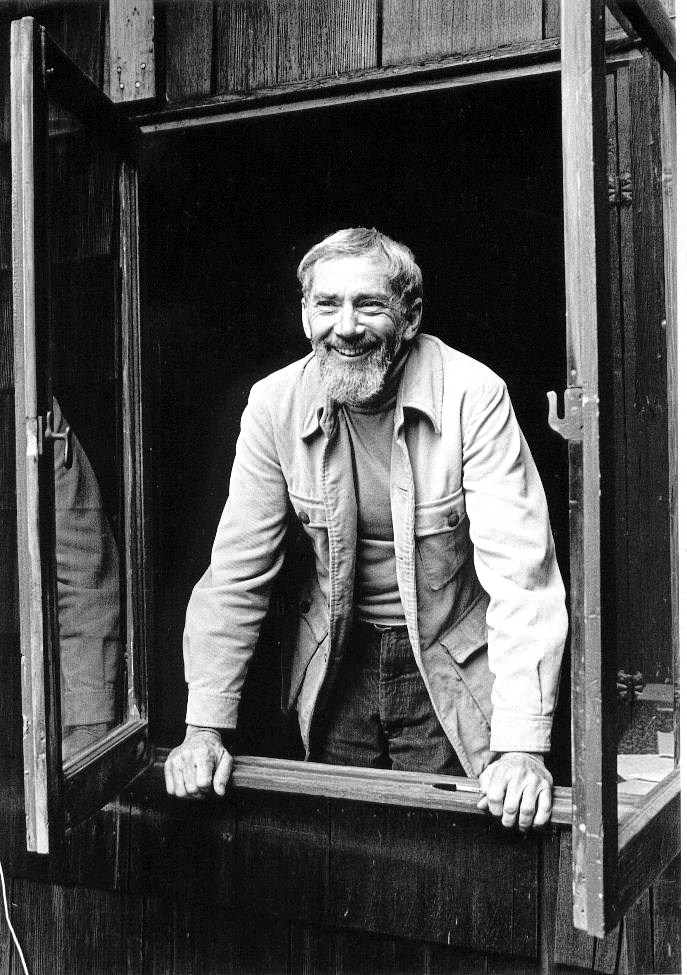
In Pittsburgh I had acquainted myself with the work of pioneer ecologist--and human ecologist-- Paul Shepard, whose first book I'd known since college.  He had taught at my college until the year I arrived, but we had a mutual friend, and we exchanged letters before his untimely death.  When I got to Arcata his widow Florence Shepard contacted me about writing something for a special issue of an environmental magazine about Paul, and after that, at Flo Shepard's request and with her participation, I wrote and gathered material and created a Paul Shepard website.  His work was a profound influence, including on the futures project.

 I’d begun drafts for this future project in the late 90s, and continued through the decade of 2000 and into the next decade.  I created separate files for drafts of each year.  Some of those files are fat, and some are thin.  I started each draft with enthusiasm but wound up exhausted and discouraged.  There was too much stuff.  I had lots of problems with scale.  Chapters that were exhausting to write were also exhausting to read. They didn’t lead anywhere.

 I was writing a lot of other stuff, of course.  Some elements of this project got into essays I wrote for the San Francisco Chronicle, for example.  And I did a New York Times article on Star Trek.  Then I found myself writing about local plays and (for the university departments), press releases about university plays and music events, that wound up in local papers which pretty shamelessly printed press releases verbatim.  There were weeks when I was writing most of the performing arts articles that appeared in the 4 local papers (three weeklies and the weekly arts section of the daily, or briefly, the dailies.)  There wasn’t a lot of time to pursue other projects—and I had more than this one.  

But I managed to read a lot that helped shape the futures project, including books by W.I. Thompson, Lynn Margulis, Kim Stanley Robinson and Ursula Le Guin.

 Since my “retirement” and the collapse of the freelance market, I’ve concentrated on my own work, including these projects.  My last progress report was about my realization that “serializing” this futures project as blog essays might center it.  Perhaps from habit, I found it easier to write in this form than in facing all the white space on the digital page. I’d found something like a voice (a blue voice?) and that’s essential.

 Getting past individual topics led to finding themes to unify the series, which alone is a good guide to another draft.

 But by the time I completed the series in 2021, something else had happened—not so much to me as to the future.  The future had contracted. Largely because not nearly enough had been done to address the climate crisis, it was now all but certain that it was going to dominate the future, as it already had begun to dominate the present, along with the parallel eco-crisis expressed in mass extinction.  It had become highly probable that humanity no longer could make choices that would ensure a smooth path to a better future And the deteriorating political consensus especially in the US made the outlook especially bleak.  There is probably going to be an apocalyptic period to some meaningful degree.  And suddenly all my words seemed beside the point.

 Yet in my last posts I found reasons why centering on the future was still important, was in fact crucial.  This project was always meant to be a book, and while the chances of my book being at all influential seem to have diminished, it still might be worthwhile.

  I would still need to work up the faith that it might, and though I was fairly pleased with what I had written in the past three years on this subject, I didn’t ever get much positive comment.  It was seldom the feature of my blog that anyone mentioned.  If I wasn’t connecting, what is the point?

 When I was completing the last posts, realizing I’d left so much out from my original plan, I considered that at best these posts constituted a decent first draft.  But that was their purpose.  A complete first draft is what I never had.  And now I do.

 Still, by the time I finished, I thought I was really finished with it, that this would be the end of this project. Especially after the massive silence that greeted the end of it.  And it may well be.

 On the other hand…Over the years, especially before the Internet was the chief repository of information, I compiled file cabinet drawers full of files. Recently I began looking to get rid of those files, but in leafing through them, I’ve found things that could enhance the material I have as organized in my blog posts.  So I may make digital notes from those files before they end up in the recycling bin.  And that in turn could lead to a second draft. 

 So maybe the project isn’t over.  Maybe there’s a book called Soul of the Future with my name on it, sometime, in the future… 

Saturday, November 13, 2021

Busby Berkeley, Historian


 Busby Berkeley is both famous and notorious for his extravagant dance numbers in movies from the 1930s through the 1950s.  But at least in one instance, two of his musical numbers reflected the times and now attest to their history, though audiences today may not fully understand what they are about.

 “If you want to understand the key to Busby Berkeley’s choreography,” said Berkeley biographer Terry Thomas in a TCM documentary, “you have to consider the military.”


 In 1917, the 22 year-old Berkeley was drafted into the U.S. Army.  By the time he arrived in France as a field artillery lieutenant, the fighting was nearly over and American troops had little to do.  So he was tasked with marching and drilling them, and in the course of inventing new formations and maneuvers, he essentially invented the style that was to characterize the work of his career.  Except instead of just male soldiers, he had armies of beautiful young women, and a camera that found both large geometric patterns and the intimacies of faces and other elements of anatomy.

 After successfully bringing this style to Broadway (minus the camera), Berkeley was drafted by Hollywood.  He soon wound up at Warner Brothers for a series of movies that would revive both musical films and the studio’s fortunes.  He started with two of his most famous, back to back, both made and released in the depths of the Great Depression.

 The first was 42nd Street, released in 1933.  Warners organized a big publicity campaign involving a train loaded with studio stars touring cities, culminating in the film’s premiere in Washington, D.C.  Jack Warner, head of the studio, was a fervent FDR backer, and he timed the 42nd Street opening to Roosevelt’s Inauguration. 

42nd Street was a big hit and a critical success.  It set the template for the series of Warners musicals that starred Berkeley’s choreography: a backstage story about mounting a show, then the featured numbers presented as the opening night.  The music by Harry Warren (with Al Dubin’s lyrics) was innovative in that it included a mix of styles, especially jazz influences.  But it wasn’t a complete break: there were plenty of soporific love melodies.

 Back in Hollywood immediately afterward, Berkeley worked on musical number for the next Warners musical, Gold Diggers of 1933. The story had been the basis for a play and a couple of movies with “Gold Diggers” in the title (and there would be more.)  Directed by Melvyn Le Roy, it was released later that year, and again, it was a major hit.

 Apart from the insipid and cringe-worthy numbers were two that spoke directly to the audience about elements of the Great Depression they had just experienced, and that would continue to affect their lives.

 We’re In The Money


The first was the now iconic presentation of the song, “We’re in the Money,” featuring a very young Ginger Rogers belting the tune (and singing part of it in Pig Latin crossed with jive) while seemingly wearing nothing but strategically placed coins (although some shots reveal she was wearing a body stocking.)

 The song is usually interpreted as wishful thinking about post-Depression prosperity, but it has a much more specific meaning that audiences in 1933 would understand.

 Upon taking office in March 1933, FDR first of all had to deal with the banking crisis, to keep money in circulation.  Deposits were guaranteed for the first time. Besides new jobs and relief programs, his administration bolstered the economy with price supports for farmers, a minimum wage for workers and uniform rules for businesses. 

But money was still too tight for economic growth, so FDR essentially took the country off dependence on gold as the backing for currency: the so-called Gold Standard.  Everyone knew about this because everyone in the country was required to turn in their gold coins (which came in various denominations) in exchange for paper money or silver, including silver dollars.  Going off the gold standard meant that the federal government could increase the money supply, and it did.  And that’s what “We’re In the Money” is about.

 It’s right there in the first verse:

 Gone are my blues and gone are my tears/

I've got good news to shout in your ears/

The long lost Dollar has come back to the fold/
With silver you can turn your dreams to gold, oh/

We're in the money/
We're in the money/
We've got a lot of what it takes to get along...

It’s been suggested that in this black and white movie, Ginger Rogers and the chorus girls, as well as the set itself, featured gold coins.  But the point is that they aren’t: the coins feature a caricature of the face on the silver dollar.  Those are the silver coins that represent the new flow of money resulting from FDR’s policies (“with silver you can turn your dreams to gold.”)  All of this would have been instantly clear to the 1933 audience.


 Remember My Forgotten Man

 A more poignant and equally specific reference is made in the last big production number, “Remember My Forgotten Man.”  The Depression is not a subtext: it is the text, and is dramatized.  There’s the obvious reference to FDR’s  “the forgotten man at the bottom of the economic pyramid” from a 1932 radio address.  But as Joan Blondell continues to sing about her specific forgotten man, he turns out to be a veteran of World War I. 


  The number features a solo by Etta Moten (who also dubbed part of Blondell’s singing), a distinguished Black singer whose Gospel background emphases the bluesy spiritual feel of this elegy.  

Again, the feeling was even more specific to the times, for the plight of World War I vets had been dramatized for all the country to see just the previous spring and summer of 1932.

 In the spring, thousands of American World War I veterans gathered in Washington, D.C. to petition Congress to pay them the war bonus they’d been promised for 1945, because they were in desperate straits.  They remained there in makeshift encampments, many with their families, through the summer, continuing to lobby Congress.  The press covered the story extensively, dubbing them the Bonus Army.

 The veterans organized themselves into units, led by officers.  In contrast to the armed forces in both world wars, their units and their camps were racially integrated.

 Things were at an impasse in late July, with Congress failing to provide the bonus and with President Hoover opposed to it. It was then that a police officer trying to clear away a crowd from the entrance to the Treasury Department panicked and shot a veteran dead.  Hoover called out the Army to settle things down.  Instead, General Douglas MacArthur decided to make war on the Bonus Army.

 MacArthur, with his officers including Major Dwight D. Eisenhower and Major George Patton, deployed tanks and tear gas, routing the veterans and burning down their camps with gasoline. (This was probably the first time tear gas was used by Americans on other Americans.)

  Patton led a cavalry charge with drawn sabers against unarmed men, women and children.  In a deadly irony pointed out by historian William Manchester, among those that Patton’s forces attacked was a World War I veteran decorated for saving the life of Patton himself. 

 Many of the veterans were literally run out of town, in trucks that took them west to Ohio and beyond.  Though newspaper stories of the day tended to support the government line that the Army had thwarted dangerous criminals and radicals, many Americans knew men who were there. Hoover never recovered his political reputation.  If he’d had any chance of winning the election that fall, it probably ended with his administration’s treatment of the Bonus Army. 

All of this could not have escaped the attention of that era’s veterans, like Busby Berkeley.  But the Bonus Army had also inspired a great deal of sympathy and support among the people who would be watching this movie. When they saw and heard “Remember My Forgotten Man,” they would likely remember the Bonus Army.  Even in this dubious context, this song was as close to a memorial that it would get.

Monday, November 08, 2021

Choosing


Choosing

Was it home or foreign
 that city without color
 where I once lived for a time
 that often seemed long
 thinking there was no choice 
and all night I heard the captive
 lions roaring

 now I look back
 from when the rain is falling
 in the bright day

 a friend and I
 talked back then about a tree
 whose branches were the choice that we
 had not taken
 then she chose not to be

 never was there any such tree

 better
 the sound of the rain
 better the brightness falling
 better the day
 choosing to be morning

--W.S. Merwin

photo: Henri Cartier Bresson

Friday, November 05, 2021

What Dreams Are For

What are dreams for?  It seems to me the overlooked function of dreams is to keep us asleep.  A rested body I imagine has survival value, and an absorbing story can divert attention away from possible outside and even internal distractions that might cause us to wake ourselves up.  (This could also be a reason we don't remember all our dreams.  They served their function in sleep.)

Dreams tell us stories.  They can be weird stories, with the gaps in easily followed narrative logic of the stories spun by a young child,  leaping around through time and space, with characters that appear and disappear, transform and wander away, with no obvious beginning or end, not to mention a middle.  But they are stories, and often have the power to evoke powerful emotions within the sleeping state, some of which are stronger than those we usually can access awake.

Which suggests the question: which came first?  The dream story or the waking story?  Stories are a way to structure information.  It's generally suspected that their function in life in the world is that they organize memories and help us remember things it is useful or even vital to remember.  A good story makes things vivid.  Or the way it is told (in song for instance) is catchy.  If the story is about a place where a dangerous predator hangs out, or where there's a source of water, we're more likely to remember it and benefit thereby.

But was this way of structuring information suggested first by dreams?  If so, how did the brain become a storyteller?  It could be that in the interest of keeping us asleep, it invented the story.  Then the story migrated to daydreams and then to an entertaining way of bragging about a successful hunt.  

Another function of story, as athletes in particular use, is as an imaginative rehearsal.  Through the story you tell yourself, consciously or in a daydream or even a night dream, you imagine situations and what you do.  These may be rehearsals for facing these situations in life.  Athletes have found that the body as well as the brain learns from these rehearsals.

Of course this is all massively overdetermined--dreams likely have a number of contributing causes and functions, like stories do.  And dreams probably have all kinds of effects, including psychological, symbolic, maybe even precognition and so on.

Some scientists believe that in dreams the brain is sorting through information gathered in the past--the previous day, or in childhood---and using it for stories.  It may also be a way of bringing perceptions that never quite made it into consciousness or awareness beyond the momentary that got sorted into the background, into awareness.    

But why don't we always remember the information in dreams?  Why are dreams often such weird stories?  There may be good reasons we don't understand.  But then again, maybe dreams are stories that haven't quite gotten their act together.

  One reason we don't remember much, or why dreams are so weird (and sometimes wake us up instead of keeping us asleep) could be that dreaming as a brain function is a work in progress.  Unlike, say, vision, the brain hasn't yet coordinated such a complicated process to work smoothly, all the time.  The very complicated human organism hasn't worked out the kinks.  Maybe in a few million years, though.

Saturday, October 30, 2021

A Severini Saga

I haven't been posting so often on this blog recently, partly because I've been engaged in another project: researching and writing a narrative of my extended family, from what origins I could find to my memories of the 1950s.

I expected this to be of interest only to my family, including (I hope) its younger members when they get older and curious.  Like a lot of my retirement projects, it's been something I've pursued off and on, over decades. It's been fascinating for many reasons, and often frustrating, especially because I never asked a lot of these questions of those who could have answered while they were alive.  My grandmother Severini was the exception--she shared her stories in conversations in the 1970s and 80s.  And I did talk to my Aunt Toni in the 90s about her memories and her life.

  Fortunately, an uncle on each side of the family was able to help with their recollections and confirmations as I worked on this for the past few months.  But it is a sobering lesson in how we change over time, and how self-absorbed we tend to be for much of our lives, while the people who can tell us so much about the past that is the ground of our own being, fade away unasked.

I mention all this here because I did not do the standard sort of family history.  I included the contexts of place and the times.  So there may be some common ground of interest, particularly in what turns out to be a history of the first half of the 20th century that surrounds one family.  

So if you are interested, here it is: the blog I created to tell A Severini Saga, which I hope will be extended by information and memories from other members of my family, particular for the years after 1960.  (If for some reason the link doesn't work, the blog address is: severinisaga.blogspot.com.)

Wednesday, August 18, 2021

The Way It Is


The Way It Is

There’s a thread you follow. It goes among
 things that change. But it doesn’t change.
 People wonder about what you are pursuing.
 You have to explain about the thread.
 But it is hard for others to see.
 While you hold it you can’t get lost. 
Tragedies happen; people get hurt
 or die; and you suffer and get old.
 Nothing you do can stop time’s unfolding.
 You don’t ever let go of the thread.

 --William Stafford 

 Just after my 75th seems a good time to post this poem (together with this scene from my  childhood), which expresses a guiding principle of my life and (as it turns out) my lifetime.

Sunday, July 25, 2021

How It Happens


How It Happens

 The sky said I am watching
 to see what you
 can make out of nothing
 I was looking up and I said
 I thought you 
were supposed to be doing that
 the sky said Many
 are clinging to that 
I am giving you a chance
 I was looking up and I said
 I am the only chance I have 
then the sky did not answer
 and here we are 
with our names for the days
 the vast days that do not listen to us

W. S. Merwin

 “In Blake, we recover our original state, not by returning to it, but by re-creating it. The act of creation is not producing something out of nothing, but the act of setting free what we already possess.” --Northrup Frye

Photo: Trinidad Head June 30, 2021

Friday, July 09, 2021

Children of Truffaut: Call My Agent!


The TV series “Lupin” has been getting most of the media attention, but another series from France is also a streaming hit: the human comedy “Call My Agent!”  Made for French TV beginning in 2015 and broadcast as “Dix Pour Cent” (Ten Percent), it was soon picked up worldwide, including by Netflix in the U.S.

 Originally conceived to run four seasons (all now available for streaming, with the fourth season this year), it was recently announced that there will be a fifth season, following a 90 minute TV movie.  Meanwhile, other nations are making their own copies, including an English language version shot in the UK.

 “Call My Agent” is about a struggling Paris talent agency with star movie actors and directors for clients.  The series follows the agents interactions with usually one or two French film stars in each episode, as well as depicting the drama and comedy in their own lives.  

 Netflix made a key decision in not dubbing “Call My Agent!” (as it does most other foreign-made series.) It relies instead on subtitles.  It was a daring but brilliant move, because the sound of the French language—even for those of us who don’t understand it—is essential (as well as a subtle reminder that most Americans who have seen French films, saw them with subtitles.)  The reason is simple: this series is very, very French.  Or more specifically, it is the French as we have seen them in exported French films.

 So I find it strange that the U.S. media I’ve seen never seems to acknowledge this essential quality.  Even the creators and producers of the series only mention American television programs, the “workplace” dramas and comedies like “The West Wing” (or they do when talking to American media.)  

Truffaut in a dream sequence in Day for Night
Yet the most obvious progenitor of this series is the French director Francois Truffaut.  Specifically it is the child in subject and spirit of Truffaut’s 1973 film “Day for Night” (“La Nuit Americaine), which is about the making of a movie, the personalities and relationships on the set, and the interactions with the movie business, the outside world and non-movie people. The peculiarities and complexities of actors and others in the theatrical and moviemaking world, and their shared love of their art, are at the heart of "Day for Night" and ultimately of "Call My Agent!"

 There are echoes of other French directors as well (including Claude Lelouch, who appears in the series) but to me Truffaut’s influence is the clearest. Several times I’ve thought while watching, “this is a Truffaut moment.”  I was feeling that strongly in the third season episode in which a baby was born in the agency office—and then suddenly the unmistakable Baroque theme from “Day for Night” played on the screen.

 It also doesn’t hurt that at least a couple of the French film stars who appear in the series previously worked with Truffaut and often are identified with him: Isabelle Adjani and Nathalie Baye (who appeared in three Truffaut films, including “Day for Night.”)   

J-P Leaud with Jacqueline Bisset and Truffaut in
Day for Night
The series character, the agent Gabriel, is highly reminiscent of the characters Antoine Doinel (in several Truffaut movies, starting with his first, “The 400 Blows”) and the actor Alphonse in “Day for Night,” both played by Jean-Pierre Leaud: placid and charming, who suddenly explodes with impetuous passions, yet is basically good-hearted.  When Gabriel tells an outrageous lie in order to deny financing to a film because he’s jealous of his actor girlfriend’s relationship with the film’s director/star, it’s exactly the kind of move Doinel/Leaud would make.

 The character of the young Camille (who we follow first in season one, but who unfortunately often fades into the background thereafter) has that Truffaut mixture of intelligence and innocence.  It’s a part Nathalie Baye might have played in a Truffaut film.

 At the same time, this series is a descendant, not a copy.  The cast is multicultural, the relationships are not all heterosexual, the visual style is contemporary. The acting is first rate.  I wouldn’t be surprised to see several win acting awards in the U.S.: Camille Cottin (as Andrea), the fearless Laura Calamy (Noemie), Gregory Mantel as Gabriel, and perhaps more.

 Still, the overall affect of the series—intelligent, ironic, yet sincere, with moments of exhilarating humanity—is very French, and goes with the language, the gestures, and the style. (Even the older male agent Mathias dresses with understated French elegance.)  In terms of narrative style, the characters may be at time excessive, but are never cartoons.  This perhaps most of all is what viewers of the best French films expect.

 In a fourth season episode, Gabriel and his ravishing, now ex-girlfriend Sofia, are talking at a party.  He tells her a tall tale which she is believing, until he admits he’s making it up.  But he says that her wide-eyed belief “is very moving.”  Those are words, and this is a moment, that in my experience can only occur in a French film.

  Maybe a British series about a talent agency based on these characters can work.  But it will be very, very different.


Wednesday, April 28, 2021

Ingenuity


It was a little more than a week ago, very early in the morning on the East Coast and even earlier here in the Western US, and not many people were watching.  The eyes of the news were on mass shootings, police killings of black Americans and the Chauvin trial.  But I happened across a link just as the NASA live feed was starting, so I got to see evidence of the first successful flight of a powered vehicle on another planet (or at least the first initiated by humans, that we know of) at the same time the people at NASA did.

 They were a dozen or so people around hotel convention tables arranged in a horseshow, all of them masked up, most of them wearing NASA orange smocks or golf shirts, peering at their own laptops and glancing up at the big screen at the end of the room.  Many of them had been working on this specific project for 6 years or more. 

 They were waiting to learn whether the flight of Ingenuity, a tiny Kleenix box of instruments attached to very long and ungainly shaped rotors, had actually flown a little earlier, since it takes hours for signals to traverse the distance between Mars and Earth.  Nobody really knew if flying would work in an atmosphere less than a percent of Earth's.

 The NASA channel—which, when I had it on our cable TV system and the Shuttles and Space Station had cameras always pointed towards Earth, I sometimes let just run with this portrait of our planet in real time, in the background—did a fine job of covering this Ingenuity flight story.  A brightly smiling interviewer elicited the pertinent information from various participants in the room, though the answers got less and less coherent as the big moment got closer and closer. 

 Then she did something pretty striking: she shut up, so we could just witness what went on in that room. As I watched the screen full of people watching their screens, I reflected on the deceptive amount of computer power in those laptops and inside that interplanetary tissue box on Mars, and the fact that the Apollo missions that landed humans on the moon had at their disposal much less computer power than a smartphone.      

 We who were watching (and some were: they had sent in questions through various social media) were primed on what to watch for.  So we got the quiet excitement when the initial data package came in, and it looked “nominal” (NASAspeak for A-OK.) The data went from one analyst to another, each adding more information until we all together got the first visual confirmation: a simple diagram, sent by Ingenuity via several links, that mapped its flight: it went straight up, flew sideways, stopped and came straight down, and landed.  That diagram was as exciting as HD video.  It meant it happened.  The first cheer went up in the room.

 A few seconds later we saw the first photo: a black and white snapshot taken by Ingenuity’s camera pointed straight down from the air, looking like a film photography negative, in which the shadow is Ingenuity itself.  There would be other photos and other flights this week, but this will remain the historic one. More cheers in the room, though social distancing meant no hugs.  But the project manager did jump up and down, in place.

 So it meant something to me to be watching this in real time, a memory to set beside seeing in real time the first human step onto the surface of another world When Neil Armstrong touched the Moon, we all did, in a way.  It was the same with Ingenuity’s flight.

 Ingenuity has flown farther and for a longer time, and will probably be pushed beyond its limits.  It’s a proof of concept device, and is unlikely to have a life even as long as the Martian rovers.  None of them are coming back.  It won’t be resting in the Smithsonian—at least, not anytime soon.

 This event, set against the others making news, like those irrational killings, and the raging flames of white supremacy, and within the complicated context of the pandemic, all the madness about masks and vaccines, reminded me again of a conversation I had several Christmases ago with young tech people in Menlo Park, about prospects for the future.  Though we had different intuitions of the outcome, we shared the basic idea of it being like a race—that is, a foot race or vehicle race—between the positive and negative, the creative and the destructive.

 Because it seems clear that as a society we are rushing furiously in two opposite directions at once (with many wiggling lines within the main ones going off slightly in other directions.)  Moreover, the race is timed.  Though we don’t know exactly when the game will be over, there may come such a moment that if destruction is winning, then self-destruction it will be.  And in terms of Earth as environment, that time is fast approaching.

 Who knows if flying a helicopter on Mars is going to contribute to saving the Earth.  (Not if it encourages the Elon Musks of this world to believe they can just leave this planet behind and start this madness all over again elsewhere.)  But those nerdy people in the orange shirts—Asian, black, and immigrant prominently among them—worked hard on this one problem for a long time, and they did something wonderful.  And they know it—they attached a shred of the first manned aircraft from Kitty Hawk to Ingenuity for its first flight.  Maybe future generations won’t care, but seeing something like this we call historic is at least a special experience for the now living.

Saturday, June 13, 2020

Once Later


 It is not until later
 that you have to be young

 it is one of those things
you meant to do later

 but by then there is
 someone else living there

 with the shades rolled down
 how could you have been young there

 at that time
with all that was expected

 then what happened to
 the expectations

 there is no sign of them there
a shadow passes across the window shade

 what do they know in there
 whoever they are

  W.S. Merwin
The top image is a recent real estate photo taken in the back of the house where I grew up just outside Greensburg, PA.  The window to the left is to the room that had been my bedroom.  While I was in college, my parents took this window out, installed a door, and turned the room into a den.  At some point--probably not long ago-- a new owner took out the door and replaced the window, returning the room to being a bedroom.  You can see how the bricks are newer under the window.  So in this way, it is more as it was when I grew up there than it has been since. The wood deck is new as well--it had been a brick patio-- and judging from the wood and bricks piled in the photo, all this was done recently when the photo was taken several years ago. The real estate photos of the inside are interesting.  They show what has survived and what hasn't.  They also suggest that no children have lived here recently.  I don't think it has been a family home anymore.

I see that I've posted this poem here before, but it means even more to me when paired with this picture.

Friday, January 24, 2020

Another Blue Voice

Trinidad Ca 2008 BK Photo
This poem happens to contain this blog's name within in.  I'm not aware of having read the poem before I named the blog, which was a very long time ago in Internet years.  That's even though it happens to be by probably my favorite poet, William Stafford. I present it here now as a way to rededicate this blog, which I've neglected.  But it's always been my favorite blog, though I am apparently its only faithful reader. Here's the poem.

Sky

I like you with nothing.  Are you
what I was?  What I will be?
I look out there by the hour,
so clear, so sure, I could
smile, or frown--still nothing.

Be my father, be my mother,
great sleep of blue; reach
far within me; open doors,
find whatever is hiding; invite it
for many clear days in the sun.

When I turn away I know
you are there.  We won't forget
each other: every look is a promise.
Others can't tell what you say
when it's the blue voice, when
you come to the window and look for me.

Your word arches over
the roof of all day.  I know it
within my bowed head, where
the other sky listens.
You will bring me
everything when the time comes.

---William Stafford

Tuesday, October 23, 2018

Now Is Later

Once Later

It is not until later
that you have to be young

it is one of those things
you meant to do later

but by then there is
someone else living there

with the shades rolled down
how could you have been young there

at that time
with all that was expected

then what happened to
the expectations

there is no sign of them there
a shadow passes across the window shade

what do they know in there
whoever they are

W.S. Merwin
published in New York Review of Books
May 7,2015

Wednesday, March 21, 2018

Gone But Not Forgotten.1


Ceramic bowl bought at a thrift store.  This is the only photo I can find, though it doesn't show its unique slightly askew shape very well.  I had to rescue it once, but couldn't save it from being broken: RIP March 2018.  This photo is from 2011, so it had probably a decade of sitting around (in recent years, holding bananas) and giving me pleasure.

Wednesday, February 14, 2018

Secret Progress Report

Back when I was writing book proposals, I even
created my own book cover. Now it's a blog series logo.
I've been working on several writing projects for at least twenty years.  Not all the time--lots of words have poured out, been published or sent out into cyberspace, including a lot of sentences I wrote to earn some money.  Nevertheless, these big projects have been difficult to complete.

One of them has been called Soul of the Future for a big chunk of that time.   The idea of this approach to writing about the future first came to me while walking down Murray Avenue to my apartment in Pittsburgh in the mid 1990s.  By then, a decade or more after my book The Malling of America was published, I'd realized that I could probably not depend on a decent book advance or even expenses for articles, to finance travel and so on for another book.  As I had no institutional support (university, foundation, etc.) and was unlikely to be offered any, and I still wanted to write a book, I would have to figure out how to do it without the expense of travel.

That certainly meant a different kind of book from The Malling of America.  Or pretty much any of the articles I'd published over the prior 20 years.  It took some thinking to come up with ideas I was interested in exploring, within those limitations.

So when I was idly wondering why so many movies about the future were apocalyptic, and that I could think of only one widely known utopian story from the recent past, a number of  questions and ideas came together, and I realized I had the makings of a book.

I did considerable research, and piled up drafts that didn't quite work.  I would stop at the point of exhaustion which accompanied discouragement, especially when the need to pay attention to paying work became acute.

  Meanwhile, we'd moved to Arcata and life went this way and that.  I kept computer files of my work on this project by year: some folders had lots of chapter drafts, some had little more than new outlines and notes.  I had a file cabinet full of notes from the old days of paper, and piles of notebooks. I did in fact publish essays and reviews related to this project, but I could not really get going on the project itself. There was so much to tell, and I couldn't find a way to tell it all.

Lately I realized that if I was going to write an entire book, especially at my age, it would have to be, not a daily battle, but a daily joy, or at least obsession. It had to be something I was eager to do every day.

To do that, it would have to establish a narrative momentum that carried me along, before I could carry along any readers.

Recently I think I've got the momentum to go ahead with it.  And it came partly from a similar source that propelled me to write the final draft of The Malling of America.

The key that time was Moby Dick. My editor was demanding a first person narrator, and I could not figure out how to do it.  Finally reading Melville's actual prose, I realized that I could create a first person narrator who was based on me, but wasn't me.  He was a somewhat more naive and focused observer. (More like Nick Carraway in The Great Gatsby than Ismael or Leopold Bloom, but they were in the mix.)  Plus I lumped a lot of trips to see malls into one voyage. Melville probably did something similar, though I'm sure he made up more stuff than I did.

From that point the writing went quickly and well.  Of course, I had a long magazine piece, pieces of other magazine articles, lots of notes and tapes and several years of writing multiple drafts behind me.

This time the key was a biography of Charles Dickens by Michael Slater. I paused in reading Dickens' novels (my first post-retirement reading project)  to read this long biography that meticulously linked his activities with his writing.

  In addition to novels, Dickens was doing a lot of journalism.  I also knew that he'd published the novels in serial form, in magazines.  But the biography made it clear how thoroughly he did it that way.  He wrote literally to deadline.  His early novels hardly even had a plan--he was winging it.  But even later when he worked them out in advance, he was writing chunks of the novel, and seeing them published in a monthly or weekly magazine (usually the one he was editing) before he wrote the next chunk.

I don't edit a magazine but I do have full control over my blogs.  Recently I'd found that it was easier for me to write for my blogs than otherwise.  I improvised, things came together, the process and the prose flowed.  I revised, of course, though that's apparently not a bloggy thing to do.  But my blogs are pretty much unique anyway.

Another longstanding project--related to this one--was Soul of Star Trek, which is one of my blogs but which was always supposed to mainly become a book.  So in Star Trek's 50th anniversary year, I experimented in writing chapters for what might be a book, but as blog entries.  It seemed to work.  I'm sure I would change things when it comes time to actually make it a book, but the basics are there.

So I applied this idea of writing for periodical publication by blog to Soul of the Future.  I've written three posts, one of them quite long, so far.  The latest one, on 70s futurists, was the most satisfying.  I know it's basically about the best I can do, and except for minor revisions, it's finally done.  Because a lot of it derived from articles and drafts that go back to the 70s themselves, that was more like a 40 year journey.

Simply conceptualizing this as a series of posts gave me a voice, and I came up with a narrative strategy.  Just for the first several chapters, but hopefully one thing would keep leading to another.

So I have a narrative working, at least in the sense of one thing leads to another, or one answer leads to another question.  Tom Stoppard has said on several occasions that the basic task of the writer is to manage the flow of information received by the audience.  That's the secret difficulty a lot of writers have.  Jo Rowling once said she had a hard time with her first Harry Potter draft--she had so much of the story in her head, she was trying to tell it all in the first chapter of the first book.

I don't like to talk about works in progress, and I do believe they can be jinxed. But I'm not too worried about being thrown off by responses, or lack of them.  No one reads my blog.  I mean, literally no one reads this one, and very few people read my Dreaming Up Daily blog, where these posts are appearing.  As discouraging as that can be at times, I know in this case it's for the best.  It's why I resist drawing attention to myself through Facebook or twittering away or instanagramming.  I don't need a lot of noise.  I don't need to please anyone, or a lot of anyones.  At my age, this isn't going to be the start of a great career.

Still, I need to publish, to see what it looks like, to experience that feeling I remember: the words are out there, written for those phantom readers you can only imagine, and written with the likely criticisms of other writers and editors in mind: flagging sloppy research, bad diction, unjustified claims, misspelling.

No, at this point I just want to record this progress report for myself.  I'm doing it here because it looks better on the blog than on the word processing page.  (I love adding photos to the drafts, even if I couldn't afford to publish them in a resulting book.)

The reader(s) in my head, that's something else.  This blog's for you, too.

Wednesday, October 18, 2017

Beginner's Mind


Finding a very nice hardback copy of Bruce Chatwin's last book in a bargain bin, a kind of miscellany of previously uncollected pieces called What Am I Doing Here, got me reading him for the first time in maybe two decades.  I read him in the 1980s mostly, into the early 90s.  He died in 1989.

Reading the first pieces in this book in conjunction with at least the wikipedia version of his biography prompted a few loose thoughts about writing.  Chatwin had problems establishing himself as a writer in the 1970s.  He was a very good looking man and a bisexual, which apparently helped with influential relationships.  Some things he tried failed, some combinations of contacts and happenstance paid off--he made the best of some bad situations and some good opportunities.

His travels seems to begin almost accidentally, as did his reputation as a travel writer.  His first big success was In Patagonia in 1977.  He later published novels and articles before the book he is most known for, The Songlines in 1989.

I read in the wikipedia entry that one of his early models for prose was Hemingway, and I could certainly see that influence, particularly in his dialogue, in a couple of early pieces in What Am I Doing Here, like "A Coup, A Story," which is his account of being held captive for three days in Benin during a coup, and "Until My Blood Is Pure, A Story."  The Coup story includes descriptions of memorable meals he'd eaten, recollected while in captivity without food.  It's very Hemingwayesque in style and subject, and the episode is itself reminiscent of Hemingway's "The Short Happy Life of Francis Macomber."

Writers learn by imitating others, and even stealing from them.  Chatwin had other models and how he handles the combination is part of what turns out to be his style.  Even these pieces in which the Hemingway influence is overt, the writing is pleasing and effective whether you see it that way or not.  If only because the subject and the diction are more recent, they are in some ways more pleasing than Hemingway, who can seem now to be quite wordy, with a vocabulary a little arcane by this time.

Chatwin liked to experiment with the form of a book.  That was very 20th century, especially in Hemingway's time, but also in those decades of the 70s and 80s.  The times sometime insist on new forms, if only because writers find it very difficult to write using the old forms.  They don't see and hear the world that way.

Chatwin experimented with the form of The Songlines and in a formal sense he failed.  It starts out as an account of Australian Aboriginal beliefs about the songlines that link them as a people and as individuals to the land, for songlines are both topographical lines of passage and song stories about their origins and relationships, linked by the rhythm of walking.

But the story broadens out to considerations of human origins and the nomadic impulse (about which he'd tried to write a book previously, and some chapters in What Am I Doing Here seem to come from that uncompleted project), until it abruptly shifts to a selection of quotations and notes taken from his notebooks and other sources.  So while this book has a beginning, it doesn't have an ending.

On that basis it should have failed.  Instead The Songlines was a best seller throughout much of 1987, and then again as a paperback.  I was completely enthralled by it.  I remember wanting to read it out in the open, so I found a spot on a sparsely traveled road between Seton Hill College and other buildings on its isolated hill.  I sat reading under a tree, and recall a car driving by with an older woman driving who saw me and smiled to herself.

It was partly the times--little was known about Indigenous cultures, but there was great interest that would blossom in the early 90s.  Certainly it was a revelation to me, but as a reading experience it was exciting as well.

What makes a successful piece of writing, whether or not it becomes a best-seller? It's in a way a happy accident, though it is a deliberate accident.  We like to think we're in control and following some prescription, or perhaps we feel that our powers are such that anything we apply ourselves to will succeed.  Usually we are forcibly disabused of such notions.

There are always times in a project that the writing is hard, or the research is overwhelming a sense of what to select from it, or there are conceptual roadblocks and--worst of all--dead ends.  Everyone who writes was seduced by what some others have written.  We want to do the same thing, so we try something similar, but try to be different, too.  Here the first level of talent is discernible.  Lots of people can write a good beginning.  But where does it go?  That's frequently the first problem: the dead end.

Chatwin had a lifelong obsession with nomads, with the impulse to wander he shared and which he believed was intrinsic to humans, and that became the center of The Songlines.  That center and that beginning was good enough to make up for the lack of an ending.  It may have worked because it left the reader wanting more.  It also allowed the reader to participate, to consider the questions, to expand on the thoughts and quotations.  To wonder, along with Chatwin, what this is all about.

There are other possible reasons for why The Songlines worked--such as the reader being seduced to identify with the first person narrator, a necessity when the first person is used.  How thought out this way, how intentional, I don't know.  There's also the question of how ill he was, how close to the end he felt.  But my experience as a writer suggests that something about the process caught him and carried him along.  Some rhythm in the words, in the pages.  Something that might not mean anything to anyone else.

What is front and center in that book to me is the Beginner's Mind. It's difficult to find it again after so much writing, so many trials.  But if you're a writer, or if you've ever started to write, you've generally started with that Beginner's Mind.

 Things are exciting the first time, which is why we remember events of our first 20 years more clearly than later experiences.  Similarly, the approach to writing of the Beginner's Mind can--when it works--transmit that excitement, that engagement, to the reader.

I've come to believe that, despite those who say all writing is just hard work, the really good work comes most often from the Beginner's Mind, the feeling that the formal problems you have set for yourself or encounter, the approach you are taking, the material you are working with, are in ways important to you, utterly new.  Isn't that the definition of "creating" anyway?  Making something new.

It's hard to hold onto the Beginner's Mind, and it's hard to find it again.  When you've never had a response to your work, you write with innocence.  When you have, and when that response makes you self-conscious, or the lack of subsequent and present response fills you with a sense of futility, the innocence of the Beginner's Mind is gone.

When writing becomes work for pay only, and has no play in it anymore, Beginner's Mind may go off somewhere else, maybe playing with the aps on the iphone.

I've come to believe that finding the project that so fascinates and involves you that these are not considerations, that your Beginner's Mind and heart are fully engaged, is completely the key.  Maybe it happens only partially, and maybe you get lucky like Chatwin did with The Songlines and you more or less stumble onto something new, like the way he ended it.  But it's what you need.

Sunday, February 12, 2017

Long May You Run


It's been several months now since I gave up El Volvo.  Born in 1986, the same year as one of my nieces (married, a mother), El Volvo came into my life in 1999 and served me well for 16 plus years.

Not much to look at, El Volvo had an engine that wouldn't quit.  But circumstances brought another car into our possession, and we can hardly justify two, let alone three.  Still, I held on to the Volvo for a lot longer than I should have.

It took me months to understand why.  Then I realized that on my many drives to local theatres to review plays, I was almost always alone.  I went alone, sat alone and returned alone.  I had to get myself together to go, especially when they were plays I didn't particularly want to see, on nights or afternoons I would rather have stayed home.  And then I had to figure out what to say about them.

At several theatres, the management people were nice to me, but by and large actors and others involved in the production weren't especially friendly.  Why should they be--I was outside the process, judging them.  Pretty much a buzzkill.  Most often these weren't comfortable evenings.

But I did have one companion--El Volvo.  My car got me there safely and most importantly, got me home.  That applies to other situations as well.  That was a relationship, and it turned out to be hard to end.

There was a lot I liked about that old car.  It pre-dated a lot of fancy technologies that are mostly confusing and are little more than something else that can break.  The windows actually wound down.  At the same time, there were some very nice Volvo features.  Headlights that go off when I turn off the engine.  A visor that swivels to catch sunglare to the sides.  I liked the dark blue upholstered seats.  And all the confidence of being in a Volvo out there with the crazies.

El Volvo gave me very little trouble over the years, mostly electrical from that old wiring.  It was missing rear brake lights and the headlights never were very strong.  But I do believe there was some good karma attached to the car because of how I bought it.

I answered an ad in the Times Standard.  The car was being sold by a young woman in Eureka.  She and her boyfriend bought it used--she told me the price they paid--and now she was selling it so she could go visit him in Mexico, prior to their wedding.  He was working there.  She was living with her father.

I had it looked at before I bought and it needed some work.  She and her father listened to me say so in the dimly lit living room.  But when I made my offer they were both surprised.  Essentially I offered about $100 more than she'd paid for it, pretty obviously as a wedding present.  She was overjoyed.  Her father was so pleased he almost hugged me.

When it came time to part ways, I thought I would donate it to a public radio station.  But that turned out to be complicated and pretty impersonal.  I was supposed to talk to somebody in Colorado.  Then a local guy offered to buy it--he likes fixing up old cars.  I figured El Volvo would have a better chance at a longer life that way.  With your chrome heart shining in the sun, long may you run.

Saturday, October 15, 2016

Tangled Up

Bob Dylan has won this year's Nobel Prize for Literature.

 When I saw this I immediately recalled a moment in my senior year of college--1967/8--when I railed to a lit professor that the literature of our times was being written by Dylan, the Beatles etc. in the form of a few minutes of song.

 It wasn't an original idea. I recall reading an interview with Donovan who referred to "Eleanor Rigby" as a three minute novel.

 But as important as Dylan's songs have been to me and to our times, this news didn't arrive as a vindication. I'm actually disappointed.

The truth is Bob Dylan doesn't need any more awards. I'm pretty sure he'd tell you that himself.  He's a pop star, and has been recognized for his contribution to American culture many times, including at the White House.

 But there are a lot of writers who aren't pop stars who have only a few shots at recognition. Yes, they can get medals from their nation for cultural contributions. But this is the big international prize for their art.


I think of Ursula LeGuin who is 87. She is only one of several I can think of who deserve this prize, which is given only to the living.

Giving Dylan this prize does nothing but muddy the waters. Does this make Sting and James Taylor and Joni Mitchell and Bruce Springsteen eligible? I guess so. But why? They don't need it. The world doesn't need it.

 Giving this prize to, say, Kim Stanley Robinson on the other hand could actually change the world. It would recognize a form of literature and give him a platform for expressing ideas and focusing a dialogue the world needs to survive.

 Hey, even a National Book Award or a Pulitzer would go a long way. But writers in the sci-fi ghetto don't get those awards, despite their contributions to literature and literary culture, not to mention the world. They have a better shot at the Nobel.

 So it's another occasion to celebrate Dylan's work (though eventually somebody is going to point out that his borrowings remain controversial) and that's fine. But we know about Dylan's work. We've been swimming in it for more than fifty years.  Is this more of an award for us?

Sure, I recognize that songs like "The Times They Are A Changin" and "Tangled Up in Blue" and a few dozen more have had more lasting and layered effects on me, including deep visceral effects, and may even say more about life in these times than almost any novel or poem.  But their power is in their nature as songs.

Without the music, Dylan might be--as Allen Ginsberg came to believe--a good minor poet.  That's not faint praise.  There aren't that many good minor poets. But that's not really relevant.  This is a different form.  Dylan would probably tell you that.  (And come to that, where is Allen Ginsberg's prize?)

 This prize is for literature, and the work of literature gets no greater recognition. Think of all that Margaret Atwood (for one) has written and done, and the example she sets for a literary culture. Or Gary Snyder (age 86.)  Or is that over now? That's not good.

It's possible to argue that songs of the kind that Dylan wrote aren't being written or at least heard as much anymore because popular music has changed. But that's a different argument. The fact is that the popular music forms are not threatened. They still bring in big bucks. Literary culture around the world is endangered. And this prize does nothing to support it.